We often cover the unique and extensive requirements of remodeling in Orange County. The State of California and its municipalities often have more extensive permitting requirements and regulatory considerations. In addition, at 46%, Orange County homes are among the most likely in the continental US to be part of a homeowners association.
HOAs are especially common in some parts of Orange County, including condo-dense areas. However, condominium HOAs often have more detailed CC&Rs than those for single-family homes. Shared-structure HOAs, especially condo HOAs, are designed to protect property values in more connected living environments. When it comes to remodels, this means more restrictions on structural work, noise, and shared utilities, among other things.
When you’re planning a remodel in an Orange County condo, it’s especially important to be aware of CC&Rs early on so designers, engineers, and contractors can plan around them. Gaining an early, thorough understanding of HOA rules can save time, money, and potential legal trouble.
In this guide, we cover the key things to know about the condo HOA landscape in Orange County. With that context, you can understand and start planning around the specifics of your own HOA.
Why Condo Remodels Are Governed by HOA Rules
Orange County condo remodels often involve shared structures, which gives HOA rules a more prominent role.
How HOAs Regulate Condo Renovations
Orange County condo renovations are governed by a mix of private ownership and shared responsibility.
Condos are often part of Common Interest Developments (CIDs). That means homeowners own their individual units, but may share ownership or responsibility for:
- Shared spaces
- Building systems
- Exterior spaces
- Shared utilities
Unlike single-family homes, this means renovation decisions are often more closely regulated by HOAs. One of the HOA’s responsibilities is to help maintain consistent standards across the community. For example, while your kitchen may be inside your unit, moving plumbing, changing electrical systems, or removing walls can affect areas beyond your home.
Plumbing, drainage, sound insulation, load-bearing walls, and ventilation can all extend beyond your unit and will affect others. Work involving these structures normally falls under HOA review. This is where condos differ from detached homes and many townhouses.
Even compared to attached homes like townhouses, condos are often more interconnected. Townhouse owners may have more control over certain updates, depending on what parts of the property are shared. Overall, condos tend to involve the most coordination, which is why HOA rules can be more detailed and strict.
Key Documents That Control What You Can Remodel
When it comes to understanding what you can remodel, there are three key places to look:
- CC&Rs
- Architectural guidelines
- HOA rules, policies, and enforcement authority
First, start with the Covenants, Conditions & Restrictions, or CC&Rs.
CC&Rs are legally binding rules that define owner responsibilities, HOA authority, and restrictions on property changes. While CC&Rs often help protect property values, they can also define owner responsibilities, shared-area restrictions, and the HOA approval process. If you’re thinking of remodeling your condo, CC&Rs are the first place to look for guidelines and approval processes.
Within HOAs, it’s important to take a closer look at architectural guidelines.Architectural guidelines are usually separate from the CC&Rs and often explain design standards, material requirements, and approval steps for visible or physical changes. In the context of condos, these rules dictate:
- What materials you can use
- Flooring and underlayment requirements
- Window changes
- Door design and materials
- Drawings, contractor licenses, insurance, and engineering document requirements
- Other physical changes and their requirements
Orange County’s HOAs have enforcement authority derived from governing documents (CC&Rs and bylaws) instead of directly from government agencies. HOA boards have the legal authority to issue violation notices and fines, or to restrict facility access. The specific enforcement actions they can take are determined in the governing documents. However, enforcement procedures must follow California law, including the Davis-Stirling Common Interest Development Act, as well as applicable local rules.
When HOA Approval Is Typically Required
There are a few sure signals that a condo remodel will likely require HOA approval.
Structural Changes
If your remodel plans involve any structural changes, that is the most likely sign that you’ll need HOA approval. Be ready to request approval for any changes like:
- Removing or altering walls
- Changing load-bearing elements
- Reconfiguring the floor plan
- Cutting into ceilings, floors, or shared walls
- Expanding openings between rooms
- Modifying columns, beams, or support areas
Keep in mind that in some cases, even if a wall appears non-structural, an Orange County condo HOA may still require you to get written approval before you start working on it.
Systems That Affect Shared Infrastructure
This is the category where condo HOAs in Orange County can be especially detailed and strict. There is simply a far greater likelihood that remodeling decisions affect your neighbors’ infrastructure. Expect HOA approval requirements for:
- Moving plumbing lines
- Relocating sinks, tubs, showers, or toilets
- Upgrading electrical panels
- Adding new circuits or high-load appliances
- Modifying HVAC systems
- Changing ductwork or ventilation
- Installing washer and dryer hookups
- Adjusting water heaters or exhaust fans
Remember, even if the work is inside your unit, you may still need HOA approval. Normally, they need to confirm that the remodel will not overload shared systems or create problems like leaks, disrupted ventilation, or other disruptions.
Exterior or Common-Area Changes
A big part of protecting property values, particularly in condos, is regulating exteriors or anything affecting common areas. You can expect to need HOA approval for changes to:
- Windows
- Exterior doors
- Balconies
- Patios
- Railings
- Exterior-facing walls
- Shared hallways or entry areas
- Any visible exterior feature
Conditional Approvals
In some condos, remodels can only be approved if you follow specific HOA conditions. These conditions may be in place for various purposes such as limiting disruptions and risks to the building and day-to-day life inside it. Some common conditions include:
- Approved flooring materials
- Required soundproofing underlayment
- Specific window or door styles
- Approved exterior finishes
- Licensed contractor requirements
- Contractor insurance requirements
- Permitted work hours
- Noise limits
- Elevator or hallway protection
- Parking rules for contractors
- Debris removal requirements
- Daily cleanup expectations
Remodeling Projects HOAs Often Allow
As a general rule, it’s always important to run any remodel plans by your HOA before setting plans in stone. That being said, some remodeling projects are far more likely to be allowed, sometimes with simple notice or written acknowledgment instead of a full review.
Here, we go over some of the projects that are most likely to get HOA approval.
Interior-Only Cosmetic Updates
Interior cosmetic upgrades are usually the simplest to get approved. The rules are often laid out in the CC&Rs or architectural guidelines,with less emphasis on or scrutiny of cosmetic work when compared to structural or systems-related work.
The interior-only cosmetic updates that are normally allowed with relatively little pushback include:
- Interior painting
- Cabinet refacing
- Cabinet replacement
- Countertop replacement
- Backsplash installation
- Flooring replacement
- Closet updates
- Trim or baseboard replacement
- Interior door replacement
- Fixture and hardware updates
Kitchen and Bathroom Updates With a Limited Scope
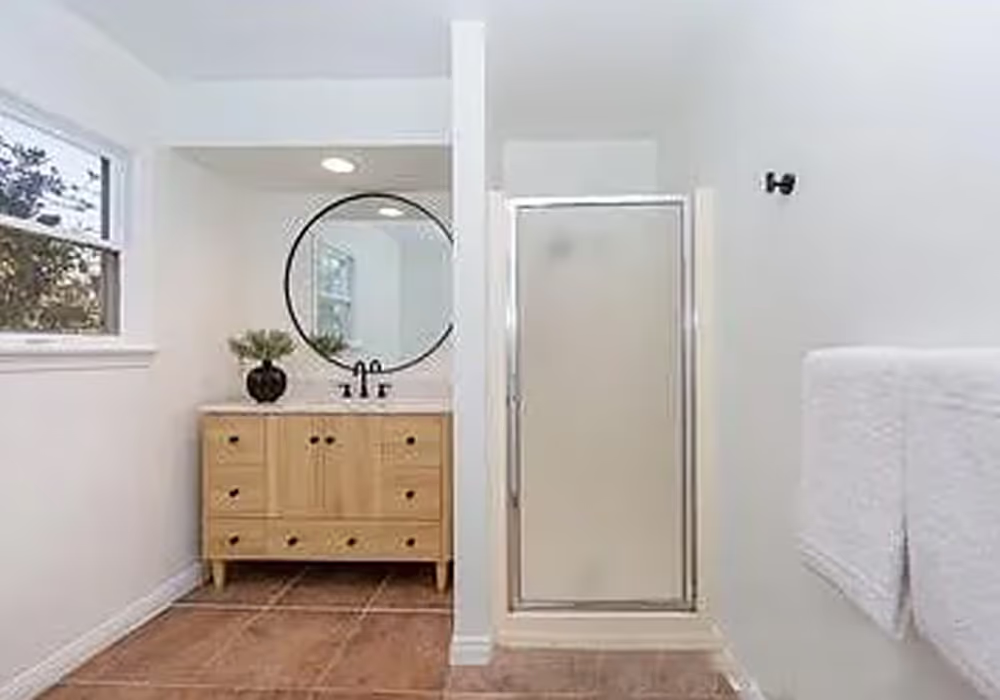
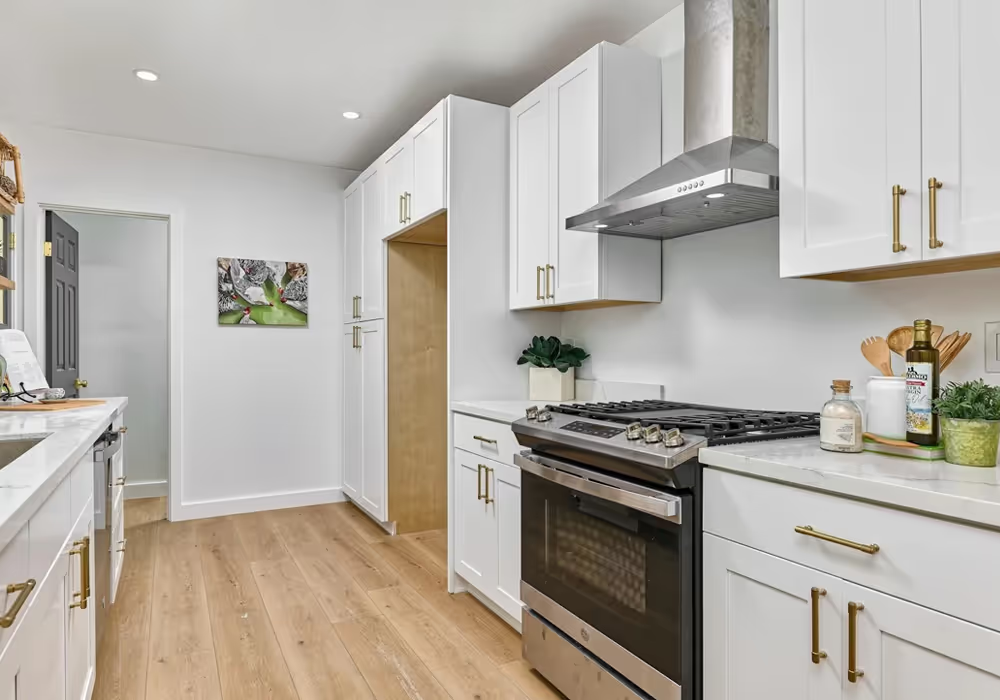
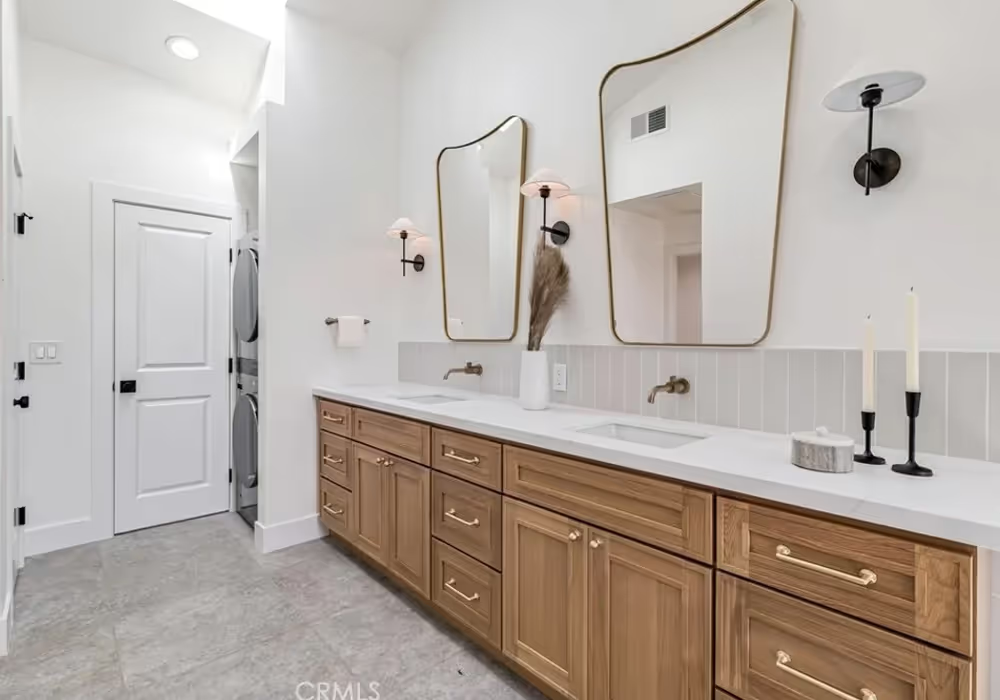
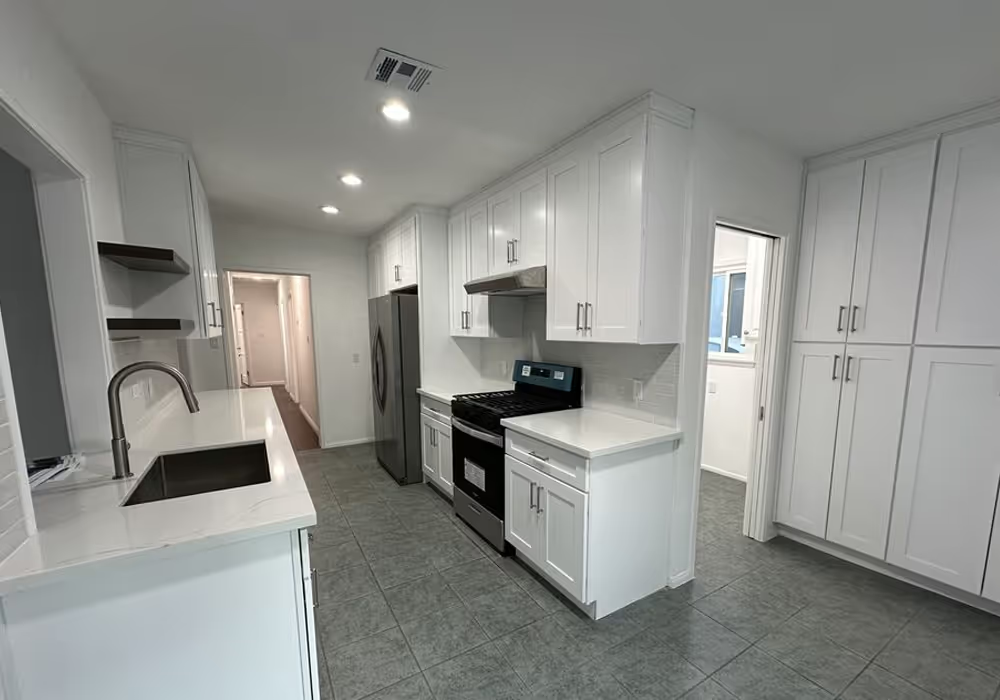
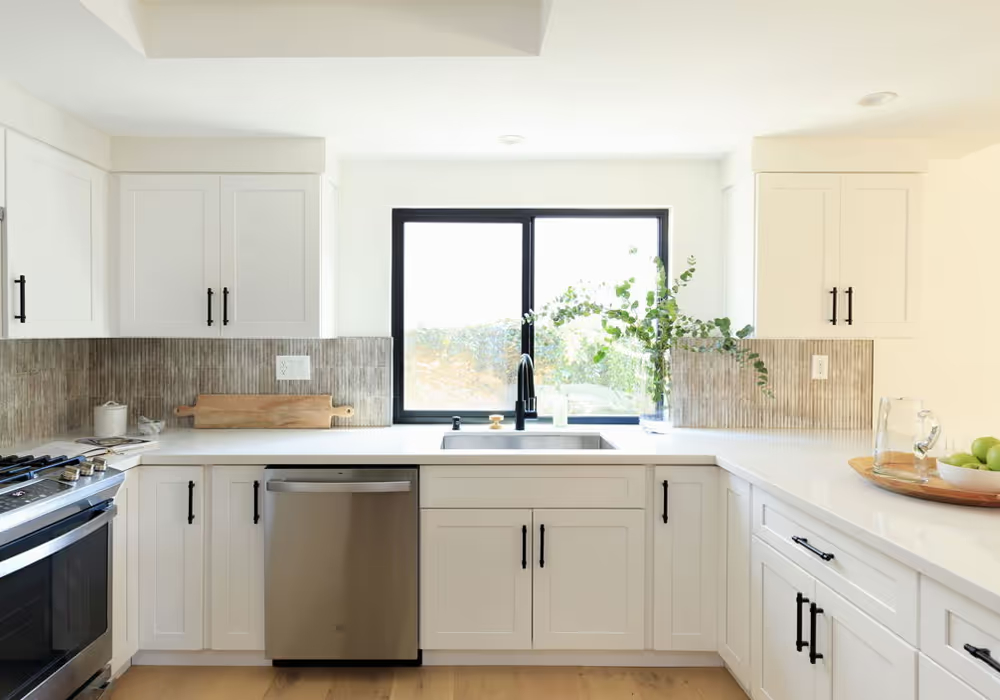
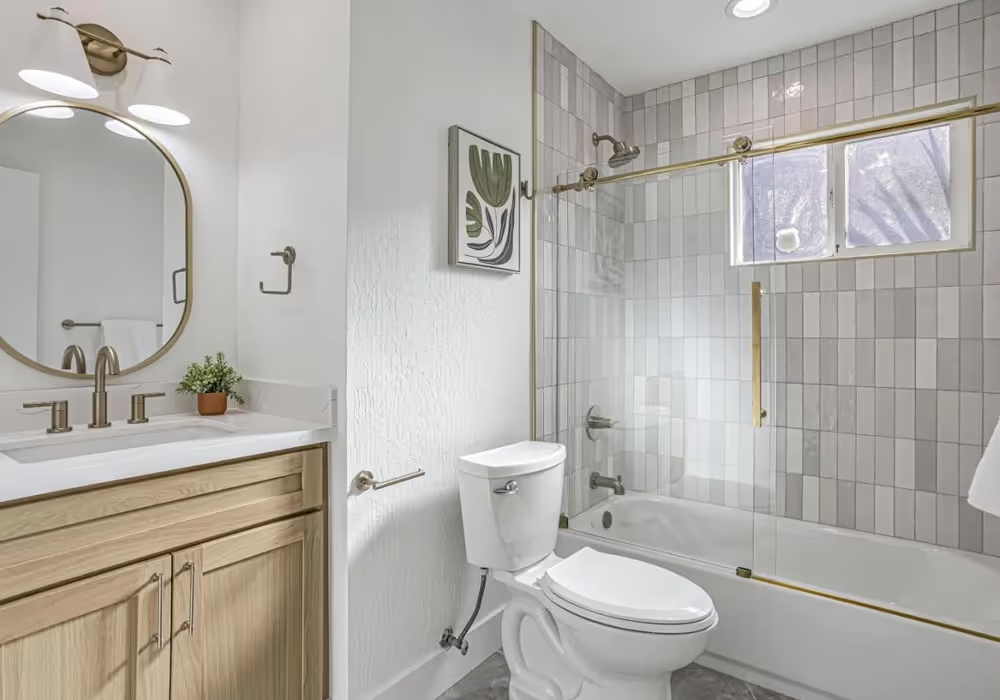
Kitchen and bathroom remodels are often simpler to arrange in condos, as long as the scope is limited to surface-level or aesthetic changes. For example, plumbing changes are normally difficult to get approved, but fixture replacement without moving plumbing is simple.
You can often easily get HOA approval for meaningful changes like appliance upgrades or changing to the lighting. However, keep in mind that even allowed projects may still require notice or written acknowledgment.
Can You Remove Walls in a Condo?
This is one of the questions we get the most from condo owners. The fact of the matter is that getting approved for wall changes or removals is generally trickier with condo HOAs. However, there is often space for compromise or limited changes that aren’t too impactful.
In this section, we go over some of the most important facts about wall demolition and reconstruction in Orange County condos with HOAs.
Load-Bearing vs Non-Load-Bearing Walls
HOAs pay very close attention to any wall removal and normally scrutinize wall removal plans especially carefully. In a typical condo, not all walls serve the same purpose.
Load-bearing walls help support the rest of the structure above them. Non-load-bearing walls mainly divide rooms and spaces or serve other aesthetic or organizational purposes. Naturally, it’s easier to get approval to remove the non-load-bearing walls.
In condos, this distinction matters more than in other homes. Any level of change to load-bearing walls will affect multiple units. Any wrong move can create safety issues.
Keep in mind that even walls that are certainly not load-bearing may require structural engineer, architect, and contractor confirmation before you are granted HOA approval.
HOAs will usually scrutinize requests involving:
- Removing full walls
- Removing partial walls
- Widening doorways or openings
- Creating an open-concept layout
- Altering walls near kitchens or bathrooms
- Modifying walls connected to shared ceilings or floors
- Changing walls that may contain plumbing, electrical, or ductwork
How to Tell If a Wall Might Be Load-Bearing
The fastest way to tell if a wall is load-bearing is to check the original architectural blueprints. They should be available from any condo HOA or the local building department.
Apart from widely available and well-recorded blueprints, you can also look to the joist direction. Load-bearing walls normally run perpendicular to floor joists or roof trusses. Exterior walls, or walls stacked vertically over lower-level support beams, are also load-bearing.
As a general rule, perimeter walls and walls separating your unit from neighboring units or hallways should be treated as potentially load-bearing until a professional confirms otherwise.
In terms of materials, interior non-bearing walls are normally thin, often framed with two-by-four lumber. Thicker walls, particularly those made of reinforced concrete, brick, or anything with embedded steel columns, support heavy loads and are almost always load-bearing.
Why Professional Evaluation Is Essential
Regardless of the confidence you have, professional evaluation is usually required for approvals and for insurance purposes. These evaluations help protect the remodel from safety issues, insurance problems, permit denials and reapplication processes, or other issues that require costly corrections later.
The evaluations include:
- Structural engineer review
- Architectural or contractor drawings
- Load-bearing confirmation
- HOA-required documentation
- City permit coordination
- Inspection planning
- Written approval before demolition
The best advice is to get the professionals involved early, before you touch your condo’s walls. Early on, you can give your HOA what they want, they can review, and you can proceed safely.
When HOAs May Deny Renovation Requests
Condo HOAs may deny renovation requests when the proposed work creates structural, safety, neighbor-impact, or compliance concerns. The simple fact is that in Orange County in particular, the onus is on you as the homeowner to ensure your remodeling decisions are compliant. However, the precise justification for denial will normally fall into one of these categories.
Common Reasons for Denial
In this brief section, we cover common reasons for denial and what you can do when your remodels are denied by your HOA.
Structural or safety concerns
The most common denial justifications involve the condo’s structural of safety concerns. There are many ways a remodel could affect either, and the HOA board will normally connect their decision to a structural or safety rule in their CC&Rs.
Impact on neighboring units
Condo HOAs must work to ensure a reasonable level of harmony between neighbors. If it is likely that your remodel will affect your neighbors, they are likely to deny your request. In some cases, the issue can be discussed and you can reach an agreement that is satisfactory to your HOA, your neighbors, and yourself.
Non-compliant materials or design
Most condo HOAs in Orange County will flatly deny remodel requests that involve non-compliant materials or design decisions. These CC&Rs are normally stated very clearly and leave little to interpretation. It’s best to simply work within the materials and designs that are not expressly banned in the HOA CC&Rs.
What to Do If Your Request Is Denied
A condo remodel request denial is not a final decision against all remodels. It is simply a denial of the specific remodel request you submitted, precisely as you had submitted it.
Orange County condo HOA remodel requests are dealt with case by case, and a denial can be followed by appealing or resubmitting through your HOA’s procedures. A condo HOA decision appeal normally looks like:
- Reviewing the reason for denial
- Revising the project scope
- Changing materials or finishes
- Providing engineering documentation
- Submitting updated drawings or plans
- Clarifying contractor licensing and insurance
- Addressing neighbor impact concerns
- Resubmitting through the HOA’s approval process
If you’re not sure where to start, that’s completely normal. One of the easiest ways to deal with denials, or to avoid them altogether, is to work with the right contractor or team. In Orange County, local experience matters.
Working with state regulations and local HOAs on a regular basis equips contractors and design-build teams with the procedural knowledge needed to make HOA approvals smoother.
HOA Rules vs City Permits in Orange County
Looking at Orange County broadly, HOA rules focus more on aesthetics, neighborhood harmony, and maintaining property values while city permits are focused on safety and structural compliance. There is often overlap between requirements, but there are a few differences that we cover in this section.
HOA Approval Does Not Replace City Permits
HOA approval and city permits are not interchangeable. Both may be required, and they are handled separately by different institutions.
When you remodel your condo, you may need approval from your condo’s HOA and permits from the city where your condo is located.
Building departments handle typical permits such as:
- Wall removal
- Structural framing changes
- Electrical panel upgrades
- New circuits
- Plumbing relocations
- Shower or tub conversions
- HVAC modifications
- Water heater changes
- Major kitchen remodels
- Work requiring city inspections
Essentially, your HOA gives permission from the community while permits give you permission from the local building authority.
How HOA Rules and City Codes Overlap
While the nature of permits and HOA approvals is different, the two often cover similar aspects of condo living and may overlap in some areas:
- Construction hours
- Noise limits
- Contractor parking
- Building access
- Elevator or hallway protection
- Debris removal
- Utility shutoffs
- Fire and life safety
- Inspection access
- Neighbor notifications
Best Practices for Remodeling a Condo in Orange County
In this section, we go over the best practical steps to conduct a successful condo remodeling project in Orange County.
Steps to Take Before Starting Design
First, review your condo HOA’s CC&Rs thoroughly. Most of the consequential information will be stated plainly and should be easily understandable. Your contractor should also review the CC&Rs before starting any demolition or construction.
Second, it’s best to start the conversation with your HOA early. This lets you get a feel for their attitudes to the type of remodel you’re trying to do. It also gives them a chance to share condo remodeling tips, flag concerns, identify documentation needs, or explain construction rules. Hesitating to communicate with the HOA board until the last minute is one of the most common causes of timeline extensions for condo (and other) remodels.
Lastly, look into the CC&Rs and the HOA’s history of remodels. Build an understanding of approval timelines and architectural reviews before moving along too far. Some HOAs review remodel requests monthly. Other HOAs will first want things like:
- Board approval
- Architectural committee review
- Revised drawings
- Added documentation
Working With the Right Professionals
Lastly, one of the most important decisions you will make during a condo remodel process is who you will work with.
Contractors experienced with condo remodels in your area and especially with your HOA make everything much simpler. The best case scenarios often happen when working with contractors your HOA is familiar with, reducing friction and maximizing the chance of a smooth remodel.
Engineers familiar with HOA document requirements are more important in condo remodels than single-family house remodels. Their insights are a key part of avoiding denials and a cycle or reapplications.
Likewise, if a designer already understands your HOA’s material restrictions, they will be better able to plan a remodel that looks great without coming in conflict with the HOA or needing to suddenly change direction later on.
Final Takeaway
Condo remodels require more coordination and care than remodels with equivalent scopes in other home types. HOA approval, structural evaluation, and permit compliance are critical, with HOA approval being granted under stricter circumstances.
However, planning ahead and working with the right professionals helps you reduce delays and avoid disputes. With the right team and plan, you can move toward a remodel that fits your goals while staying aligned with HOA requirements.
How much is your home's worth?
Get your personalized estimate today.
























Seasoned architect with a B. Arch from Sushant School. Formerly at Brookfield Residential and Studio Niev's founder. Kanika's blend of aesthetics and efficiency is pivotal to our production team's excellence.