The Short Answer Plus Why It's Complicated
Yes, a new walk-in shower adds value to a bathroom.
New amenities, particularly those involving new plumbing, almost always add value. The main question, however, is what your walk-in shower is replacing.
Is your new walk-in shower replacing an older, dated one, or a visually aged and outdated bathtub? Or are you replacing something proven to add value to a bathroom with a walk-in shower that is less valuable for resale?
While remodeling normally adds fresh, new amenities that look good and drive value higher, the question of “added value” is more focused on what is being replaced.
Yes, But Only When You Don't Remove Your Home's Last Bathtub
Nothing answers the conundrum built into the question “does a walk-in shower add value to your home?” more clearly than this. If your home only has one bathtub, then you are likely working against your resale goals by replacing it with a walk-in shower.
Again, there are exceptions. For example, if you have one bathtub, but it’s in a small Los Angeles main bathroom, and the walk-in shower saves space and makes that bathroom more usable, then a walk-in shower will likely have a more neutral effect in terms of value.
However, in almost all cases, removing your only bathtub to make space for a walk-in shower is a poor investment.
Why?
Having one solid bathtub is a major selling point that, while not always significantly increasing value outright, can still attract more buyers and serve as a strong secondary psychological reinforcer.
Walk-In Showers as a Luxury Signal vs. a Resale Asset
Walk-in showers with clear glass are seen by many buyers as a sign of a modern bathroom. In main bathrooms, they offer the strongest immediate buyer appeal.
Walk-in showers serve as a strong luxury signal when they demonstrate high-end design, ease, cleanliness, and modernity. The individual factors most likely to signal luxury include:
- Removing bulky, acrylic tub/shower combos in favor of a more navigable space
- Making the room feel brighter by removing barriers to light
- Curbless entries
- Dual showerheads and body sprays
- Linear drains
- Future-proof design
However, as a resale asset, walk-in showers don’t necessarily offer excellent resale value. The resale value that walk-in showers add is connected to the property. They can be valuable additions to primary suites, but may reduce value in a family-friendly home where a bathtub would be preferred for lifestyle purposes.
What Real Estate Industry Reports Have to Say
The NAR 2022 Remodeling Impact Report found that bathroom remodels recover about 71% of their costs at resale, based on mid-range remodel values of about $35,000. The report also gives bathroom renovations a Joy Score of 9.6 out of 10, making bathroom remodels one of the surest major room projects to satisfy homeowners post-renovation.
The problem: there is little meaningful data on walk-in showers specifically.
What we do know is that many buyers seem to prefer a “best of both worlds” strategy, particularly in certain large, primary bathrooms. According to the NAHB’s 2024 buyer survey, 78% of buyers rated having both a shower and tub in the primary bath as “essential” or “desirable.”
According to Houzz’s 2025 Bathroom Trends Study, 25% of renovating homeowners remove a bathtub. Among homeowners who remove a bathtub, most use the extra space to expand the shower. One-fifth relocate the shower altogether, and half increase their shower’s size.
While these figures don’t provide value metrics, they point to a majority of homebuyers valuing spacious, bright, and modern shower experiences.
When a Walk-In Shower Clearly Adds Value
There are a few cases when a walk-in shower is more likely to add value.
Primary Bathroom Upgrades in Homes That Already Have a Tub Elsewhere
The safest value-add scenarios are homes that already have a tub in a secondary bathroom.
If you already have a tub elsewhere, you keep the appeal and functionality of a bathtub while the primary bathroom can become a higher-impact, more functional space. This is the closest you can get to the “best of both worlds” approach.
Homebuyers who want a tub will have one, especially the family-friendly buyer segment. Buyers who value modern design and convenience also get what they want: a larger, more accessible room with a sleek walk-in shower.
This approach works best in homes with:
- A hallway bathroom with a standard tub
- A secondary bathroom used by kids or guests
- Multiple generations living together
- A primary suite large enough to support a more spacious shower
Replacing an Outdated Tub/Shower Combo with Frameless Glass
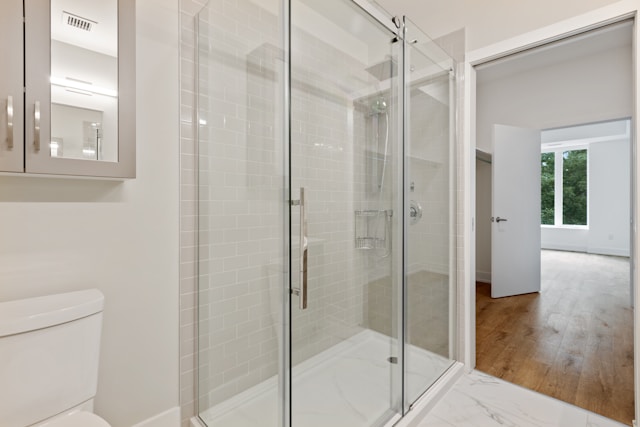
Replacing an outdated tub/shower combo with a modern walk-in shower with clear, frameless glass is one of the clearest visible updates. Old acrylic or fiberglass combos can make a bathroom feel dated to some modern homebuyers, especially with some older, less thoughtful layouts.
A frameless glass walk-in shower can make the same bathroom feel:
- Larger
- Brighter
- Cleaner
- More modern
- More luxurious
Frameless glass meets a few modern expectations, including the emphasis on thorough, layered lighting. Light can move seamlessly through the room.
Importantly, an updated walk-in shower with frameless glass photographs well in listings. Your bathroom will present as more open, updated, and modern.
If you’re considering replacing an outdated tub/shower combination, the goal is to avoid over-customizing in favor of simple:
- Clear glass
- Neutral tile
- Clean fixtures
- Minimal hardware
- Easy-to-maintain surfaces
This way, you can avoid luxurious overspending while focusing on value returns.
Homes Targeting Buyers Who Prefer Showers: Young Professionals, Couples, Empty Nesters
Young professionals, couples, and empty nesters are more likely to find walk-in showers appealing, but for different reasons.
Young professionals and couples value spaciousness and efficiency. Walk-in showers offer both of those things. Well-remodeled bathrooms with walk-in showers also offer the modern comforts they are looking for.
For empty nesters or multi-generational households, walk-in showers offer safe, barrier-free access. The hazardous threshold of a traditional tub kills hundreds of people every year, including those aged 5 to 64. But for seniors, especially those in an aging in place situation, curbless walk-in showers are the safer and easier option.
When a Walk-In Shower Can Hurt Resale Value
These are a few of the mistakes that we’ve seen people make that end up hurting their home’s resale value.
Over-Customized Designs That Buyers Will Want to Redo
Bathroom remodels that include walk-in showers should prioritize tested design and functionality principles if resale value is the goal. If the shower reflects personal taste more than market appeal, resale appeal can suffer .
Remember that over-customization makes it more likely that buyers may mentally discount the home if they sense they’ll need another remodel after purchase. So, it’s best to avoid these personal but risky choices:
- Bold tile patterns
- Niche color palettes
- Dark stone in small bathrooms
- Unusual layouts
- Trend-heavy fixtures
- Built-in benches that reduce usable space
- Specialty shower systems that signal ongoing maintenance
The general rule is that buyers aren’t looking for signs that the bathroom was expensive. They are thinking about what daily life will be like in that bathroom. Even a bathroom that photographs well but looks complex to maintain could lead many potential buyers to hesitate.
A better checklist for a resale-focused remodel would be:
- Neutral tile
- Simple hardware
- Clear glass
- Clean lines
- Functional storage
- Easy-to-clean surfaces
High-End Finishes in a Mid-Range Market
Neighborhood comps are especially important if you are renovating to sell fast.
A walk-in shower renovation can reduce your potential ROI if its scope outpaces neighborhood expectations. This is known as the “ROI ceiling effect” in real estate.
It may not feel intuitive, but remember that sometimes buyers may like an upgrade, but the local market may not justify a higher resale price for it. This is why it’s best to work with professionals who understand neighborhood comp analysis and ROI-focused remodeling.
Some common examples of possible overinvestment include:
- Full slab stone shower walls
- Imported designer tile
- Steam systems
- Multiple body sprays
- Custom glass in a modest bathroom
- Luxury plumbing brands in a mid-range home
- Heated floors
- Any upgrade that nearby comps do not support
Mismatches like having these features in the wrong neighborhood may be especially risky when you are trying to sell fast. You are likely to reduce your ROI while also having little time to enjoy them yourself.
In mid-priced markets, clean, updated looks produce higher returns than luxury or custom work. It’s better to think “what will this market reward?” than “what is the nicest walk-in shower we can fit here?”
The ROI Numbers: What to Expect
Unfortunately, there is no clean, widely-accepted ROI figure for walk-in showers. The most reliable data comes from broader bathroom remodel categories. There are also some buyer preference studies and renovation trend reports to consider.
A Quick Snapshot
Overall, walk-in shower ROI depends most on what it’s replacing and expectations set by the local neighborhood. The JLC 2025 Cost vs. Value Report compares both average costs and resale values for 28 remodeling projects across 119 U.S. markets.
According to the report, a midrange bath remodel costs an average of $26,138, produces $20,915 in resale value, and recoups 80% of the cost. However, the scope in question includes a tub instead of a walk-in shower. This can only serve as a general benchmark because the project scope does not isolate walk-in showers.
Returns Per Dollar Spent: Why Bathroom Remodel ROI Gives the Best Benchmark
Bathroom renovations recovered about 71% of their cost, according to the 2022 Remodeling Impact Report. The report found that bathroom renovations recouped a meaningful share of cost, but usually not 100%. Most cost about $35,000 and recover about $25,000 at resale. The 2025 Cost vs Value Report provides a more recent figure of costing $26,138 and adding $20,915 in resale value, and recouping 80%.
The NAR also lists bathroom renovations near the top of its Joy Score, measuring how satisfied homeowners report being after a change or addition to their homes.
The practical takeaway is that a walk-in shower should be judged as part of the full bathroom remodel strategy. The available data supports smart bathroom updates, but it does not prove that every shower conversion returns a specific dollar amount. There simply isn’t enough data.
How the OC Market Affects Walk-In Shower ROI
Keep in mind that in Orange County, buyers are more likely to reward clean, updated, and move-in-ready homes. A clean and recently installed or refurbished walk-in shower is a good signal that reduces buyer friction and presents well in photos.
When planning financially, it’s important to not underinvest or overinvest. Market-fit factors are important when deciding on the scale of a bathroom remodel and how much goes into your new walk-in shower:
- Price point
- Neighborhood buyer profile
- Home size
- Number of bathrooms
- Whether the home is family-oriented
- Whether there is another bathtub elsewhere
What makes sense in one OC bathroom might not make sense in another.
Simple, Clean Finishes Usually Outperform Heavy Customization
Simple, clean finishes create broad appeal. They may not match every buyer’s personal taste, but they make the resale process smoother.
While we don’t have precise data on finishes and ROI, our experience with resale performance and the simple math point to conservative approaches that value broad appeal works better for both short-term and long-term value. Some safe choices that can achieve the right balance include:
- Frameless or clean-lined glass
- Neutral tile
- Simple fixtures
- Good lighting
- Low-maintenance materials
- Practical niches or storage
Walk-In Shower Design Choices That Maximize Value
If you’ve decided that a walk-in shower is the right move for your home, it’s time to start putting a plan together. In this section, we discuss how to design the one that buyers are most likely to reward.
Frameless Glass Enclosures vs. Tile-Only vs. Curtain Setups
Frameless glass is normally the strongest resale choice, but it comes with a high price tag. It’s the best way to make your bathroom feel bigger and brighter. Frameless glass gives the photo-friendly modern look that many homebuyers look for. Bonus points when it’s matched with clean, simple tile and hardware.
Tile-only shower layouts can look high-end, but only work when the layout is big enough to control splash. This is a risky option for smaller bathrooms because many viewers will worry about water escaping. In large, primary suites, it can work better.
Lastly, curtain setups are the low-cost, but weakest option. They present poorly in resale presentations and make the bathroom feel unfinished. However, they can work well enough in secondary bathrooms.
Curbless Entry: Style and Accessibility Combined
Curbless, zero-threshold entry showers upgrade both design and functionality. They create a seamless look and make the bathroom feel open and welcoming. These benefits combine to make aging in place and busy, low-maintenance lifestyles easier and safer.
However, keep in mind that curbless entry will require proper:
- Slope
- Drainage
- Waterproofing
- Planning
Poor installation creates water issues, and in some cases can reduce the remodel’s value instead of enhancing it. This is why choosing the right contractor matters. With the right professionals and workmanship, curbless entry walk-in showers line up with modern expectations and make the bathroom look modern.
Tile, Fixtures, and Hardware That Photograph Well and Appeal Broadly
If the goal is long-term value, or especially if it’s short-term resale, it makes sense to focus on making these areas:
- Fresh
- Bright
- Clean
- Easy to like
For tiles, some of the best choices that strike all these cords include:
- Neutral tile
- white, warm gray, beige, taupe, or soft stone tones
- Large format tile to reduce grout lines and create a cleaner look
Hardware doesn’t need to be splurged on, but it’s important to keep up appearances. The safer options we often recommend are those that feel current, but without being trendy. Some modern or timeless options include matte black, brushed nickel, chrome, or warm brass.
Size and Clearance: NKBA Standards for Shower Dimensions
National Kitchen & Bath Association (NKBA) standards are professional planning guidelines used by kitchen and bath professionals. They are applied for safety, functionality, and comfort, and are separate from local building codes. Instead, the NKBA standards are meant to describe what works in real-life room design.
For showers, the NKBA recommends a minimum size of 36 inches by 36 inches, while building codes often allow for lower minimums. In general, local building code minimum standards are better treated as the floor, while the NKBA recommendations are somewhere near the bullseye. But remember that while a shower’s size may “fit” with recommendations, if it looks or feels cramped, it will harm the value of your remodel.
Clearance is also important. The benefits of a walk-in shower rely on the shower opening being easy to enter and exit. The surrounding layout should leave enough space to move naturally without feeling cramped. In terms of resale value, that doesn’t necessarily mean a larger shower. Instead, it means to focus on making the entire bathroom feel easy to navigate and use while still feeling clean and open.
Thinking About a Bathroom Upgrade Before Selling in Orange County?
If you’re remodeling to sell, we can help you with a plan that enables you to renovate now and pay later.
How Revive Assesses What's Worth Doing Before You List
If you’re trying to sell a home faster, not every bathroom upgrade is worth doing. The goal is less about making a dream bathroom, and more about creating a clean, timeless bathroom buyers can trust. That’s why our process always starts with:
- Clear data
- Expert guidance
- Smart decisions
- More homeowner control
That is why the Revive remodeling process starts with analysis of:
- Current bathroom condition
- Buyer expectations in the neighborhood
- Comparable homes in the area
- The home’s price point
- Whether the home already has another bathtub
- Estimated project cost
- How tub or shower changes could affect resale presentation
- Your timeline for listing
When it comes to walk-in showers, we focus on whether the upgrade removes buyer objections or creates new ones.
In general, there are some signals that a thorough walk-in shower-centered remodel is recommended:
- The primary bathroom looks outdated or unthoughtful
- Your home has another bathtub
- A new walk-in shower could make the bathroom feel bigger and more inviting
- Neighborhood comps support the addition of a modern walk-in shower
On the other hand, there are also some signals that a walk-in shower would be risky or counterproductive:
- The project removes the only tub
- The cost is too high for the expected price range
- The design is too custom for broad buyer appeal
- The bathroom already offers strong resale value and your money could go farther somewhere else
The right renovation is not always the biggest one. It is the one that gives buyers more confidence and helps you protect more of your equity.
Get a Free Pre-Sale Estimate
{{cta-banner}}
How much is your home's worth?
Get your personalized estimate today.



Creative operator, storyteller, and growth-driven entrepreneur sum up the core of Shyam Ronvelia, Junior Growth Operator at Revive Real Estate. With a background running his own clothing brand and a deep passion for design, photography, and filmmaking, Shyam brings a rare creative lens to the world of real estate. Turning the story of home renovation into content that captivates and converts across the nation.