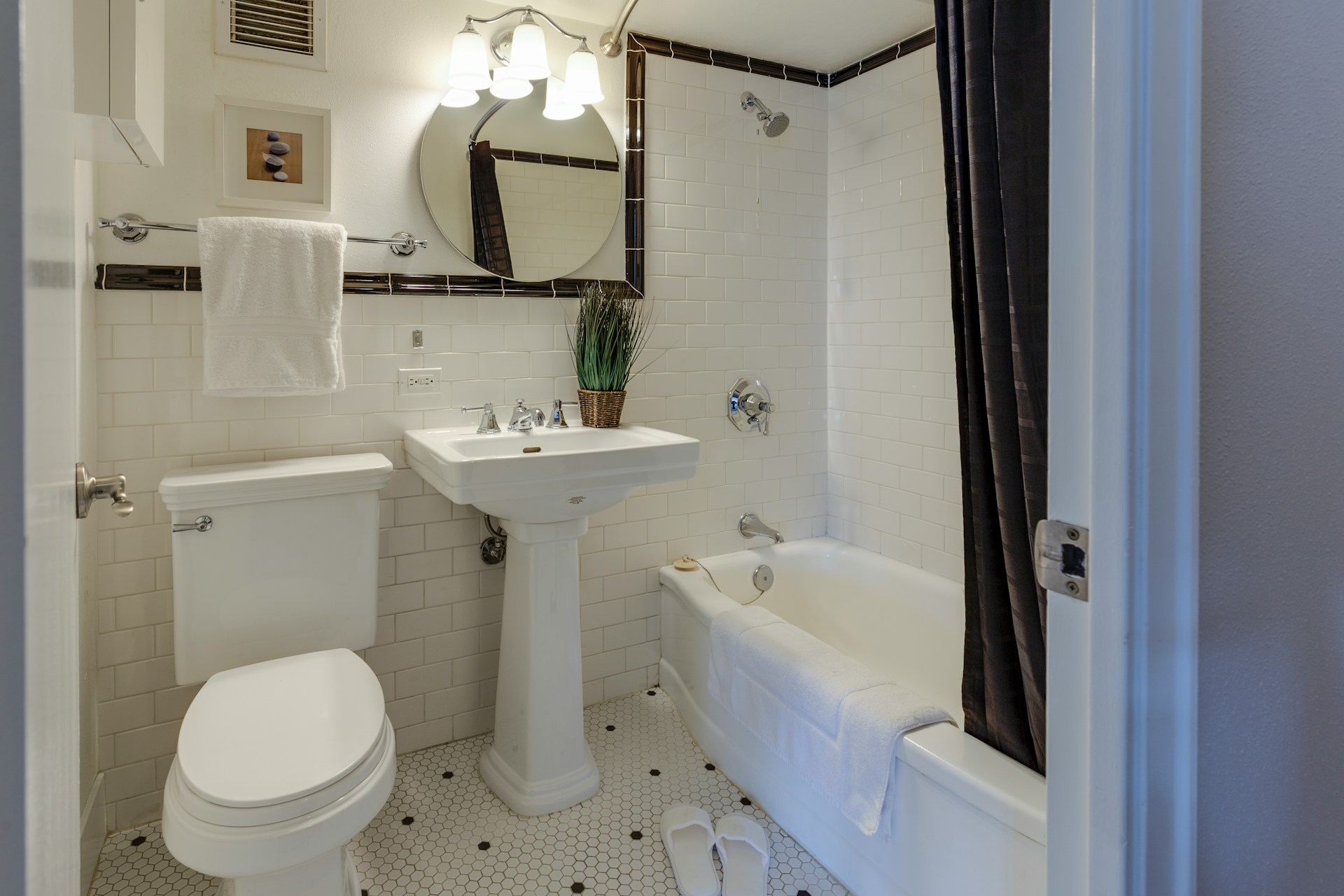
Small bathrooms are common in many Los Angeles homes. In older bungalows and Spanish-style homes, among others, small bathrooms are a part of the regular housing experience.
At first, it may seem like small bathrooms leave fewer options for a meaningful remodel. They may not drive value the same way a primary bathroom does, but they still matter. So, what is the right way to think of small bathroom remodels?
Every square foot needs to pull its weight!
The key is knowing where to focus. Smarter layouts, better lighting, space-saving storage, and durable modern finishes can do most of the work. You don’t need an oversized budget or a full overhaul to create a much better bathroom experience and support your home’s long-term value.
In this guide, we cover how small bathroom remodels fit into Los Angeles homes. We then offer the top ideas for LA homeowners, including tile, finish, storage, and lighting tips.
Why Small Bathrooms Are So Common in LA and Why They're Worth Remodeling
Historical construction booms, strict building codes, and design decisions focused on saving space made small bathrooms very common in LA.
Postwar builders typically prioritized adding more bedrooms and living areas to serve the rapidly increasing population. At the time, that meant minimal costs, and thus minimum space, to meet the growing housing demand in Los Angeles.
The reality of older LA home layouts is that they were created with efficiency in mind. This logic applied to vast swathes of what are now residential LA neighborhoods. In addition, many of the prewar homes in LA were created before indoor plumbing was standard. As homes changed over time, bathrooms were sometimes added into tight spaces, converted rooms, or small additions.
The combination of prewar construction patterns and postwar, efficiency-focused housing booms explains why Los Angeles bathrooms remain smaller on average.
How a Small Bathroom Remodel Adds Value in the LA Market
If your main bathroom is small, that alone means a remodel is likely to add significant value. Primary bathrooms can play an important role in how buyers and appraisers evaluate a home. According to Zillow, a small bathroom remodel with just cosmetic upgrades in LA can yield $1.71 for every $1 spent. That means over 80% of a small LA bathroom remodel’s expenses are normally recouped.
In general, practical midrange bathroom remodels tend to deliver stronger returns than highly customized luxury upgrades. However, a few smart decisions make it more likely that your investment will be well-focused.
If you can, avoid relocating drains or making any kinds of major plumbing alterations. Keeping your old plumbing layout can help reduce labor costs and limit the complexity of the remodel. Drain and vent relocations are expensive and do not have as strong an effect on appraised value.
The other issue with major plumbing work is that it’s likely to trigger permitting and LADBS requirements. These requirements raise the costs and risks of any bathroom remodel, so if you want the highest returns with the least risk, it often makes sense to avoid them.
The plumbing upgrades that do often have a large ROI impact are certifiable efficiency improvements. For example, in Southern California’s climate, WaterSense-labeled toilets provide added appeal to the large eco-conscious homebuyer base in Los Angeles.
Space-Saving Layout Ideas That Actually Work
When it comes to working with the typically limited bathroom space of LA, there are a few options that can have outsized effects on your new bathroom.
Swap a Tub for a Walk-In Shower with Frameless Glass
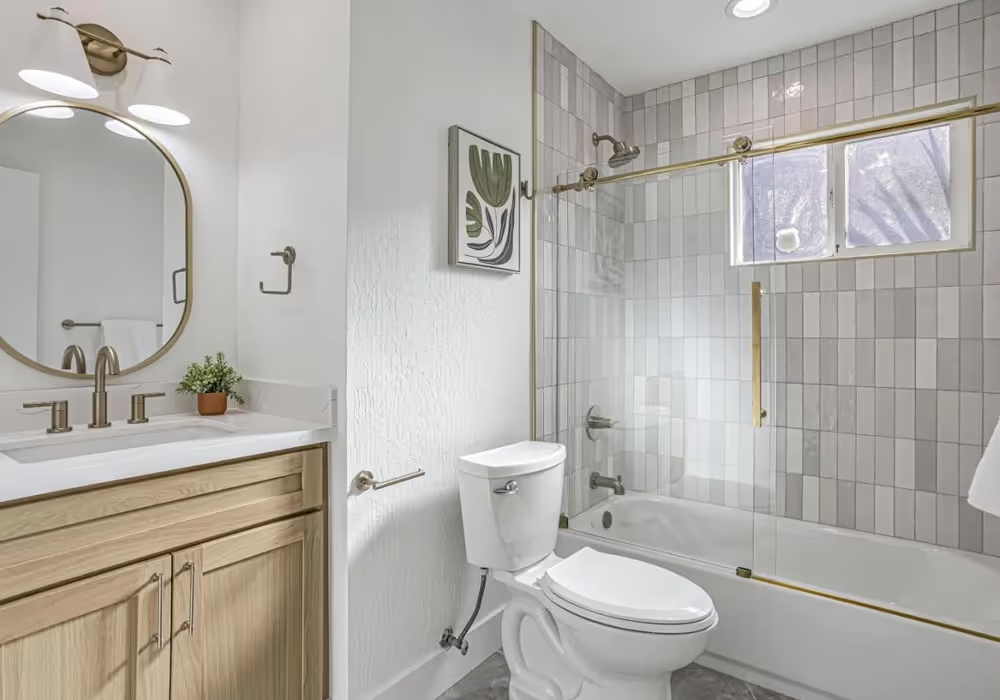
If you don’t often take baths, replacing a tub with a walk-in shower can add a real sense of spaciousness. Walk-in showers with frameless glass naturally change how a small bathroom is perceived, making it feel larger than it otherwise would be. The open sightline helps the room feel larger while giving the bathroom a cleaner, more modern look.
Choose a Floating Vanity to Open Up Floor Space
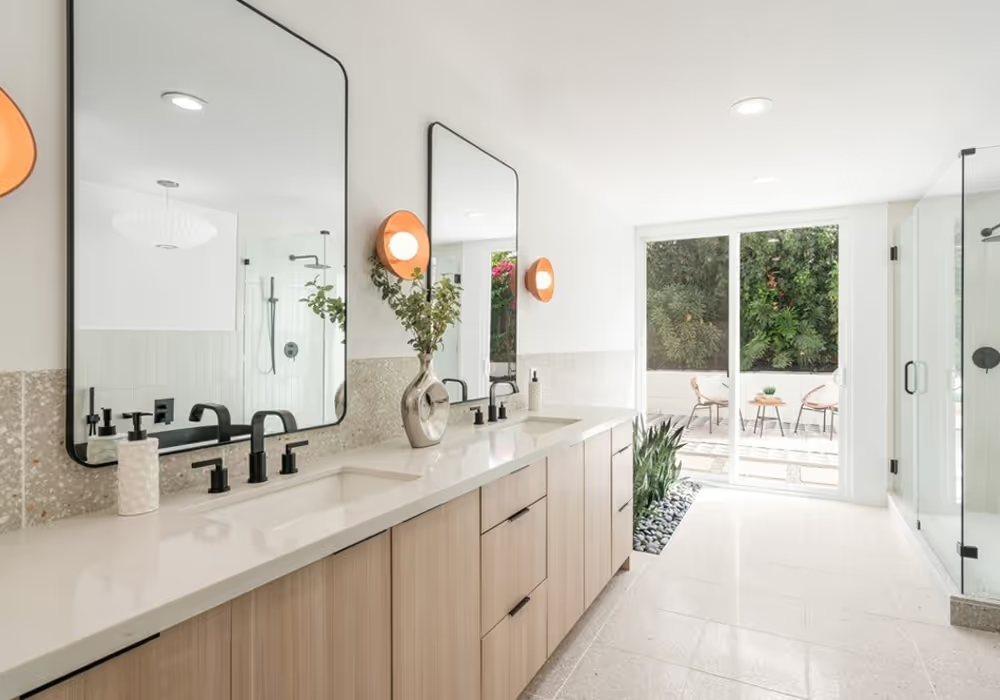
Floating or wall-hung vanities create more floor space and a larger sense of space. Shifting to a floating vanity, if you don’t already have one, adds an airy feeling while also giving you more open, usable space.
Bulky, traditional bathroom cabinets can be convenient in some ways, but they certainly make small bathrooms feel even smaller. Modern homebuyers typically prefer a larger sense of space, often preferring it over actually having more space. Floating vanities with open shelving also fit in with new lighter, millennial-driven trends.
Use Pocket or Sliding Doors to Reclaim Square Footage
Switching from a traditional swinging bathroom door to a sliding door can often save you 10-15 square feet.
The extra space sliding bathroom doors provide can often be used for vanities, towel racks, and other features close to the door. Think of a sliding door as a foundation for a more efficient layout.
Think Vertically: Wall-Mounted Storage and Tall Cabinetry
Shifting from a horizontal to a vertical mindset can solve the problem of clutter in a small bathroom. In small spaces, a vertical mindset is increasingly considered the gold standard for modern space optimization.
The idea is simple: use wall space to reduce clutter and make the room feel more open. This tricks our perception. Less-used wall space, with more open spaces, makes it appear as if a small bathroom is larger and more airy than it really is.
You also get the benefits of:
- More floor space
- The illusion of greater height
- More attractive storage that still feels open
Tile, Finishes, and Materials Popular in Los Angeles Right Now
Clearly, most of what goes into making the most of a small bathroom remodel is creating a greater sense of space. Most of that focus ends up being at floor level. Most of the rest involves the sink, shower area, lighting, and cabinetry.
Simple choices like your tile patterns will have an outsized effect on the perceived space of a small Los Angeles bathroom.
Light or Neutral Tiles That Make Small Spaces Feel Bigger
Light or neutral tiles reflect more light and help a small bathroom feel brighter and more open. They also reflect light in a way that contributes to that sense of space while making the room naturally brighter and more comfortable. All of these are also reliable ROI factors that appeal to modern homebuyers.
Sunlight matters. To make the most of lighter and larger tile choices, maximize the daytime effects of natural light. Window changes are not purely cosmetic, so check with your contractor before assuming they can be handled without permits. In cases where window alterations are done on non-load-bearing walls, you may not trigger building code or permitting requirements.
Even if you keep the same frame, it is still worth confirming the requirements before work begins. However, always be sure to consult with your contractor or other trusted expert before making a decision that may or may not trigger extra requirements.
Layered Lighting: Vanity, Recessed, and Natural Light Strategies
Once you plan for having natural light enter the bathroom, you can expand on the benefits with layering. Layered lighting makes spaces feel brighter, larger, and more inviting.
Think of layered lighting as a strategy tailored to each bathroom:
- Natural light entering through windows
- Overhead light
- Ambient light
- Eye-level task lighting at the vanity
One common mistake is relying on a single overhead light. People will notice issues like darkness from a single-source overhead lighting, which creates a visual sense of darkness, uneasiness, and smallness. On the other hand, diverse, layered lighting creates the spa-like atmosphere, even in the smallest bathrooms.
Some additional strategies to achieve ideal lighting in a small bathroom include:
- Side sconces
- Integrated mirrors
- Light bars
- Warm white lighting specs (ideally between 2,700K and 3,000K)
- Avoid recessed lights directly above mirrors, which can create harsh top-down shadows
- Place narrow light beams close to shower walls
- Aim for a 40-to-60 degree beam spread to avoid cluttering the ceiling
- Position recessed fixtures 12 to 18 inches in front of the vanity mirror and angle them slightly toward where you’d use it
Statement Walls and Accent Tile for Visual Depth
In small bathrooms, directed attention is the other major contributor to the feeling of how big the washroom is. Statement walls and accent tiles create a focal point that draws your attention across a small bathroom.
The right design for a statement wall and accent tiles creates another illusion that blurs the perceived boundaries of small spaces.
Eco-Friendly and Low-VOC Materials
Eco-friendly materials have become a growing priority for many Southern California homeowners. According to the NAR, more than half of homebuyers nationwide consider sustainability and environmental impacts when buying a home. Several different high-authority sources found that homebuyers pay significant premiums on homes with verified green certifications like LEED or NGBS on top of the local Los Angeles Green Building Code (LAGBC).
Smart Storage Solutions for LA's Compact Bathrooms
When you’re dealing with a small LA bathroom, storage space is often one of the harder aspects to plan for. Modern homebuyers value smart storage that makes the most efficient use of the space available.
Recessed Niches and Built-In Shelving
Recessed niches are built-in storage cubbies built into your wall studs. They are a space-efficient alternative to bulky hanging shelves or shower caddies. Better yet, with the right choice of colors in your bathroom, recessed niches look sleek and modern and normally provide more than enough space for all your toiletries.
If recessed niches aren’t possible or just don’t make sense, other built-in shelving options likely still make sense. Framing limits may create a layout where other built-in shelving options work:
- Corner shelves
- Built-in recessed shelving
- Over-toilet storage
- Silver niches
- Full-height linen nooks
As a bonus, these areas are normally easy to keep clean and are easy to maintain and create a clean, modern look.
Vanity Upgrades: What to Choose for a Small Footprint
The best vanity upgrades for small LA bathrooms prioritize visible floor space, usable square footage, and vertical storage.
Floating vanities, narrow-depth cabinets, and integrated sinks all add up to an efficient layout with a relatively small footprint.
Whenever possible, it’s a good choice to install a wall-mounted vanity. Mounting the vanity to the wall exposes the floor below, makes the room feel larger, and leaves more vertical space for convenient and low-footprint upgrades.
In some LA bathroom layouts, corner vanities make the most sense. They can be harder to design well, but they are strong space-savers when the layout supports them.
In other cases, a freestanding look can be achieved with furniture-style vanities that come with legs. You can maintain some of the airiness and visible floor space of other vanity types, while perhaps keeping some open under-sink storage.
Lastly, there are other options like a single-piece molded basin and countertop. Molded pieces remove the awkward lip and crevices of drop-in sinks, and they remain easy to clean. In other cases, vessel sinks or trough sinks may make sense, and you can discuss all these options and possibly more with an expert designer.
What Does a Small Bathroom Remodel Cost in Los Angeles?
The cost of remodeling an LA bathroom has increased through the 2020s, with costs remaining moderate due to the combination of small average size, but a high average labor cost.
Here are simple estimated ranges to help you plan your budget.
Typical Price Ranges: Cosmetic vs. Full Remodel
In LA, common bathroom remodel price ranges include:
- Typical bathroom remodel in LA: $10,000 to $30,000
- Full bathroom renovation: $15,000 to $25,000
- Small bathroom renovation: $10,000 to $15,000
- Half bathroom: $5,000 to $10,000
- Primary bathroom: $20,000 to $35,000
- Deluxe primary bathroom: $35,000 to $50,000+
What Drives Costs Up in LA
Three factors often drive many LA bathroom remodel costs higher:
- Older housing stock
- Permit requirements
- Higher labor costs
Even small bathrooms can cost more than expected in some cases, often due to problems that are discovered after the project begins. Several common issues are often hiding behind the walls:
- Outdated plumbing
- Old wiring
- Water damage
- Poor ventilation
If these issues are discovered late, they need to be corrected before the project can continue. Also, certain discoveries can trigger the needs for permit or building code requirements. The younger your building and the better it’s been maintained, the less likely you are to experience serious issues. But these are the discoveries that often drive up LA remodel costs, especially in kitchens and bathrooms.
If the project requires additional permits, inspections, or code upgrades, it can add time and cost. These requirements are higher in California than in most other states, and the high LA labor costs can combine for a higher overall cost.
When working with an older LA bathroom remodel, it makes sense to create a higher contingency budget of 15% to 20% of the original estimated cost, just in case.
To keep costs under control, avoid layout changes where possible, choose durable materials, and work with a contractor who understands older LA homes and local permit rules.
Bathroom Upgrades with the Best ROI for LA Homeowners
The strongest ROI figures often come from upgrades buyers can see and use right away.
For small bathrooms, the focus should be on the most important visual features:
- A clean shower
- Modern vanity
- Warm and bright lighting
- Efficient fixtures
- Fresh, attractive tile
- Modern, space-conscious storage
Overall, the National Association of Realtors lists bathroom remodels as one of the higher-ROI remodeling projects. In the broader Pacific Region, including Southern California, the typical ROI is even higher, with an average ROI of 91%.
For LA homeowners, the best ROI decisions are often not the most expensive ones. On the contrary, cosmetic upgrades that are immediately visible and not labor-intensive to produce are the ones you can recoup the most from.
Extra labor, inspections, and layout changes can reduce your overall return.
Permits, Water Rules, and What LA Homeowners Need to Know
Lastly, it’s important to understand how permits and water rules work in LA so you can avoid unnecessary surprises.
When You Need a Permit for a Bathroom Remodel in LA
Bathroom permit requirements in the City of Los Angeles are administered by the Los Angeles Department of Building and Safety (LADBS).
The Los Angeles Municipal Code, Chapter IX, Building Regulations, sets the city’s local building requirements. At the state level, Title 24 of the California Code of Regulations, also known as the California Building Standards Code, sets statewide building standards.
The simplest guideline is that the more cosmetic the work is, the less likely it is to require permits.
You can expect to need permits if your bathroom remodel includes:
- Moving or adding plumbing lines
- Moving a toilet, sink, shower, or tub
- Converting a tub to a shower when plumbing changes
- Adding, moving, or replacing electrical wiring
- Adding or relocating outlets, switches, or light fixtures
- Installing or replacing an exhaust fan or ventilation system
- Removing, adding, or altering walls
- Changing door openings, windows, or framing
- Expanding the bathroom footprint
- Changing the bathroom layout
- Waterproofing or rebuilding a shower area
- Completing work that needs inspection before walls or floors are closed
- Combining plumbing, electrical, and mechanical work in one remodel
Low-Flow Fixture Requirements and LADWP Rebates
One key factor for Los Angeles bathroom remodels is California’s Title 20 Appliance Efficiency Regulations.
In LA, you need to plan for water-efficiency requirements, particularly in fixtures, when you plan a remodel. The California Energy Commission lists “private lavatory faucets” at 1.2 gallons per minute and showerheads at 1.8 gallons per minute.
Toilets are also covered, with LADWP participating in the SoCal Water$mart rebate program through the Metropolitan Water District. The current residential rebate starts at $40 per toilet that qualifies with 1.1 gallons per flush or less.
The LADWP also offers customers some items for free, including showerheads and bathroom faucet aerators. According to the LADWP website, standard new bathroom faucet aerators in California use 1.2 gallons per minute while their customers may receive as low as 0.5 gallons per minute through the Free Conservation Items program.
Working with Licensed Contractors in LA County
Permit rules, water-efficiency requirements, and older-home issues can feel complicated. While some of the information we’ve covered so far can seem intimidating or tiresome at first, most of it can be navigated smoothly with a good, licensed, local contractor.
How Revive Makes Small Bathroom Remodels Easy in Los Angeles
Our Process: From Estimate to Finished Bathroom
We make the bathroom remodel process simple from start to finish. We walk many LA homeowners through all the intricacies of the remodeling process:
- Consulting you on your goals & choosing a remodel type
- Design choices & initial planning
- Pre-renovation checklist & DIY vs contractor
- Structural work
- Aesthetic work
- Final inspections & adjustments
- Final walkthrough
How much is your home's worth?
Get your personalized estimate today.













Jessica Morrow, is a member of the founding team at Revive and today holds the position of Chief of Staff, overseeing companywide operations and acting as righthand and advisor to Revive’s CEO. With a background in real estate and ground-up construction, Jessica understands first-hand what it’s like to be in the ‘real estate trenches’ and aims to empower Realtors® with knowledge and tools to grow their businesses and bring value to their clients.