Energy efficiency is an increasingly important and expected feature of modern homes. Homebuyers increasingly expect energy efficiency, while all levels of government promote energy-efficient upgrades.
Energy-efficient San Francisco kitchen remodels are in particularly strong demand. 63% of San Francisco homebuyers consider energy-efficiency “very” or “somewhat” important. The housing stock of San Francisco is aging quickly, with about 44% of homes in the city built before the 1940s. Energy-inefficient kitchens have become a significant focus in recent years. Residential energy data from the EIA shows that appliances, lighting, and water heating make up a significant share of household energy use.
All of this has come to the forefront as the Bay Area levies strict local mandates. New air quality rules seek to phase out gas-powered water heaters starting in 2027, move toward full electrification, and meet carbon neutrality by 2045.
While you’re at it, kitchen upgrades can reduce your energy use and increase your home’s value. In this guide, we cover:
- What makes a kitchen energy-efficient
- The highest-impact changes you can make
- Tips and strategies to reduce electricity and water usage
- Sustainable layout and material choices
- Relevant San Francisco and California codes
- Costs, ROI, and how to make the most of a kitchen remodel
What Makes a Kitchen Energy-Efficient?
An energy-efficient kitchen uses the most efficient appliances and lighting while being set up in a way that enables people to get more done with less energy. Unlike eco-friendliness and broader “sustainability,” energy efficiency focuses only on energy usage, not recyclable or biodegradable materials, water, or other eco-friendly features. So, energy-efficiency is about both purchase decisions and broader design.
The most energy-efficient kitchens typically:
- Use ENERGY STAR® rated appliances for minimal energy usage
- Involve smart layouts that facilitate smart cooking habits
- Feature efficient LED lights that keep the kitchen well-lit while using less energy
- Include insulation that helps keep indoor temperatures under control
With just these decisions, you can have a much more energy-efficient kitchen. The challenge is bringing all of these decisions together in a way that aligns with your budget, supports your design goals, and delivers real energy savings. That’s how energy efficiency ultimately ends up working; you sacrifice short-term savings for long-term performance.
High-Impact Energy-Efficient Kitchen Upgrades
Let’s start by taking a closer look at the high-impact kitchen upgrades that can maximize a San Francisco kitchen’s energy efficiency.
Energy-Efficient Appliances
- ENERGY STAR® refrigerators, dishwashers, and ranges
- Induction cooktops vs. gas ranges
- Panel-ready and integrated appliances for efficiency + design
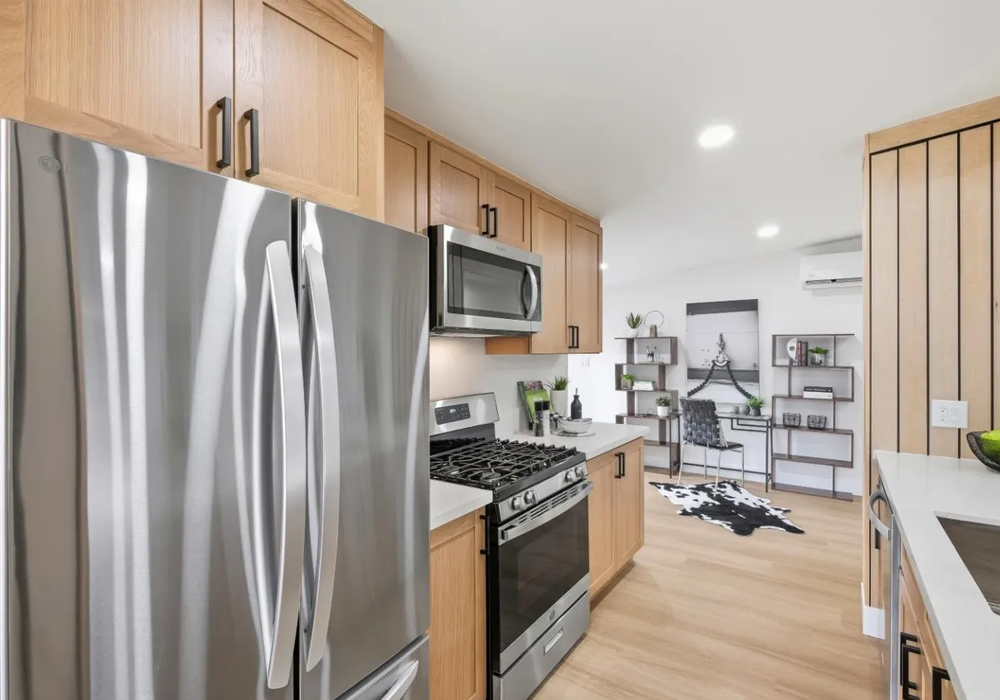
One of the easiest ways to make a kitchen use less energy is choosing appliances that get more done with less energy. The gold standard is ENERGY STAR® refrigerators, dishwashers, and ranges.
ENERGY STAR® appliances must meet minimum standards for energy efficiency to get their star from the Department of Energy. So, when you buy an ENERGY STAR® appliance, you know it meets a high standard for how little energy it uses. For example, refrigerators must put out 10% less measured energy use than the minimum federal efficiency standards. For some components, like coolers, the minimum is 30%.
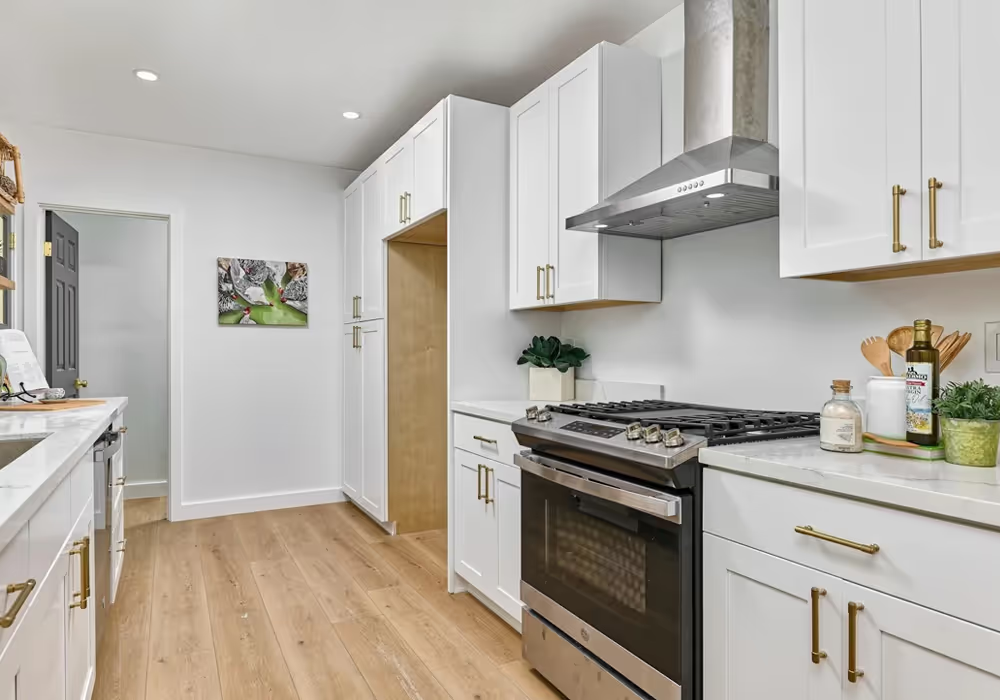
Apart from simply choosing energy-efficient appliances, it is also important to choose more efficient types of appliances and tools. For example, induction cooktops are about three times more efficient than gas ranges, according to the DoE.
Many San Francisco kitchens are relatively small when compared to other locations. So, you may need to reduce your selection to the appliances that fit into your available spaces. ENERGY STAR® appliances are not any larger or smaller by default, except that they cap out at 39 cubic feet. However, you should be aware of any limitations on the type of appliances you’re shopping for.
Smart Kitchen Technology
Smart kitchen technology offers reduced energy usage and more flexible management and usability. For example, instead of relying on manual temperature controls, smart refrigerators can adjust cooling based on factors like:
- Usage patterns
- Volume
- Time of day
Using these factors, smart refrigerators can increase or limit energy usage, avoiding unnecessary waste. Over time, they help you use close to just as much energy as you need for your kitchen to meet your needs. Smart appliance energy monitoring is one of the main drivers of smart home renovations.
Similar features are put to use across your kitchen. For example, smart dishwashers save both energy and water by optimizing cycles to use precisely the amounts needed for each load. Small adjustments over time start to add up and reduce your long-term consumption without changing how often you use your kitchen.
App-controlled, programmable lighting is another feature that enables you to keep your kitchen well-lit, when you need it to be. You can schedule usage, dim output, and turn off the lights remotely. There are also features that change the dimness or brightness of your lights as the day goes on to minimize energy usage when natural light is there.
Smart plugs and energy monitoring tools add another layer. They highlight precisely where energy is being used and help you detect inefficiencies, reduce standby power, and make additional decisions to optimize your kitchen’s energy use.
Lighting & Electrical Improvements That Reduce Energy Use
Lighting accounts for 9% to 10% of residential energy use, according to the U.S. Energy Information Administration. While it isn’t the most significant category, it’s still worth it to take a few simple steps to reduce the energy needed to light your kitchen.
LED & Smart Lighting Solutions
The simplest start is to use bright but efficient LED lighting. Use under-cabinet LED task lighting to get direct, specific utility out of every kWh. Using a layered lighting strategy that combines ambient, task, and accent lighting makes it easier to efficiently light kitchens or any other productive space.
Adding other features, especially smart lighting features, is a final bonus step. Dimmers, motion sensors, and daylight controls maximize the final energy savings that a perfectly designed kitchen can enable.
Maximizing Natural Light
Natural light is the most energy-efficient resource. Once you find a way to let enough of it in, your energy consumption can drop dramatically. Also, even when the current layout isn’t ideal, there are several ways to maximize natural light.
It’s worth it to explore options for increasing natural light in any kitchen. Naturally, this starts with considering window placement and expansion, where applicable.If new windows cannot be added and old windows cannot be expanded, you may have some other options:
- Reflective finishes and surfaces that help natural light travel
- Skylights that let natural light in from directly above
- Solar tubes that transport natural light from outside through the roof or walls
If you’re wondering which natural light solutions are feasible for your San Francisco kitchen, we can help. Reach out to discuss all your options during a kitchen renovation of any size.
{{cta-banner}}
Sustainable Materials That Support Energy Efficiency
Some materials can play a big part in promoting energy efficiency. As a bonus, these same materials are sustainable and often biodegradable, offering unparalleled eco-friendliness.
In this section, we go over the sustainable materials that best increase the energy efficiency of your kitchen, category by category.
Cabinets, Countertops & Surfaces That Improve Efficiency
These surfaces affect indoor temperature and air quality. Making the right material choices promotes energy efficiency, health, safety, and kitchen performance.
Sustainable Material Choices
- FSC-certified wood that supports responsible forestry
- Reclaimed wood that reduces material waste and embodied energy
- Rapidly renewable materials like bamboo
Low-Emission Finishes & Construction
- Low-VOC or zero-VOC paints, stains, and adhesives
- Formaldehyde-free cabinet construction
- Factory-finished cabinetry for better air quality control
Thermal Performance & Durability
- Quartz and engineered stone for long-term durability and minimal replacement
- Recycled glass surfaces that reduce heat absorption and material waste
- Natural stone with high thermal mass to help stabilize indoor temperatures
Design Considerations That Impact Efficiency
- Light-colored surfaces that reflect light and reduce lighting demand
- Durable finishes that reduce the need for frequent replacement
- Seamless surfaces that improve cleanability and long-term usability
Flooring & Wall Finishes
Homes with reflective interior surfaces and finishes can reduce lighting energy use by up to 10–20% by improving how natural and artificial light is distributed throughout a space.
Using reflective interior surfaces and finishes can reduce lighting energy use by 10-20% according to the Department of Energy. These options affect how light is distributed across space and how well climate control works.
Sustainable Flooring Options
- Cork flooring with natural insulation properties
- Bamboo flooring as a renewable, durable alternative to hardwood
- Engineered wood that uses fewer raw materials while maintaining performance
Thermal & Energy Performance
- Tile and stone flooring that retain and radiate heat effectively
- Materials that pair well with radiant floor heating systems
- Flooring choices that help maintain consistent indoor temperatures
Wall Finishes & Surface Efficiency
- Low-VOC paints that improve indoor air quality
- Plaster and specialty finishes that help regulate humidity
- Backsplash materials that reflect light and reduce reliance on artificial lighting
Indoor Air Quality & Health
- Non-toxic adhesives and sealants
- Mold- and moisture-resistant materials for longevity
- Finishes that minimize off-gassing in enclosed kitchen spaces
Insulation, Sealing & Hidden Materials
Lastly, there are a few unseen choices that make a significant difference in the energy efficiency of a kitchen, and they are often overlooked. These features prevent unseen, undetected energy loss, increase your HVAC efficiency, and improve the long-term durability and value of your kitchen.
Behind-the-Walls Efficiency
- Wall insulation upgrades during remodels
- Air sealing around cabinets, outlets, and penetrations
- Proper sealing around windows and doors
Moisture & Heat Control
- Vapor barriers where needed
- Materials that prevent heat loss and condensation
- Sealing gaps behind appliances and cabinetry
Designing an Energy-Efficient Kitchen Layout
Layouts increase the energy efficiency of a kitchen in several ways. When a kitchen renovation makes changes to the kitchen layout, there will necessarily be changes to energy use and efficiency. Below, we explain the relationship.
Layout Efficiency
Your kitchen layout determines its energy efficiency by controlling your relationship with appliances and lights, as well as the efficiency with which you’re enabled to complete cooking tasks.
You can reduce wasted steps and appliance overlap with a kitchen remodel that addresses weaknesses in your layout. For example, work triangle optimization and storage planning that minimizes appliance overuse can both decrease the amount of energy your kitchen uses.
Integrated & Custom Design
Integrated and customized designs open up the greatest possibilities for your kitchen in terms of appearance, utility, and energy efficiency. Modern kitchens can be highly efficient, with built-in appliances and cabinetry set up in a way that requires as little energy use for cooking as possible.
A San Francisco kitchen remodel that focuses on energy efficiency will include ventilation planning for efficiency and better indoor air quality. Ultimately, the project will work toward balancing aesthetics with performance.
San Francisco-Specific Codes, Permits & Energy Standards
- Title 24 and CALGreen requirements
- Electrical upgrades for induction and all-electric kitchens
- Permit considerations for lighting, plumbing, and appliance changes
- Working within condo and HOA rules
Building codes, permitting, and energy standards are important parts of kitchen remodeling projects in San Francisco. There are a mix of local and California state regulations that are present and always evolving. Experienced local contractors offer an easier time reaching your goals for your kitchen while consistently meeting these requirements. If you’re aiming for maximum safety and sustainability, you will be aiming to meet and exceed these requirements as a default.
Title 24 and CALGreen requirements set minimum standards for lighting, appliance, and overall energy efficiency. Requirements include high-efficacy lighting, such as LED, in most kitchen applications. In some cases, requirements include compliance documentation or periodic inspections, including during the remodel. CALGreen requirements focus more on water efficiency, material sustainability, and indoor air quality. For example, they encourage:
- Low-VOC materials
- Efficient fixtures
- Waste reduction
Regardless of the specific sustainability targets you set, you will need to meet these minimum requirements. If you aim to create an energy efficient kitchen, you may even hit all of the minimum targets by default. However, you need to be aware of all of the requirements and work with a contractor or design team that knows how to ensure they are seamlessly accounted for.
Then, there are also permit considerations for lighting, plumbing, and appliance changes. During the planning phase, it’s important to review all the changes you want and break down the permitting regulations and fees so you understand the full scope of the project you’re starting.
Throughout California, Homeowners’ association rules are also often a major part of remodeling projects. Local contractors familiar with your HOA may be very helpful working within their regulations. The same can be said about contractors experienced in local condo communities. In the latter case, you may have additional rules about electrical or plumbing work on top of existing permitting, Title 24, and CALGreen regulations.
Gas to Electric and All-Electric Kitchens
One common San Francisco kitchen remodel goal is moving toward an energy-efficient, all-electric kitchen. In terms of environmental sustainability, homes that change from gas to all-electric kitchens reduce indoor pollution by over 50%, including a 56% reduction in NO2. Gas stoves also add 2.6 million tons of methane to the atmosphere each year, which is the equivalent of about half a million cars.
Remodels that include a gas-to-electric transition offer one of the greatest energy-efficiency and environmentally sustainable boosts you can get. Beyond sustainability benefits, all-electric kitchens are easier to manage and often more efficient. Induction cooktops heat faster and waste less energy than traditional gas ranges. Electric appliances also often integrate with smart home systems and are more likely to meet modern energy standards.
Basically, any move toward an all-electric kitchen:
- Leads to better energy performance
- Makes indoor air cleaner
- Positions your home for long-term marketability
- Prepares your home for long-term energy trends
Cost Ranges for Energy-Efficient Kitchen Upgrades in San Francisco
Now let’s get into the numbers. These ranges are based on analysis of industry reports.
Typical Investment Levels
- Basic energy-efficient upgrades
- Mid-range efficiency-focused remodels
- High-end, all-electric or net-zero-ready kitchens
A kitchen remodel that includes energy-efficient upgrades typically falls between the following ranges depending on the scale and complexity:
Basic energy-efficient remodel: $30,000 to $55,000
These remodels don’t change the existing layout. Instead, basic energy-efficient remodels take a careful and targeted approach. Often, homeowners look for existing weaknesses and make the updates with the highest possible impacts.
Common changes include replacing appliances with new ENERGY STAR® appliances, low-flow fixtures, and upgrades to your finishes. The range is wide because of how many variables there are, but projects at the lower end of this range are still feasible in San Francisco, especially when the layout remains unchanged. For example, a complete induction appliance package normally costs between $4,500 and $5,500, but then you have to consider labor, permitting, and assorted unpredictable costs.
This range follows the national minor kitchen remodel benchmark, but adjusted for San Francisco labor and permitting.
Mid-range energy-efficient remodel: $70,000 to $130,000
Mid-range remodels are typically thorough and include layout changes and complete cabinetry replacements.
A typical mid-range kitchen remodel with an emphasis in energy-efficiency sees costs driven higher by labor and permitting. However, in many cases, the small average kitchen size in San Francisco pushes costs back down closer to or below the national average. This range assumes you will need some mix of:
- Demolition
- Cabinetry and counter replacement
- Multiple appliances replaced
- Electrical work
- Plumbing work
As an example of why the range is so high in San Francisco, consider that with local pricing and materials, the remodel could cost anywhere from $100 to $1,000 per linear foot. With custom, high-quality work and materials it can exceed $1,200.
High-end energy-efficient remodel: $150,000 to $300,000+
High-end energy-efficient kitchen remodels are typically gut remodels that apply premium materials, craftsmanship, and the most efficient appliances.
A high-end energy-efficient San Francisco kitchen remodel will be more expensive than the national average. The time and labor commitment combined with rounds of inspections will necessarily add up faster. However, the energy-efficient part does not necessarily add to the total cost as much as other factors.
High-end, energy-efficient remodels typically include:
- Premium materials
- Custom cabinetry
- Panel and service upgrades
- Induction cooking
- Integrated and smart appliances
- ENERGY STAR® appliances
- Readiness for broader electrification goals
What Impacts Cost the Most
Overall remodel costs generally depend on scope, but three key decisions have an outsized influence on the final cost of your remodel:
- Cabinetry and material choices (25% to 35%)
- Electrical and panel upgrades (15% to 20%)
- Appliance selection (10% to 20%)
First, material choices, particularly for cabinetry and countertops, will be a major determinant of which category your price range falls under.However, even cabinetry and countertops are broken down into their own categories:
- Whether you choose stock, semi-custom, or fully custom
- Material selection
Second, making a kitchen energy-efficient is an investment that often includes necessary electrical upgrades. A transition from an old kitchen to a modern induction-friendly and all-electric kitchen often requires:
- New 240V circuits
- Panel upgrades
- Service changes
Panel upgrades can add thousands of dollars to a budget on their own, but the final cost depends on existing infrastructure and whether trenching or utility coordination are necessary.
Appliance choices can also have a substantial effect on the budget range of your remodel. Refrigerators, stoves, ovens, and dishwashers are major drivers of thorough kitchen remodels. Entry-level ENERGY STAR® or induction cooking appliances are financially accessible for most people, but the higher-end ones are relatively costly.
Beyond the price, be aware that appliances, especially larger ones, often trigger the need for additional work. In small San Francisco kitchens, mismatches between workable space and appliance sizes often drive remodel budgets higher.
ROI & Long-Term Value of Energy-Efficient Kitchens
Energy efficiency is far from being an immediate money-saver, particularly in the context of full remodels. The financial value is often overshadowed by the environmental value. However, there are a few key ways in which an energy-efficient kitchen remodel pays you back both quickly or down the road.
Resale Value
First, the largest long-term returns from energy-efficient kitchen investments comes from increased market appeal and resale value. According to a 2023 Freddie Mac Report, homes with high energy efficiency ratings sell for 3% to 5% more than comparable homes. In California, Green Home certifications are even more valuable, with homes selling for 9% more than comparable homes. A National Association of Realtors survey also found that homebuyers are willing to pay 2% to 3% more for homes that deliver them energy cost savings.
The big picture here is that you gain long-term value. If you plan on living in your home for many years, you save money over time by paying less for energy. Likewise, if you want to sell, you improve your home’s attractiveness to buyers who are thinking of long-term value and willing to pay a premium.
Utility Bill Savings
In San Francisco and California more broadly, the value placed on energy efficiency is higher than the national average. California residential energy rates average 27.04¢ per kWh, the highest of all U.S. states except Hawaii. Green-certified California homes already sold for ~9% more on average according to one University of California / USGBC-backed study.
In practical terms, these factors affect how local homebuyers evaluate homes. NAR reporting reveals a growing share of agents noticing that buyers are prioritizing the operating costs of potential future homes. In San Francisco, where the baseline is already high, energy-efficient kitchens signal the lower long-term costs and the future-prepped homes that many homebuyers are looking for.
While not measurable in financial terms, a lot of the value that energy-efficient kitchens provide is in the form of:
- Improved comfort
- Reduced indoor air pollutants
- Health benefits
- Daily usability
- More pleasant and efficient lighting and ventilation
These specific changes might not all show up in resale value improvements. However, they all play an important role in how your home is experienced over a long period.
The Energy-Efficient Kitchen Remodeling Process
Here, we cover the broad process you can expect from a San Francisco energy-efficient kitchen remodel. The stages of a kitchen remodel include:
- Initial consultation
- Design planning
- Material choices
- Moving and demolition
- Installation and replacement
- Intermittent inspections, where applicable
- Final checks
Initial Consultation and Energy Goals
For an energy-efficient kitchen remodel, the initial consultation focuses on your energy goals and material selection. This is the part where you discuss the current state of your kitchen and the changes and outcomes you want. You will discuss the expected timeline, with an understanding that things may change, especially once demolition starts. However, eco-friendly aspects of kitchen remodel consultations include:
- Design planning and material selection
- Demolition and responsible waste management
- Installation and inspections
Here, we discuss the environmental impacts of each choice, the energy efficiency, the costs you can expect to pay, and approximate projected savings.
Design Planning & Material Choices
The design of and materials in your remodeled kitchen all add up to a new level of energy efficiency. In the planning phase, designers and engineers draft plans aligned with your stated goals from the consultation. The goal during this phase is to make choices that balance all your goals as best as possible. However, during this phase, professionals have to take into account many considerations including:
- Appliance efficiency and sizing
- Layout and workflow efficiency
- Electrical capacity and upgrades
- Lighting placement and efficiency
- Material durability and performance
- Thermal properties of surfaces
- Indoor air quality and emissions
- Water efficiency and plumbing design
- Smart technology integration
- Code and permit requirements
- Budget and cost tradeoffs
- Long-term value and electrification goals
Next, you’ll need to see if you need permits and approval from the SF Department of Building Inspection. If so, it’s necessary to get all permits and approvals before moving forward.
Moving, Demolition, Installation, & Replacement
The heavy lifting parts of a kitchen remodel typically take 6 to 12 weeks, but can take longer in large homes or those with many special considerations. This is the phase where old cabinetry, countertops, flooring, walls, and other features are destroyed and removed to make space for the remodel.
Next, the main build phase takes the longest. This is the phase when:
- New layouts are added
- Electrical and plumbing work is done
- Cabinetry is installed
- Countertops are added
- Flooring is redone
- Painting is completed
The exact duration can vary widely based on scope, delays, and inspection results.
Inspection Cycles
If permits are pulled, inspectors from the Department of Building will need to visit to make sure the work all meets code regulations. Your contractor normally handles meeting requirements and scheduling. If everything goes according to plan, inspections don’t add much time to your energy-efficient kitchen remodel.
Energy efficiency requirements and ratings are harder to achieve in San Francisco but with proper planning and execution they still don’t need to add significantly to the timeline.
Finish Details, Final Work, & Performance Checks
Lastly, there is normally a tail end of any project when the final touches are completed:
- Installing fixtures
- Appliance installation
- Accessory additions
- Thorough cleanups
- Final performance checks
- Last-minute fixes
These are fast tasks that are done after the most intensive work is done and the groundwork is laid. After everything is done, it’s time to clean up and make sure every aspect of your kitchen is functioning as intended. Once that is done, the project is over.
Common Mistakes to Avoid
Keeping your budget and timeline within expectations is sometimes just not possible. However, many delays and extensions stem from common mistakes that you can avoid:
- Prioritizing style over performance
- Oversizing appliances for the space
- Ignoring ventilation and airflow needs
- Underestimating electrical capacity requirements
- Skipping panel or wiring upgrades when needed
- Choosing materials without considering durability
- Overlooking thermal performance of finishes
- Failing to plan for efficient lighting layout
- Not aligning layout with daily usage patterns
- Ignoring water efficiency and plumbing constraints
- Missing permit or code requirements
- Delaying permit approvals or inspections
- Not planning for future electrification needs
- Underestimating costs and contingency needs
Final Thoughts: Building a Smarter Kitchen for the Future
Energy efficiency upgrades are better than most trend-driven designs. The shift toward energy efficiency preferences began years ago and is expected to continue for decades. Global targets for reducing carbon outputs and increasing energy efficiency are almost universally expanding, and are particularly intense in San Francisco and elsewhere in California.
To future-proof your home and prepare for long-term value enhancement, as well as reducing your personal footprint, you can consider energy-efficient kitchen remodeling. In doing so, you are planning for electrification and future energy standards.
Interested? To get the most out of your energy-efficient San Francisco kitchen remodel, reach out to our team…
How much is your home's worth?
Get your personalized estimate today.













Driven by a passion for people and possibility, Paige is focused on helping agents and homeowners leverage their equity to create new opportunities and move into their next chapter with confidence. Known for her thoughtful, relationship-first approach, she brings energy and authenticity to everything she does. A proud dog and boy mom, she also enjoys cooking, singing, and embracing the joy in everyday life