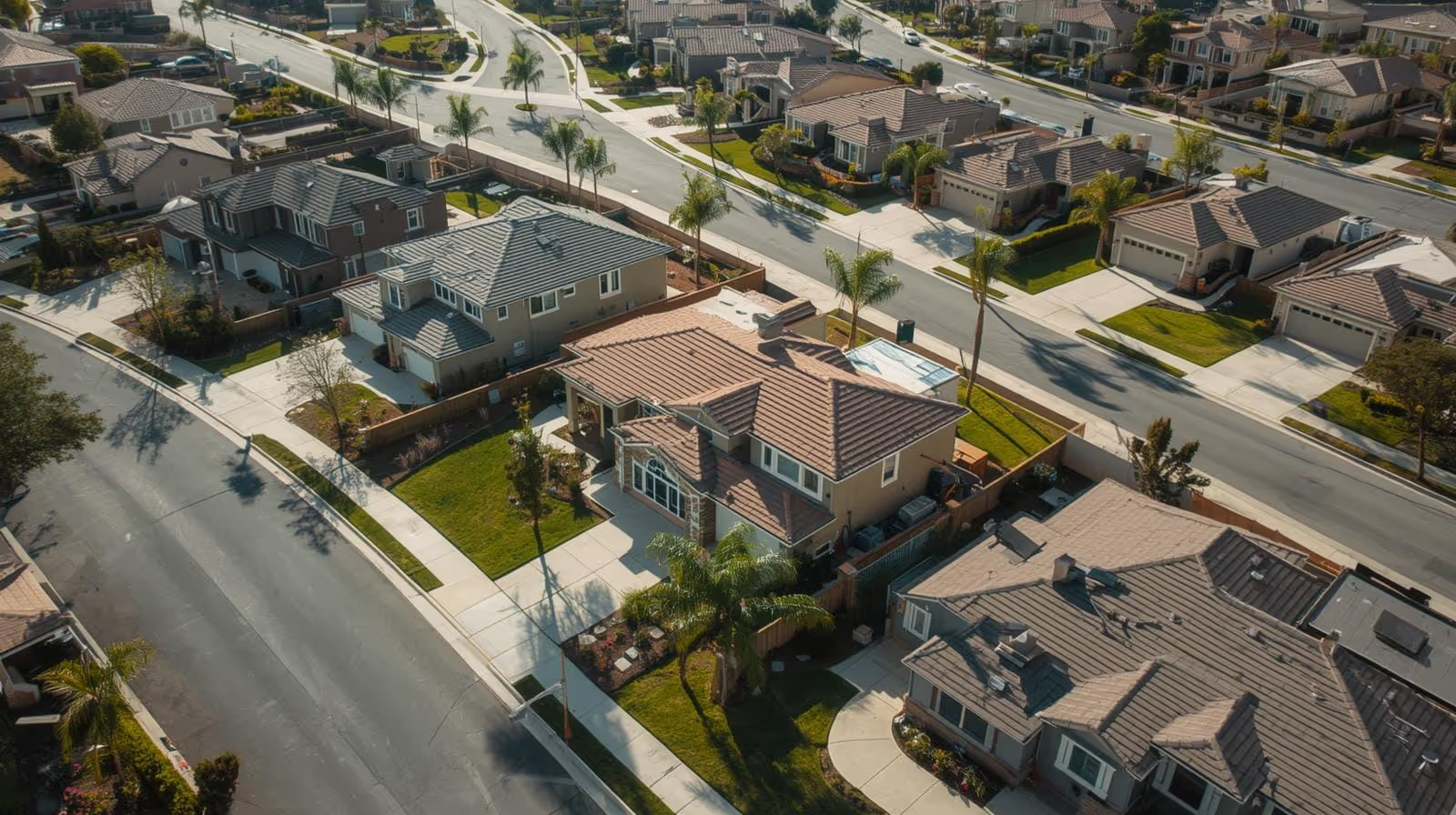
For Orange County homeowners, the challenges with homeowners’ associations are about more than compliance. It’s also a question of how Orange County HOA rules intersect with:
- Long-term equity
- Resale value
- Smart renovation decisions
82% of Orange County residents live in an area covered by one of the county’s 4,927 homeowners’ associations, according to the California Association of Community Managers. Orange County is one of the most HOA-covered real estate markets in the US, well above the national 23% of residents living under an HOA. Even by California standards, Orange County is a major outlier. Local homeowners seek strong protections for their property values and want to maintain high neighborhood standards. Homeowner economic demands led to HOA ubiquity, stricter rules, and the friction that often comes with HOAs.
Orange County is well-known for the exhaustive lists of HOA rules residents regularly face. Orange County residents are mostly living under HOAs, paying higher rates, and following more rules. The median monthly fee in California is $278, while the national median is $135, according to the Census Bureau.
If you are involved in the real estate industry in Orange County, dealing with homeowners’ associations is a simple fact of life. Their rules and remodel approval processes impact everyday decisions for most local residents.
With this in mind, this article will walk you through:
- Orange County homeowners’ association governance and remodeling restrictions
- Common HOA rules you need to be aware of
- Approval processes for remodels
- 2025 California HOA updates
- Common disputes and how to protect your rights
- Tips for smooth application processes
Understanding HOA Governance and Your Remodeling Rights
Let’s start with the common, must-know facts surrounding HOAs and remodeling.
How California HOAs Are Structured
California HOAs are structured as non-profit mutual benefit corporations. They are governed by the Davis-Stirling Act and operate according to their founding documents which normally include CC&Rs and Bylaws. HOAs primarily concern themselves with the maintenance of common areas and enforcement of standards.
For Orange County homeowners, being informed about those HOA standards, California law, renovation goals, and how they all relate helps expand positive renovation choices, equity, and resale outcomes.
HOA decisions are made by a board consisting of elected local homeowners, normally including:
- Officers
- President
- Vice President
- Secretary
- Treasurer
- Committee members appointed by officers for specific tasks
- Management company support
So, a normal HOA board consists of at least 3 officers and a few other support staff. These leaders can then set up committees to handle specific issues. In any case, California HOA boards have several legal responsibilities:
- Act according to the Davis-Stirling Act, California Civil Code Sections 4,000 and above
- Follow a fiduciary responsibility to act in the interest of the HOA and homeowners, not for personal gain
- Attend regular transparent meetings for decision-making, acting on homeowner input
- Enforcement of the local HOA rules and maintaining common areas
- Handling disputes wherever necessary
Homeowner Rights Under California Law
The rights and responsibilities accorded to homeowners’ associations include fiduciary responsibility with transparency to the people they serve. Under California law, homeowners paying dues to a HOA have the rights to:
- Access governing documents upon request
- Fair and consistent rule enforcement (the right to “reasonable decision-making”)
- Timely responses
- Due process prior to fines or penalties
- Transparency around fees and decisions
- Alternative dispute resolution (ADR)
These rights exist to give homeowners clarity, leverage, and protection. You can take advantage of these benefits when making decisions that impact your home and its financial outcomes.
In California, your HOA needs to give you at least 28 days’ notice prior to implementing a new rule or changing a previous one. During that time, homeowners are entitled to submit feedback for the board to consider. If the changes move forward, they will be included in the new HOA documentation.
Key Governing Documents You Must Review
If you plan on making any changes to your property from the time you acquired it, these are the key documents you need to understand in California:
- CC&Rs (Covenants, Conditions & Restrictions)
- Bylaws
- Architectural guidelines
- Rules and regulations
Remember, not all HOA documents are equal from a legal perspective. Some override others, starting with CC&Rs, which generally override other rules or especially any “guidelines”.
Also, keep in mind that HOA rules are subject to change. Even operating rules and architectural guidelines can be changed, including after a recent purchase.
Common HOA Rules That Affect Home Remodels in Orange County
Thinking of a major home remodel?
You’ll need to check your HOA’s specific rules and guidelines to get an idea of the restrictions you’re dealing with. Generally speaking, there are a few remodel tasks that will almost certainly require you to ask for approval.
Exterior Appearance & Facade Changes
Orange County homeowners’ associations often insist on maintaining a neighborhood aesthetic. Their typical argument is that maintaining rules regarding appearances should protect each individual homeowners’ equity. To that end, they may have a few basic guidelines, but in many cases their rules are stringent to the extent that seemingly innocent, minor details can cause serious and costly battles. So, understanding how to approach exterior appearances is one of the most important steps to guarding your investment’s value.
According to 2025 Community Associations Institute (CAI) National Research, 23% of homeowners’ reported violations for exterior design changes.
Most aesthetic HOA rules list restrictions regarding exterior:
- Paint colors
- Roofing materials
- Windows and doors
For example, approved paint palettes may be restricted to specific colors and finishes that meet local design standards. They may also restrict roof types, tile colors, textures, and possibly even installation methods for both aesthetic and durability reasons.
Structural or Layout Modifications
Major structural changes like additions or changes to structural layout are common focuses of HOA rules. In some cases, homeowners try to limit the scopes of remodels to avoid triggering HOA permission or city permit requirements.
In general, you can expect to need approval for any changes including:
- Room additions
- Patio or deck expansions
- Utility modifications (ie. electrical or plumbing)
- Garage conversions (especially in communities with parking rules)
These kinds of changes alter the value of properties and/or change the external appearance of a home. So, it’s typical for Orange County HOA structural change rules to be more detailed and strict.
HOAs are normally less strict about value-adding internal or scarcely-seen improvements like interior smart home features, while they often regulate the external ones. What is seen from the outside and what may (even rarely or arguably) affect others will normally catch their attention and come with restrictions.
Landscaping & Hardscaping Rules
Most landscaping and hardscaping changes are tightly regulated. Some of the main areas of concern include:
- Front-yard design
- Drought-tolerant requirements
- Fencing and retaining walls
Utility, Electrical & Mechanical Upgrades
Most Orange County HOA boards restrict work involving utilities and cite safety, aesthetic, or functional justifications. Some of the most common areas of regulation are:
- Solar panel restrictions
- HVAC placement & noise rules
- Pool equipment and plumbing guidelines
Noise, Construction Hours & Contractor Policies
Lastly, Orange County HOAs regulate the actual processes of undergoing a remodel. To preserve equity and local quality of life, they typically set:
- Working-hour limits
- Noise thresholds and equipment use restrictions
- Contractor licensing and insurance requirements
- Signage and advertising restrictions
- Site access and parking rules
- Debris removal and litter regulations
- Security deposit or construction bond requirements
The HOA Approval Process for Remodels
Now that you have an idea of what to expect, you can start the process of submitting a request to your local homeowners’ association. These are not strict or legal instructions. Instead, we want to provide you with a general overview on how to request HOA approval with as little friction as possible.
Step 1 — Pre-Planning the Project
First, start with pre-planning. The more thorough your pre-planning stages go, the less likely you are to experience unexpected delays, costs, or other costly issues.
Start by reviewing your HOA’s CC&Rs. As the most significant and enforceable part of your HOA regulations, the CC&Rs are likely to include the regulations that are most likely to impact your remodel plans. Get a copy and go through it with a highlighter so you can mark all the rules relevant to your planned remodel.
Before moving forward, organize a meeting with the architectural review committee. Your own review of the CC&Rs is a great start, but having the committee actually see and sign off on your plans is a safer way to move forward.
It’s worth noting that your HOA is likely not the only regulatory body that deals with remodels. Check your municipality’s permitting requirements, too.
Basically, the pre-planning stage is where you learn what exactly requires approval and what doesn’t. This is also the best time to make any changes so you don’t end up committing to anything that will be interfered with later. Pre-planning is ultimately about protecting your time, budget, and long-term value by avoiding preventable setbacks later.
Step 2 — Submitting an Architectural Application
When you’ve completed the pre-planning stage, you can move forward to penning an architectural application. To submit a formal architectural application, you will need:
- Detailed project description and scope
- Drawings with measurements
- Samples
- Permits
- Contractor information
This list is non-exhaustive. A lot can go into an architectural application.
Step 3 — Waiting for Approval
There are no Orange County timeline requirements, but HOA review deadlines are common in California. The process is typically about 30 days, but sometimes takes longer. It is uncommon for their response to take more than 60 days. As a rule, the more complex your proposed remodel, the longer it should take for a response.
After you’ve submitted your application, you must simply wait for approval or denial. Under California law, there has to be a reason for an HOA to deny an application, and arbitrary reasons without explanation don’t qualify.
For an Orange County HOA to deny an architectural application, they must cite something like:
- A violation of the CC&R or architectural guidelines
- Inconsistency with community standards, with an explanation
- Safety, structural, or common-area issues
- A lack of necessary documentation or permits
Step 4 — Managing the Remodel After Approval
Once you’ve been approved, your responsibility is to simply complete the remodel as laid out in the approved architecture application. Post-approval remodel management simply entails:
- Following the approved plans
- Adhering to inspections
- Avoiding fines or violations
2025 California HOA Law Updates That Impact Remodels
There have been some changes to California HOA regulations in 2025 that may affect your experience asking for HOA permission for remodeling.
Assembly Bill 2159 (Electronic Voting)
While Assembly Bill 2159 became effective on January 1st, 2025, affecting the internal governance of in-state HOAs. AB 2159 does not target HOA approval processes directly, but it may indirectly affect some of them.
Assembly Bill 2159 simply allows HOA boards to conduct most secret ballot elections electronically. It enables using secure electronic voting which may lead to approval timelines for remodel requests and other issues speeding up. However, it does not affect architectural review processes or requirements.
Assembly Bill 2460 (Election Quorums)
Assembly Bill 2460 came into effect in January 2025, simplifying the process for HOAs to hold board member elections. It specifically targets issues that come up when initial meetings fail to meet quorum requirements.
The key provisions of AB 2460 ensure more consistent board management, which may avoid some delays in decision-making.
Senate Bill 900 (Utility Interruptions & Emergency Funding)
Senate Bill 900 became effective on January 1st, 2025, bringing changes to utility repair and emergency responsibilities. SB 900 simply provides more flexibility for funding shared emergency utility repairs. In some specific cases where SB 900 streamlines utility repair and replacement, project timelines may be faster.
Assembly Bill 2114 (Balcony Inspection Requirements)
Assembly Bill 2114 came into effect on July 15th, 2024, expanding the list of professionals who can inspect exterior elevated elements. That means AB 2114 makes it easier and faster to perform required balcony, deck, and elevated walkway inspections. This change only affects communities with multi-story homes or townhouses.
Assembly Bill 572 (Assessment Caps for Affordable Units)
Assembly Bill 572 came into effect on January 1st, 2025. The bill concerns new common interest developments. So, AB 572 is rarely applicable, but still relevant to mixed-income Orange County communities.
Common HOA Disputes Related to Remodels
Even with thorough preparation, Orange County is still known for more deeply involved homeowners’ associations. So, be ready to mentally prepare yourself for the possibility of common HOA disputes during remodels so you can:
- Stay in control
- Protect your home equity
- Make decisions based on outcomes and not on frustrations
Architectural Control Disputes
An HOA can deny a remodel based on safety concerns or violations of their documented rules. However, there are cases of disputes where HOA board decisions appear inconsistent or subjective. This simple category of architectural control disputes can slow down your remodel, even when you try hard to be well-prepared.
Most architectural control disputes fall into one of the following categories:
- Conflicting interpretation of the guidelines
- Design standard disputes
- Selective approval decisions
Assessment & Fee Disputes
After approval, unexpected assessment and fee disputes can slow down the remodel. For example, a project can be clear cut, but the board may then have reservations based on special assessments for community-impact projects.
In other cases, the main concern would be if the need for changes arises. Cases like these or others may lead to a dispute with your HOA.
Neighbor Disputes Triggered by Remodels
One of the most common reasons for disputes once a remodel has been started is a complaint from a neighbor. Remodels may cause issues for neighbors, with most concerns surrounding:
- Noise
- Access
- Property line concerns
Most issues like this can be avoided in the pre-planning stage. However, neighbors being annoyed isn’t always avoidable. For example, the remodel may only be worked on during the day but a neighbor still gets annoyed. Oftentimes, this leads neighbors to look for a CC&R violation to use against you.
Breach of CC&Rs
A breach of the CC&Rs occurs whenever any of the HOA’s governing documents are violated. Most of the time, violations are not major or intentional. Most HOA disputes are the result of small oversights that are discovered during or after a remodel.
Some of the ways to avoid breaching CC&Rs and facing HOA disputes are:
- Only starting work after you’ve received written HOA approval
- Submitting plans that provide adequate leeway to not have to deviate from them
- Following construction/noise hour restrictions closely
- Ensuring contractors are not working on or damaging common areas
- Ensuring inspections and final sign-offs are acquired
- Open ongoing communication with the HOA during construction
Understanding how CC&R breaches happen can help you to protect your investment, avoid fines or work stoppages, and complete the remodel without unnecessary setbacks.
What to Do If You Disagree With the HOA’s Decision
It’s often the case that you’ve done everything by the book, to the best of your ability, but your HOA board decides you’ve made a mistake. However, their denials, conditions, or other enforcement actions are not necessarily final.
California law provides homeowners with options for seeking clarity or requesting a change in their decision.
Request Clarification or Reconsideration
When your remodel application is denied despite your best efforts to follow the rules, the first step is to ask for clarification. Most disputes between homeowners and HOAs stem from a lack of clarity. Unspecific guidelines, misinterpretations, and missing documentation can lead to abrupt denials.
To write a polite and formal appeal:
- Be specific and professional throughout
- Reference the exact rule or guideline of the CC&Rs applicable to your request
- If applicable, include revised plans, photos, and other supporting materials
- If available, refer to other similar projects in the HOA’s jurisdiction
The idea is to not appear to be arguing for personal preferences, but instead align yourself with the HOA board’s stated mission.
If clarification doesn’t resolve the issue, you can request a meeting with the HOA board or architectural review committee. While it’s not guaranteed to work, meeting with the decision-makers can be helpful when:
- Their denial appears inconsistent with prior approvals
- Their guidelines are subjective or unclear
- Additional context or explanation could help resolve concerns
Mediation & Dispute Resolution
Sometimes, the polite and informal requests for clarification or reconsideration will not work in your favor. However, California’s Alternative Dispute Resolution (ADR) is an encouraged and often-necessary path. The ADR process is designed to save time and money, helping you and your HOA avoid troublesome legal battles.
Under California law, you and your HOA must undergo an accepted form of ADR before a lawsuit is permitted. The State of California prefers these methods for conflict resolution, and they present less costly alternatives to lawsuits. Disputes over remodels often lead to ADR, allowing homeowners and HOAs to protect their interests at a lower cost.
The two most common ADR options are mediation and arbitration.
Mediation brings in a neutral third party to facilitate meaningful discussion and find an acceptable solution. The mediator is a volunteer who cannot make a binding decision, and their role is meant to be collaborative.
Arbitration is more formal, but still calls in a neutral third party. The arbitrator reviews the dispute, considering both the CC&Rs and the specifics of the disagreement with the homeowner. Depending on the specifics of the ADR agreement, the arbitrator may force a binding decision. Because of this formality and more aggressive approach, arbitration is normally faster and cheaper.
In many cases, mediation is the first step and arbitration comes second. In some cases, disputes between HOAs and homeowners still drag on, leading to escalation.
When Legal Counsel Is Appropriate
The next step during escalation with an HOA is professional legal counsel. This is never the ideal option, as it’s costly, time-consuming and sometimes mentally draining. The goal here is to preserve your clarity and resolution while you choose the path that best supports your financial and personal priorities.
However, seeking legal counsel can be appropriate when California state laws clearly override your HOA rules and previous mediators’ decisions.
In general, legal counsel is more likely to be useful if:
- The HOA’s decision appears to conflict with California law
- The association refuses to follow its own governing documents or required procedures
- Repeated attempts at clarification or mediation have failed
- The dispute involves significant financial impact or long-term property rights
Orange County HOA attorneys can help you navigate any discrepancies related to these issues. They can ultimately determine whether your HOA’s position is legally defensible.
Sometimes, you may have a clear case where California law overrides anything decided by your HOA and intermediaries. For example, according to California’s Solar Rights Act (Civil Code § 714), HOAs cannot prohibit solar energy systems without additional justification. This is a rare type of situation, but it can make legal escalation less burdensome for you.
Many cases are not so clear. So, a cost-benefit analysis is the best way to start approaching whether to seek continued legal counsel.
Tips for a Smooth Remodel Approval in Orange County Communities
These are the ways that homeowners can maximize their chances of smooth remodel requests.
Start Communication Early
The best way to ensure as smooth communication as you can is to start communication early.
Contact the architectural review committee (ARC) before drafting plans. That way you can discuss your overall goals and get input that can help avoid a dispute.
The goal of early communication is to identify potential hang-ups in advance. Many HOAs are notoriously bureaucratic, so pre-screening yourself can sometimes save you from the worst potential outcomes.
Work With HOA-Friendly Contractors
Local residents in Orange County often face confusing situations when dealing with their local HOAs. Living in an area doesn’t normally make it easy to handle HOA rules. However, many contractors have specific experience working within HOA and California state regulations.
One of the easiest ways to ensure a smoother HOA approval process is to work with contractors who understand the approval processes and work-hour regulations.
Follow the Paper Trail
Remember to always keep copies of all submissions, approvals, and emails. You may need them as evidence for mediation or if the situation escalates.
Know Which Projects Typically Get Approved Easily
It’s easier to know how the remodel approval will go when you understand the types of changes that get approved more easily:
- Cosmetic updates that match neighborhood aesthetics
- Like-for-like replacements
- Energy-efficient upgrades
Navigate Your Homeowner’s Association Rules For a Seamless Remodel
Navigating homeowners’ association rules doesn’t need to be stressful or overwhelming. You can make HOA rules easier to deal with by understanding the CC&Rs relevant to your remodel and learning about where your rights begin and end.
Looking ahead to your approval process helps you avoid delays and unexpected costs or disputes. You can start your remodel in a stronger position to communicate with your HOA in a way that addresses any concerns. With the right preparation, OC homeowners can remodel confidently and compliantly.
Considering a remodel in Orange County?
Revive Real Estate helps homeowners make value-driven decisions that maximize your equity and net you the highest price on a house sale. We understand the finer details of working with OC homeowners’ associations and can help you achieve the best possible outcome for your home.
How much is your home's worth?
Get your personalized estimate today.















Michael Alladawi, CEO & Founder of Revive Real Estate, is a Southern California real estate veteran with a proven track record as a builder, investor, and respected home flipper. Michael created Revive Real Estate to share his industry knowledge and help homeowners maximize their profits when selling their homes. Michael’s passion for his work is as big as his desire to create lasting partnerships. For Michael, it all comes down to how much value one offers, both in business and life relationships.