Bathroom renovations are one of the most common upgrades homeowners make. The difference between a cosmetic update and a strategic one can mean tens of thousands in resale value.
Japandi bathroom design blends Japanese minimalism with Scandinavian warmth to create spaces that feel calm, intentional, and timeless. Beyond aesthetics, this style supports what homeowners care about most: long-term value.
In this guide, we break down the principles behind Japandi bathrooms, from layout and materials to color palettes and storage. More importantly, we explore how thoughtful design choices can elevate daily living while protecting resale potential. When approached strategically, a bathroom renovation can become a meaningful wealth-building lever.
If you are renovating, do it with clarity. Design should feel good and make financial sense.
Origins and Philosophy of Japandi Design
Japandi is effective because it blends restraint and warmth in a way that feels intentional rather than trendy. It combines Japanese minimalism, rooted in simplicity and imperfection, with Scandinavian functionality and comfort.
Because it prioritizes simplicity, Japandi adapts well to a range of home conditions without requiring excessive structural changes. That flexibility makes it a practical choice for homeowners looking to improve a space strategically rather than overinvest in cosmetic upgrades.
At its core, Japandi emphasizes natural materials, restrained color palettes, and purposeful layouts. These choices support daily functionality while maintaining broad market appeal. An uncluttered design does more than create visual calm. It improves usability today and strengthens resale positioning tomorrow.
Core Japandi Bathroom Design Principles
One common misconception is that achieving Japandi design means having lots of "blank" spaces in your bathroom. While openness and a lack of clutter are important elements of achieving Japandi, the goal isn't to create a bare space.
Minimalism With Warmth: Clean lines, open spaces, and an uncluttered look
Japandi showcases what minimalism looks like when a space is intentionally designed. Keep the idea of "clarity of mind" at the forefront as you explore Japandi-inspired layouts. What sets Japandi apart from pure minimalism is that a space should be "filled" with clean lines and open areas as design elements, rather than actual clutter. When done properly, Japandi suits your life by putting everything that you need in an accessible space that's both easy to reach and out of the way.
Natural Materials: Wood, stone, bamboo, handmade tiles
Japandi draws heavily on natural elements. Vanities and built-in shelving are often made from natural wood or bamboo. Countertops are designed with natural stone that catches the light. For flooring, popular options include wood floors and wood-look tiles, which create a neutral space.
Neutral Color Palettes: Soft whites, beiges, grays, muted greens, and warm earthy tones
While color has its place in Japandi design, it's never the star. There's real art to this design concept in creating pops of color that don't disrupt the space or create a jarring effect. Think vanities made from bamboo finished in light wood tones, soft-white stone countertops, gold faucets, beige artwork, muted-green accent pieces, and sprinklings of warm, earthy tones when needed.
Neutral, timeless palettes are the best colors for selling because they allow buyers to imagine themselves in the space. Highly personalized finishes can narrow appeal and reduce competitive bidding.
Sustainable Choices: Eco-friendly, long-lasting materials and conscious consumption
Japandi is the home designer's answer to disposable, quick-build culture. In addition to being a physical and mental oasis, a Japandi bathroom is a statement of value. This is why it's important to prioritize eco-friendly, durable materials over convenience or trends. Go timeless over trendy when designing for this aesthetic. Timeless materials and durable finishes not only age better visually, they protect your renovation investment by reducing the likelihood of costly updates before resale.
Durable materials are not just environmentally responsible. They reduce the likelihood of costly updates before resale. That protects your return and keeps renovation dollars working longer.
If you are unsure which upgrades drive the highest return, start with data. Explore how Revive evaluates renovation ROI before you finalize your scope.
Functional Elegance: Combining beauty and utility in every fixture and feature
Nothing in Japandi is done just for chasing an aesthetic. Every choice and placement has a purpose. For this reason, it's usually recommended to work with a professional bathroom designer who understands how to make the best use of space. For example, a built-in bench used for relaxing or grooming can include storage elements to make it more purposeful. A large mirror over the vanity may have built-in lighting that illuminates the space without cluttering the wall with a fixture.
Japandi Bathroom Layout and Spatial Elements
Well-planned layouts influence how buyers experience the space during showings. Bathrooms that feel open, organized, and easy to navigate create a stronger first impression and reduce perceived renovation risk. When buyers feel confident about condition and functionality, they are more likely to compete.
Japandi principles can be applied in bathrooms of nearly any size, from 5,000-square-foot homes to condo bathroom renovations. Whether you're applying Japandi to a bathroom renovation connected to your primary bedroom or you'd like to make your home's guest bathroom more organized and inviting, it's easy to incorporate signature elements into any space.
1. Open, Clutter-Free Layouts: Streamlined furniture and practical zoning
Japandi bathrooms derive their character from textures rather than features. This means you're keeping spaces open and clear while using neutral-colored tiles or subtle wallpaper to create visual interest. Planning a Japandi bathroom takes time because this seemingly simple concept requires careful zoning of elements used together. Placement of items such as tubs, showers, vanities, towel racks, and storage ensures a natural flow from one space to the next without awkwardness.
2. Natural Light and Airiness: Large windows, skylights, and semi-opaque partitions
While Japandi prizes openness, it isn't actually aligned fully with open-concept trends. Your ability to incorporate Japandi principles, such as natural light and clear partitions, will vary based on the size and placement of the bathroom you're remodeling or adding to your home. However, the general concept is using natural light from large windows and skylights as much as possible. In larger bathrooms that require zoning for areas such as the tub and toilet, semi-opaque partitions made from glass or renewable materials help create privacy and visual separation without closing off one area from another.
3. Smart Storage Solutions: Floating vanities, hidden cabinets, and niches
One theme we often see in Japandi is the floating vanity. Floating vanities are effective because they provide storage and countertop space while maintaining an open, airy look. Many people also prefer floating vanities because they are easier to clean and maintain than vanities that extend to the floor. Of course, you may lose a few inches of cabinet space with a floating vanity. Fortunately, Japandi's heavy use of features such as hidden cabinets and built-in niches helps create extra storage. The best part of spreading out your storage is that you can place items where you need them, rather than centralizing everything in your main vanity.
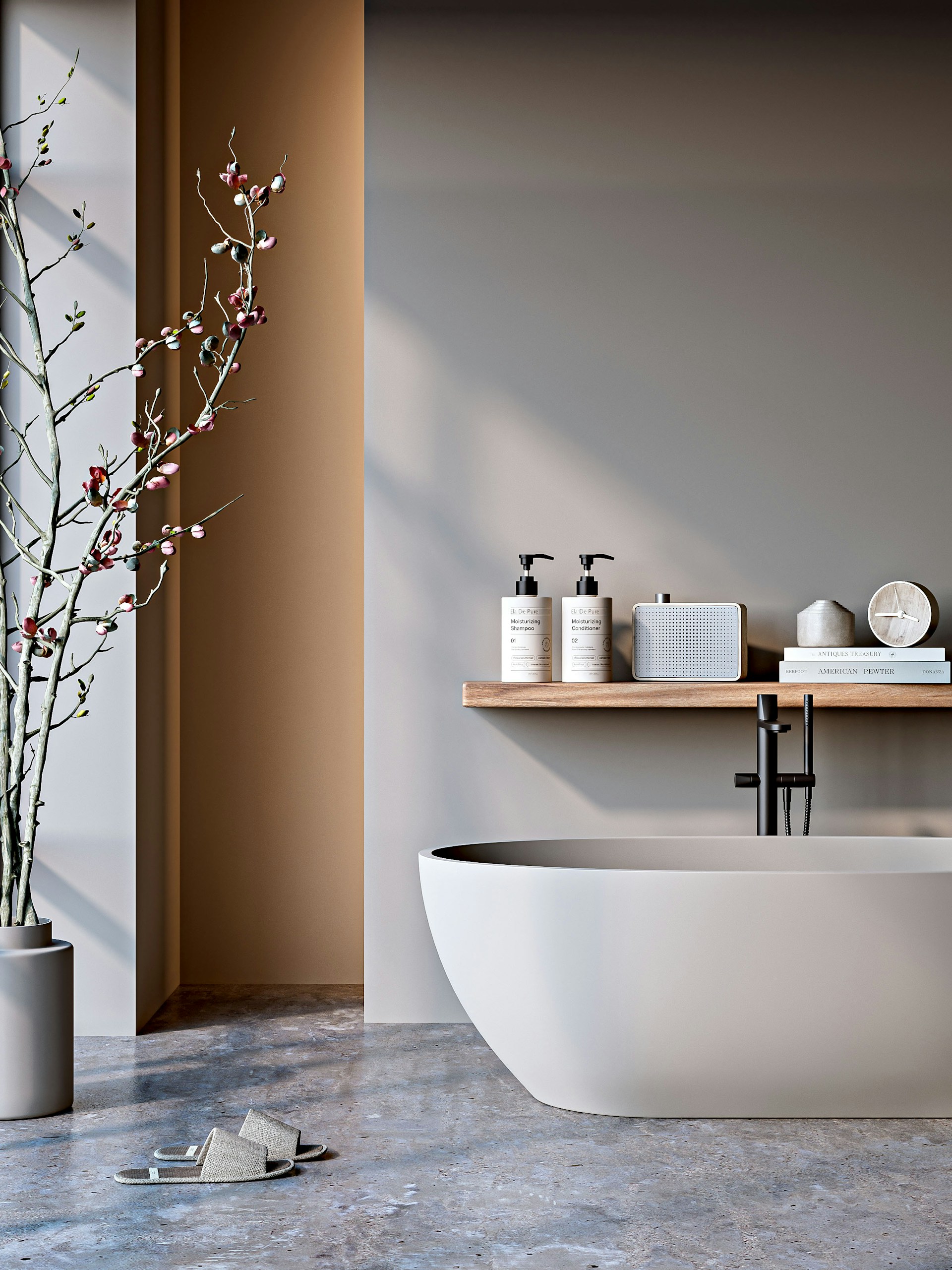
4. Freestanding Bathtubs and Wet Areas: A central feature for relaxation
Japandi design often incorporates features that elevate perceived luxury, such as freestanding tubs and open wet areas. These elements can increase buyer interest when aligned with neighborhood expectations and home value tiers.
A freestanding tub can reposition a bathroom visually and competitively. However, it should be proportionate to the space and justified by projected resale impact. In mid-tier markets, this upgrade can strengthen appeal. In entry-level markets, it may not produce proportional return.
Wet rooms and curbless showers are also considered premium upgrades in many areas. Because they require extensive waterproofing and structural planning, they should be evaluated carefully against your after-repair value and renovation budget.
Common wet area components include:
- Moisture-resistant flooring such as tile or sealed concrete
- Curbless shower entry with proper drainage slope
- Frameless glass partitions
- Built-in shelving for functionality
- Optional sauna integration in higher-value homes
Before committing to high-impact upgrades like wet rooms or freestanding tubs, understand how those features influence your home’s projected resale value. The right renovation strategy starts with clarity around scope, budget, and return.
Explore how Revive helps homeowners evaluate renovation potential before making design decisions.
5. Low-Profile Fixtures: Vanities and seating with a grounded, zen feel
It's important to remember that Japandi bathroom design is focused on "quiet" luxury. No single element in the bathroom is intended to be a standout feature. In practice, this looks like slim, low-profile vanity and seating with simple edges and profiles. The goal is a very grounded look that creates a "zen" feel. Japandi works because it balances warmth with restraint. That combination appeals to a wide range of buyers while aging gracefully over time.
6. Materials, Fixtures and Finishes
Buyers tend to gravitate toward finishes that feel timeless rather than highly customized. When a bathroom reflects current design standards without leaning into short-lived trends, it reduces hesitation and strengthens perceived move-in readiness.
While there are no hard rules when it comes to sourcing materials, there are some basic themes to follow based on whether you want to skew more heavily toward the Japanese influence or Scandinavian influence. These are the simple rules:
- Skewing Toward Japanese: Cedar, hinoki (cypress), and Japanese red pine.
- Skewing Toward Scandinavian: Blonder woods like ash, beech, oak, birch and pine.
There's also quite a bit of freedom for personal taste within the Japandi framework. As you create a cohesive bathroom, these are some of the design elements that require personal choices:
- Stone and Ceramic Accents: It's acceptable to mix and match textures and shades with Japandi as long as you're striving for a cohesive palette. For a seamless look, tadelakt is commonly used for hygienic surfaces like walls and showers. Tadelakt is a seamless and waterproof lime-based plaster imported from Morocco. Other wall and surface materials commonly used in Japandi bathrooms include porcelain, travertine, and marble.
- Glass Features: In keeping with the open-concept Japandi aesthetic, frameless showers and dividers delineate spaces while maintaining flow and transparency.
- Matte and Textured Finishes: In general, glossy finishes and other modern bathroom tile trends are swapped for more textured or flat finishes with a soft, organic feel. Matte and textured finishes also better convey natural warmth than glossier surfaces, which can create a colder, more sterile look.
- Handcrafted Touches: The finer details are crucial to Japandi. By sourcing strategic and purposeful artisanal decor and integrating very subtle geometric or nature-inspired patterns, homeowners can tie a bathroom together in an uncluttered way.
Before selecting tile, fixtures, or layout changes, clarify your home’s current value and projected after-renovation value. High-impact upgrades should align with neighborhood price ceilings and buyer expectations in your specific market.
Design choices are most effective when guided by data. When you understand the financial upside first, you can renovate with confidence instead of assumption.
Color and Texture
Another exciting part of Japandi for homeowners who enjoy adding self-expression to their projects is that this design school gives you plenty of room to customize your color palette. Here's a very simplistic look at the "rulebook" for achieving different Japandi color palettes:
- Light Japandi Palettes: Use soft whites, pale grays, and pastels to create a serene space with very little visual noise.
- Dark Japandi Palettes: For a richer, more intimate ambiance, utilize rich browns, navy, and charcoal.
- Layered Textures: Pepper in strategic accessories like towels and rugs with woven or subtly plush textures. Curtains and other textiles made from cotton and bamboo wrap the room in warmth and comfort with creating a heavy, stifling effect.
- Subtle Contrasts: Unlike traditional bathrooms that might use opposing colors to make a statement, Japandi bathrooms incorporate different textures and monochromatic accents for depth that never feels jarring.
Styling and Decor Ideas
Japandi styling is restrained. A few intentional elements complete the space without overwhelming it. Focus on functionality first, then add subtle accents that reinforce cohesion. Here are popular Japandi design trends to finish with:
- Minimalist Decor: Add a few small, subtle accessories that have an appropriate place in the bathroom. This can include things like soap dispensers, toothbrush holders, and towel racks.
- Plants and Greenery: Add easy-to-maintain greenery like a snake plant or succulents. Hanging baskets can create a subtle "canopy" effect when placed just above eye level.
- Statement Lighting: Don't miss an opportunity to make a statement with lighting. Bar lighting and LED pendants can provide lighting around mirrors. For mood lighting, consider washi paperlamps.
- Zen Touches: When possible, add zen touches that speak to the spa theme you're trying to create. Consider a water feature that brings the sensory experience of a waterfall to a bathroom wall. Dimmable lighting is important for setting the tone of the atmosphere at different times.
- Art and Accents: Strategically place minimalist, abstract art on the walls of the bathroom. Consider art with water lilies, fish, and similar elements that bring "flow" to the bathroom.
Creating Your Custom Japandi Bathroom
A bathroom renovation is not just a design upgrade. It is a capital decision that should align with your home’s value, your neighborhood standards, and your long-term goals. If you are considering a renovation, don’t rely on guesswork. Understand what upgrades drive value, what buyers respond to, and how to approach the project strategically.
At Revive, we help homeowners evaluate renovation potential with clear data, transparent guidance, and smart planning. See how a Japandi-inspired bathroom could impact your home’s value and make a renovation decision with confidence. The future starts at home.
How much is your home's worth?
Get your personalized estimate today.



Jonathan Salas brings a wealth of experience to Revive, having started in real estate in 2007 and later founding Above Media in 2012. His expertise in real estate marketing and innovative technology has helped Revive since year one. As Head of Sales, Jon helps homeowners and agents navigate the challenging world of renovations.