Valued at $127.8 to $134 billion in 2024, the smart home market is becoming one of the fastest-growing subsets of the real estate market. Grand View Research projects growth to $537.27 billion by 2030, and other studies project growth to as much as $1.03 trillion by 2035. So, why does smart home technology matter so much more now?
Many millennials are entering or are already in their prime homebuying years. While delayed when compared to previous generations, they are bringing new logic and values when purchasing homes. According to Vivent’s How We Home survey, 96% of Gen Z and 93% of millennials have at least one smart home device. For many buyers in these demographics, smart home features are no longer just optional upgrades.
In addition to smart home devices being almost ubiquitous among the young, older age groups also report higher rates of smart device adoption.
Various surveys have asked why so many people are pushing the smart home trend forward. The answers all point to similar motivations:
- Convenience
- Security
- Energy and cost savings
In this guide, we break down:
- How smart home technology is evolving
- Why it matters more to homeowners today
- What comes next
As always, we connect the trends to what matters most, which is how your home:
- Supports your lifestyle
- Protects your financial security
- Helps you unlock long-term equity and resale potential
The Evolution of Smart Home Technology
Here’s a brief overview of how smart home technology has risen from a niche luxury to a growing necessity. This section looks at:
- How the shift to smart home technology happened
- What drove adoption
- Why it matters for homeowners planning remodels today
From Convenience to Necessity
Some historians point to early devices like the ECHO IV and kitchen computers from the 1960s, while some cite even earlier inventions as the first smart home innovations. However, the modern smart devices referred to in market size statistics are the connected devices that started taking root in the early 2010s.
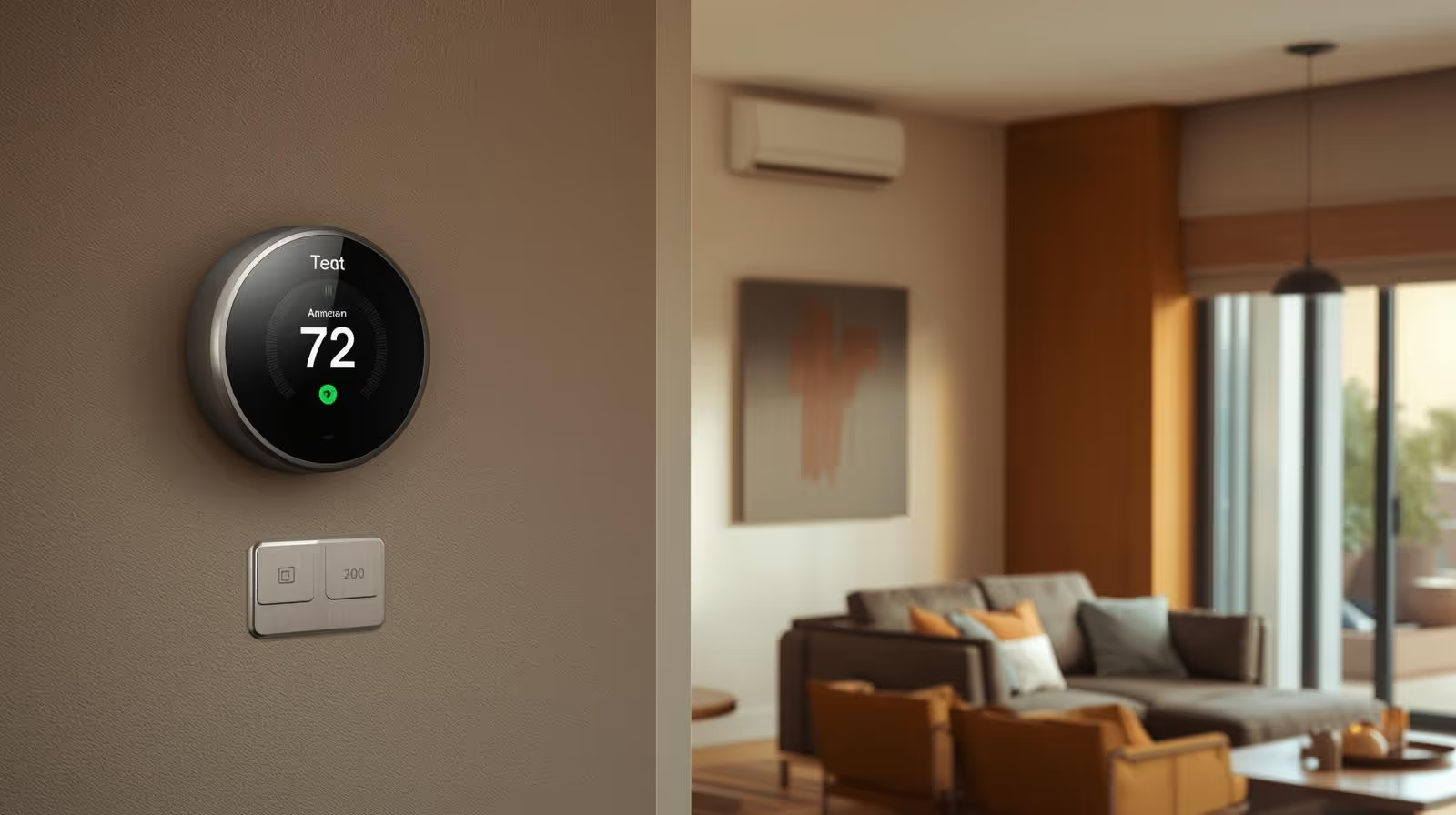
Our understanding of “modern” and “smart” home devices begins with devices like the Nest Learning Thermostat and Siri, both released in 2011. These devices were the pioneers of app-controlled climate control and integrated voice control entering the mainstream. At the time, they were viewed as innovative conveniences rather than essential home features.
Shortly after these major market successes emerged, many new innovations followed:
- Smart programmable LED lighting (2012)
- Smart security cameras (2013)
- Smart locks (2013)
- Consumer Internet of Things (IoT) devices (2013)
- Smart garage openers (2013)
- Voice-controlled smart speakers (2014)
- Smart home hubs/ecosystems (2014)
- Smart irrigation and water management (2014)
While all of these items offered clear, immediate benefits when they came out, their adoption sped up due to specific forces. The growing consciousness and need for energy efficiency has been one of the biggest drivers of smart home devices.
Greater connectivity through faster internet and ubiquitous access to it is another factor that spurred rapid growth. For example, greater visual and mental awareness of crime and safety concerns helped spur the rise of smart security devices; the ubiquity of smart phones filled in the rest of the formula for an explosion in demand for smart home security solutions.
Lastly, the sheer convenience and control that smart homes offered early on was clear to everyone. Rising disposable incomes combined with the rapid rise of remote work, especially during the COVID pandemic, did the rest.
Today, smart home technology is firmly in a phase of rapid growth and ongoing innovation. New systems are increasingly designed to support how people actually live in their homes.
Key Advancements in Smart Home Technology
A modern “smart home” is a cohesive home system where every important feature and appliance works together for more convenient and efficient living. Most homes are not like this yet, but the average smart home device owner owns 8 different devices according to Parks Associates.
Looking ahead, most modern smart home devices now rely on a combination of:
- Artificial intelligence
- Internet of Things (IoT) sensors
- Voice assistants
These newer smart home features add greater interoperability, efficiency, and accuracy than was previously possible. They go beyond simple remote control, allowing homeowners to give one command and trigger coordinated responses across multiple systems. For example, imagine you make one voice command for “night out” and the home responds immediately:
- A system like Philips Hue dims lighting throughout your house
- Google Nest adjusts your thermostat to energy-saving mode
- Smart locks secure exterior doors
- Your security system goes into night mode
- Window shades close for greater privacy
This kind of comprehensive ecosystem-level response is possible with some setups using platforms like Google Assistant.
5G is another factor advancing the utility of smart home features through greater performance and connectivity. As it becomes more accessible, 5G will make smart homes and other major industry-wide transformations much more useful.
There are also more targeted improvements to individual smart devices like smart thermostats or lighting. For example, modern thermostat systems like Google Nest and Ecobee use learning algorithms to:
- Learn occupancy patterns
- Optimize for comfort
- Make energy usage more efficient
Another key example is smart lighting systems that:
- Adjust lighting levels throughout the day
- Shift color temperature to match different times of day
- Reduce energy waste over time
- Integrate with motion detection and voice controls to make daily use simpler
Innovations like these make it easier to balance financial and ecological sustainability goals with individual comfort needs. With older systems, you could try to strike a balance, but would be more likely to “overshoot” with attempts to save more or maximize comfort. The more modern smart home features make it possible to aim for the best of both worlds: comfortable and sustainable homes.
The Impact of Smart Home Technology on Remodel Design in Orange County
{{request-estimate}}
Enhancing Energy Efficiency
At Revive Real Estate, we’ve been working closely with homeowners navigating this rapidly expanding part of Orange County home remodeling. A big part of why many OC homeowners ask about smart home features is to get the combined value of:
- Long-term equity potential driven by buyer demand for smart-enabled homes
- Cost savings
- Local sustainability benefits
According to a Journal of Energy Engineering and Thermodynamics report, the average energy savings per smart home technology category is approximately:
- Smart thermostats: 20%
- Smart lighting: 30%
- Smart appliances: 25%
- Smart plugs: 15%
- Smart energy monitoring systems: 10%
A report by the American Council for an Energy-Efficient Economy (ACEEE) found that smart thermostats save 8% in heating costs and 10% in cooling costs. Differences in reported savings are often tied to climate, baseline system efficiency, and how devices are used.
Across studies, smart devices consistently show measurable reductions in household energy use.
Typically, smart thermostat systems like Google Nest and Ecobee and smart lighting systems can be integrated with:
- Solar panels
- Battery storage
- Load-shifting technology for better energy management
They monitor energy usage in real time to optimize energy consumption and cost savings.
To sum up the benefits, smart home features:
- Reduce energy usage
- Support environmental sustainability
- Reduce long-term energy costs by between 10% and 30%
- Enhance the potential selling price of your home
- Preserve equity
- Enhance the quality and comfort of your day-to-day life
Improving Home Security and Safety
Integrated smart homes can also offer several security features meant to control access and respond to potential threats. More homes are taking advantage of:
- Smart surveillance cameras with remote viewing
- Facial recognition
- Smart locks
- Real-time threat detection
- Biometric identification
- Integration with monitoring services and emergency alert systems
These security features can normally be integrated with home management systems and viewed from connected smart devices. For example, you can view security camera footage from your phone or receive push notifications for important updates from security applications.
Typical smart home security systems are evolving from passive to active, learning systems. While traditional home security systems include passive monitoring and triggered alarms, smart home security can include proactive threat detection. More advanced systems use AI-driven analytics to identify unusual activity patterns and reduce false alarms.
Smart home security features are some of the easiest to recommend. They enhance your personal safety and can increase the value of your home. Some smart security features may also qualify homeowners for insurance discounts, depending on the provider and system configuration.
Promoting Health and Wellness
Health and wellness features have long been a part of modern homes. Modern smart home systems add greater levels of personalization and responsiveness. You can track wellness metrics from any mobile device with an internet connection, including factors like:
- Air quality
- Sleep patterns
- Stress levels
- Additional health-related indicators
Many wellness features attached to your home are related to your bodily health. So, modern smart home applications integrate with wearable devices that track your personal health. Indoor air and lighting may be adjusted according to wellness metrics taken by wearable devices.
Examples of wellness-enhancing smart home tech include integrated:
- Air purifiers
- Humidity sensors
- Smart lighting sleep settings
- Smart appliances that help manage nutrition and food usage
- Fitness devices
Like other smart home features, wellness-focused systems enhance how homeowners experience their living space. You benefit from a higher overall quality of life, while supporting your home’s equity and long-term value.
Smart Home Features Driving Remodeling Trends in Orange County
These features are shaping how remodels are planned and prioritized across the Orange County market.
Seamless Integration and Interconnectivity
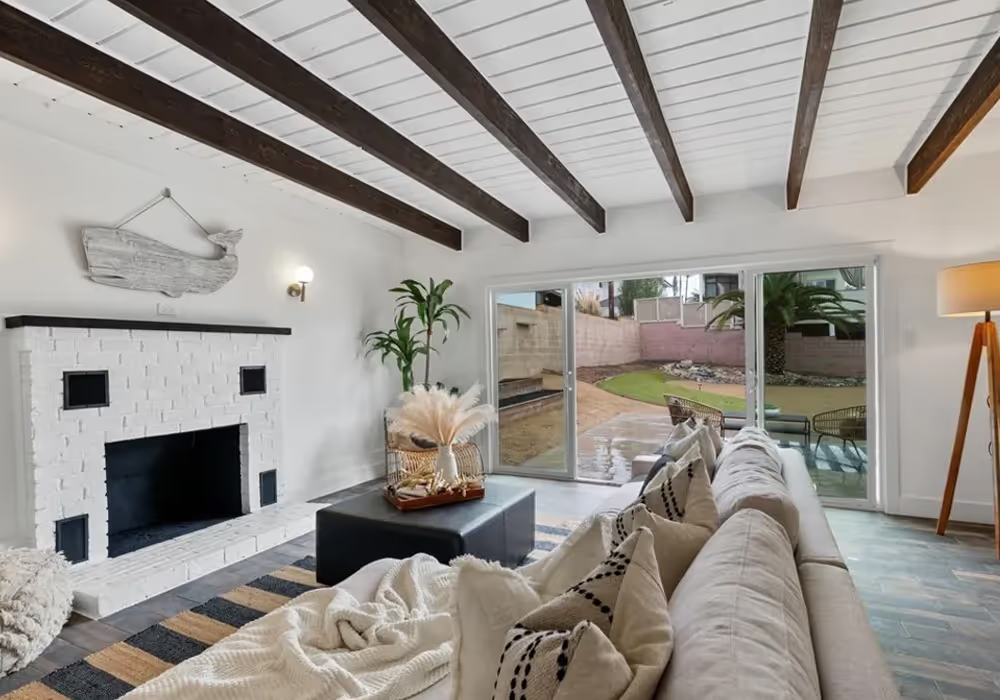
The aspects of smart homes that we see Orange County homeowners valuing the most are the interconnected features that create a cohesive living experience. Younger buyers in particular place a higher value on experiences than they do on things. Smart homes consist of many things, but their value is derived from the experiences they give homeowners, like making a rustic living room feel warmer and more comfortable with the right lighting and temperature settings.
The integrated and interconnected nature of smart homes means that each part of your house is working together as part of a unified system. For example, devices like smart speakers, security cameras, and thermostats work together and can all be managed from the same application.
More homes now have “smart home hubs”. These central command centers are where you can control and automate all of your various systems, reflecting the deeper shifts in how homeowners interact with the places they live. A well-connected smart home gives homeowners clarity, control, and the ability to unlock more value from the space they already own.
Sustainable and Green Remodels
Energy-efficient appliances are very important or extremely important to 70% of homeowners according to a YouGov and homes.com joint survey. As a result, one of the strongest smart home remodeling trends is the integration of efficiency-focused and sustainability-driven systems. Smart tech such as adjustable LED lighting, smart irrigation, and solar panel systems make it possible to get the exact resources you need to run your home, without going over that threshold.
Optimizing systems like air conditioning with smart controls can lead to up to a 65% reduction in greenhouse gas emissions. Similar studies point to a 60+% reduction. Adding smart home tech in remodels helps reduce your carbon footprint and enhances your home’s sustainability while appealing to the sensibilities of homebuyers who overwhelmingly value it.
Voice Control and Accessibility Features
One of the most significant features separating early smart home systems and modern platforms is voice control. You don’t need to walk up to a wall-mounted device to take complete control of your home anymore. Instead, you can use a device or interface to issue spoken commands. Or, with software like Siri or Alexa, you can just say their name and start speaking without having to press any buttons at all.
Voice control is one of the aspects of smart home management that big tech companies have been working the hardest on. Accessibility and user-friendliness have been publicly stated principles of all of these companies for many years now, and voice control plus accessibility features make these goals an increasing daily reality.
Smart homes are all about making comfortable living accessible to everyone. All of the major companies offering smart home technology solutions continuously work to perfect features that make their technology usable to individuals with disabilities. To make these solutions more accessible, they normally include features like:
- Motion-sensing technology
- Voice-activated systems
- Smart lighting schedules and scenes
- Thermostats with voice and app control
- Automated locks
- Video doorbells
- App-based home control dashboards
- Routine-based automation
- Remote access and monitoring
- Smart alerts/notifications
The Financial Impact of Smart Home Technology on Home Remodeling
Smart home features can meaningfully add value to your home. Let’s look at the financial aspects of smart home integration during a remodel.
Return on Investment (ROI) from Smart Home Features
Each smart home feature is designed in part to give homeowners greater efficiency, reducing overall energy use while saving them money. Depending on the quality of the smart device, the savings can be substantial.
Energy Star-certified thermostats can reduce heating and cooling bills by approximately 8%, amounting to roughly $50 per year on average. IoT smart devices have demonstrated stronger ROI potentials, including 15% to 30% energy savings against similar devices in conventional homes. Based on existing energy consumption data, that means IoT residential energy bills in California can save up to $579.09 per year with a perfectly optimized home. On the lower end, that would still represent hundreds of dollars in savings every year.
But what about smart home technologies’ effects on home values?
Zillow consumer survey data reveals that 36% of buyers rate smart home capabilities as “highly important” during their searches. You can assume that a large pool ( ⅓ < ) of potential buyers, most of whom have higher budgets, will show interest in your home. Older Zillow research on eco-friendly features found that homes with smart features sell six to seven days faster than expected on average.
According to the NAR 2025 REALTORS® Residential Sustainability Report, nearly one-third of REALTORS® (31%) identified higher resale value as a key driver of demand for sustainable homes.
While it is difficult to assign precise dollar values to individual smart upgrades, a remodel that includes multiple quality smart home feature additions is well positioned to appeal to a significantly wider pool of potential buyers and convince many of them to make a purchase sooner. Therefore, the data points to higher ROI and selling points when you add smart home features to your home.
Budgeting for Smart Home Remodels
At Revive Real Estate, we regularly sort budgeting questions into 3 broad categories that make sense for those considering home remodels in Orange County. The costs of any kind of remodel can naturally vary from the low thousands of dollars well into the hundreds of thousands. Fortunately, smart home remodels typically fall into more predictable ranges.
At the low-cost level, you can add basic smart home upgrades starting around $1,500 and typically up to $5,000. The more common upgrades include:
- Smart thermostats
- Smart lighting controls
- Video doorbells, mobile alerts, and live video
- Smart locks
- Smart plugs for lamps and small appliances
- Basic voice assistance and hands-free control
- Simple automation routines for climate and light control
The medium-cost range offers more comprehensive smart home systems and individualized solutions for around $5,000 to $20,000. In this wider price range, you can normally implement more complex systems that require a mix of:
- Rewiring
- Panel upgrades
- Custom automation scenes
- Advanced security
- Smart irrigation/water monitoring
- Integration with solar panels and battery storage
- Centralized, appliance-based control
In general, high-end or fully-integrated smart homes start around $20,000 and go higher. For example, combining solar integration with advanced security and system automation can easily exceed this threshold. This is the cost bracket for unified, smart ecosystems with seamless control and interconnectivity. These systems offer you thorough, convenient, and fast control over:
- Lighting
- Climate control
- Energy use
- Security
- Motorized window shades
- Audio and entertainment systems
- Advanced, thorough, and responsive automation routines
- Network infrastructure upgrades to facilitate all of the above
Of course, smart tech upgrades aren’t often the top priority in a remodel. However, they are included in a substantial portion of remodels in many areas. According to a PR Newswire story from 2016, 45% of homeowners add smart technologies that are controlled via a mobile device during remodels. 20% of unrenovated homes have smart technology, vs 51% of remodeled homes. Half of the updates covered in the story are in the sub-$1,500 category.
However, having at least the most basic smart home technology has become a nationwide expectation, especially in high income and home value regions like Orange County. The minimum value of smart tech in those homes surveyed more recently is significantly higher than those studied a decade ago.
One trend that has stayed similar is that, in practice, there is not much of a “middle ground” when it comes to smart home tech. You can get the basics we covered in the first category, as most of the homes with smart tech do. However, not many homeowners spend in moderate ranges, as most that choose to get more than the basics tend to create fully modernized and remotely managed smart homes.
When you’re budgeting for a remodel, you should prioritize based on your personal lifestyle and financial goals. Smart features can add to a home’s financial value, but the changes are normally modest when compared to major bathroom or kitchen renovations, or even to outdoor extensions. So, the best you can do is prioritize the smart tech upgrades within your budget and especially those which you intend to make full use of personally.
As with any other aspects of a remodel budget, you can leverage equity in a smart way for a better chance of maximum returns. Home equity loans are often used to finance all kinds of expenses related to increasing home values and therefore equity.
Overcoming Challenges in Smart Home Integration During Remodels
Smart home integration can face several common challenges during remodels. Here, we cover the common problems and how you can best prepare for and avoid the worst of them.
Choosing the Right Smart Home Tech for Your Remodel
The first step to avoiding challenges is understanding the complexity of integrating different smart home systems. There are some packages approaching what we can call “all-inclusive” systems. However, there are also dozens of different platforms, devices, and integration ecosystems.
The range of individual smart tech solutions also cuts across ecosystems. You may want to mix devices from different ecosystems, or maybe you already have devices from different ecosystems without realizing it for:
- Energy efficiency
- Security
- Health
The main consideration at this stage is ecosystem compatibility. Most smart home devices were designed for specific platforms like:
- Google Assistant
- Amazon Alexa
- Apple Siri
Mixing devices from different ecosystems can work, but this is where much of the complexity typically arises.
Ensuring Compatibility and Interoperability
The solution to potential compatibility and interoperability problems is careful research and advance planning. To reduce risk and avoid unnecessary complications:
- Choose a primary smart home ecosystem early
- Confirm each device’s compatibility before purchasing, especially when you buy products from different manufacturers
- Prioritize products that support open and widely adopted standards such as Zigbee and Matter
- Avoid one-off or proprietary systems wherever possible
- Plan with centralized control in mind and design infrastructure that supports interoperability
- If you’re making one purchase at a time, consider how each new device will fit into future upgrades and additions
Working with Remodel Contractors and Builders
One overlooked part of smart home technology integration is selecting contractors and builders who know how to deal with it. Coordination between tech planning and broader remodeling processes can make a difficult project more manageable and therefore more affordable.
The most important step is to make sure smart home planning is part of the contractor search process early, especially if you’re deciding on a custom vs. pre-designed remodel. Then, it’s important to make sure it’s included in the early conversations with contractors. Many homeowners make the critical mistake of communicating their interests in smart home improvements only after construction begins. But that’s often too late to integrate them into the project without taking a big step back and extending the timeframe and costs.
If you want smart home tech integration in your next remodel, you can do best by:
- Ensuring that your home remodel project includes adequate infrastructure for smart devices, such as wiring and internet connections
- Finding contractors with the experience you need
- Providing clear communication and documentation about your home goals
- Coordinating timelines so smart home goals are aligned with electrical and HVAC work
- Avoiding any one-off decision-making that isn’t part of the broader plan
The Future of Smart Home Technology in Home Remodeling
Where current smart home trends are heading and how they are shaping future remodeling decisions.
Emerging Trends and Innovations in Smart Home Design
The central themes of emerging smart home innovations are the big three acronyms:
- AI (artificial intelligence)
- AR (augmented reality)
- VR (virtual reality)
Below is a closer look at how these technologies are influencing the future of smart home design.
Artificial Intelligence
The main role companies are leveraging AI for is personalization. AI applications learn over time, helping smart home tech optimize experiences day by day. AI also promotes greater automation, another key trend in smart home technology. The focus now is on learning-based automation that learns about and adjusts:
- Lighting
- Climate
- Energy use
- Occupancy
- Habits and timing
- External weather
- Utility costs
New Monitoring Capabilities
Another fast-growing area of smart home technology research and development is advanced sensing and monitoring. Sensors now track a wide range of home performance metrics. For example, water use detection is basic, but new smart systems detect spikes and can point to causes such as water leaks. These advanced sensing and monitoring features aim to detect issues early to reduce waste, saving you time and money.
Wearable Integration
Wearable integration is starting to play a bigger role in smart home design. Smart home systems can respond to signals sent from your phone or even smaller mobile devices. That way, the systems can respond to which occupants are present and how the home is being used.
While wearable integrations are still an emerging trend, they are expected to enhance the value offered by smart home systems.
AR/VR
AR and VR are already playing a large part in the real estate industry, especially among realtors and marketing professionals. The technologies that enable more accessible home tours from a much larger pool of possible buyers are now being applied to more technical real estate professions. Construction and remodel planning and drafting are already regarded as important use cases for AR and VR applications.
In the near future, augmented and virtual realities are more likely to be planning tools across the industry. Daily use features are not expected anytime soon, but longer-term applications continue to develop.
Smart Homes in a Post-Pandemic World
According to the Pew Research Center, the Covid-19 pandemic set the modern work from home trend in motion. Later research post-pandemic revealed a partial return to the old “normal”, but 80% continued hybrid work or exclusively from home into 2025.
With more people spending more time at home, and all the social, safety, and health implications the change has brought for better or worse, expectations for at-home lifestyles have already increased. Remote work, home businesses, and broader home-based lifestyles are influencing smart home design, including home offices and wellness-focused upgrades. They are also keeping demand for these integrated features high.
Design Remodels Around Modern Housing Needs
More homes in Orange County prioritize modern quality-of-life enhancements. In addition to crafting better living spaces, homeowners and buyers are looking for smarter, more efficient ways to cool, warm, and power their homes. They also want integrated wellness and convenience features that are built in during construction or remodeling.
With rising energy costs and sustainability concerns, buyer expectations of how homes should function have changed. But when you plan early, and treat smart upgrades as part of your whole home remodel guide, you can recreate your home in a way that makes it easier to manage, more comfortable to live in, and better positioned for long-term value.
How much is your home's worth?
Get your personalized estimate today.














Mansoor Bahramand is an accomplished technology executive and entrepreneur with more than a decade of experience building innovative companies. He launched his first startup over 15 years ago and has since been part of founding teams that delivered hundreds of projects across web, mobile, AI, cybersecurity and AR/VR technologies . As chief technology officer (CTO) at Revive Real Estate, Mansoor leads the cross‑functional team behind the AI‑powered Revive AI platform, RenoVision, the company’s consumer dashboard, all internal tools, contractor experience and its mobile app . These innovations have improved operational efficiency and customer engagement , earning industry recognition; in May 2024 he was named a 2024 “Future Leader in Real Estate,” an Inman award honoring emerging leaders who drive innovation and reshape real estate practices.