A 2026 Orange County home remodel is a costly choice, but one that can vastly improve your ROI and equity as home values continue to rise. Orange County homeowners are navigating rising everyday costs, some of which spillover into home remodels. We’re seeing higher overall expenses as well as shifting remodel trends and labor market changes.
There is no one-size-fits-all cost for a remodel in Southern California or anywhere else. Real estate remains one of the most powerful ways to long-term wealth, livability, and equity. However, an understanding of average home remodeling costs and the cost of living can help you align your personal budget and long-term goals for your home.
In this guide, we will be looking forward to the rest of 2026 and beyond. This guide provides a clear, practical overview of what homeowners can expect when planning a remodel in today’s market.
Understanding Orange County’s Housing Market in 2026
Here is a quick rundown of the Orange County housing market.
Market Overview and Trends
- The cost of living in Orange County was already approximately 60% higher than the national average in 2025
- Most recent Consumer Price Index data: increase of 3.6% over the 12 months ending in November 2025 (BLS)
- Housing prices expected to continue rising at 2% to 5%, a slower pace than 2025 and prior years (Revive Estimate)
- Moderate cost of living increase of 2-4% annualized (Revive Estimate)
- The total value of state-assessed properties increased by 8.4%, or $13 billion, in the 2025-2026 fiscal year (California State BOE)
- Mortgage rates are forecast to average in the low-to-mid 6% range in 2026 (Realtor.com, Fannie Mae outlooks)
- Housing inventory is expected to increase slightly in 2026, but remain below long-term historical averages, limiting downward pressure on prices (California Association of Realtors trend data)
The Key Drivers of Housing Market Trends
Orange County will continue to be shaped by a diverse, high-tech, professional, and high-earning employment base. This includes an outsized concentration of high-income workers in technology, healthcare, professional services, and education. These underlying structures help keep the housing market on track and keep remodeling decisions grounded in long-term value beyond short-term price movements.
Demographic influences on the OC housing market have started to shift. Millennials are now reaching the later stages of their traditional prime homebuying years. They drive demand, but specifically for updated, functional homes. At the same time, many baby boomers are either downsizing for long-term financial stability, or investing in renovations that allow them to age more comfortably in place.
One factor affecting all demographics is housing supply and service constraints, which are continuing to tighten as we go into 2026. Some of the most significant constraints keeping supply low and costs high include:
- Limited land availability
- Slow development timelines
- Skilled labor shortages across key trades
- Strong lifestyle appeal (consistently high demand)
In short, all of these factors help keep prices high, supporting gradual upward price pressure.
Affordability and Housing Demand in 2026
With the key drivers of the housing market keeping demand high and prices equally high, several affordability trends are expected to persist through 2026.
Affordability was already, and continues to grow as, a challenge in 2026. Despite the modest increases in inventory and lower mortgage rates, elevated living costs combine with higher property costs to limit how much the affordability situation can improve. In 2026 homebuyers and owners considering renovations can expect:
- Less competition than in prior years
- Greater submarket variability, with some areas becoming more competitive than others
- A greater need for budgetary flexibility
- Higher demands from buyers willing to pay premium prices
Overall, the Orange County housing market is expected to stay resilient in 2026. Affordability should continue to shape buyer behavior more meaningfully. However, strong employment stability, high incomes, and long-term desirability continue to support overall market stability.
The Cost of Living in Orange County in 2026
Now, let’s dive into the major cost of living factors worth considering in 2026.
Housing Costs: Home Prices and Rent Trends
Orange County house prices are expected to continue their moderate rise, but at a slower pace. Most available economic and independent forecasts project an increase in average home prices between 2-5%.
National housing demand is expected to remain relatively strong in 2026, with modest cooling. Equity is expected to grow minimally, around 2% to 3%, according to the National Association of Realtors (NAR). Multiple industry insiders and experts from the NAR to Redfin and Zillow project a 1% increase in US home sale prices. Most of the transactions are expected to be in single-family homes, with similar price trends expected across new and existing homes.
The slower pace of home price growth is largely attributed to elevated mortgage rates and higher overall living costs. Rising rent costs are expected to keep more potential buyers from entering the housing market. However, some industry analysts expect price growth to persist into 2026 as buyers gradually adjust to higher borrowing costs.
New housing developments, particularly multifamily and higher-density housing, are adding supply across more of the US, including Orange County. Additional housing units help ease the pressure on home prices but do not fully offset long-term supply constraints. Therefore, the effect is not expected to be substantial in the short-term.
Other Key Living Expenses
2026 is expected to see cost of living changes in a few key expense categories:
- Property tax increases are restricted to annual assessment growth of up to 2% under Proposition 13
- Californians are expected to pay approximately $340 million more for electricity in 2026
- Due to rising costs and natural hazards, the California Department of Insurance (CDI) expects homeowners insurance premiums to rise throughout California
The cost of living in Orange County is approximately 60% higher than the national average, according to PayScale. This figure typically hovers in the 50-60% range and is mainly driven by the cost of housing. Utilities are also significantly more expensive than elsewhere in the US, but by a much smaller margin. Groceries are slightly more expensive on average as well, but not enough to make a notable statistical difference. Compared to the US averages, Orange County’s high cost of living is driven by:
- Property values
- High median rent of over $4,300
- Energy bills
- Lifestyle expenses such as eating out and entertainment
When compared to the megalopolises and other expensive counties of California, Orange County doesn’t stand out as much. San Mateo, Santa Cruz, and Marin counties each have average costs of living that are significantly higher than Orange County.
The Impact of Economic Factors on Living Costs
At 3.1% to 3.6%, inflation is higher in Southern California than it is nationwide, with Orange County at 3.6% and the national rate at 2.7%. That makes Orange County one of the more inflation-impacted regions in the country.
The impacts of OC’s high inflation are broad-based but primarily focused on housing costs. Rent and housing costs continue to rise, but most consumer goods, groceries, and other day-to-day items are seeing noticeable price increases.
The Costs of Home Remodeling in Orange County in 2026
Now, let’s look at how all of these cost of living factors add up when you’re in the middle of an Orange County remodel project.
Common Home Remodels and Their Costs
Kitchen Remodels
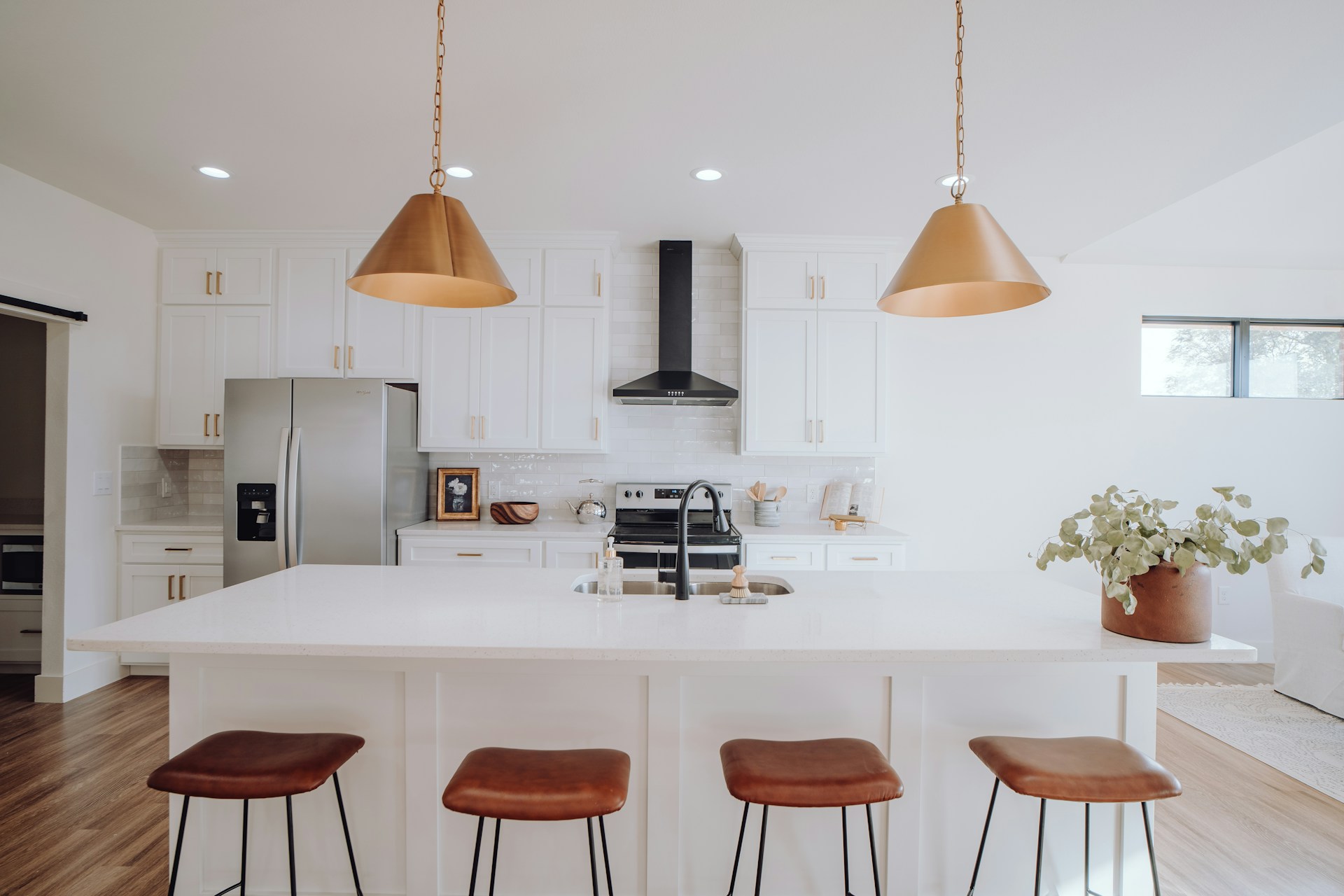
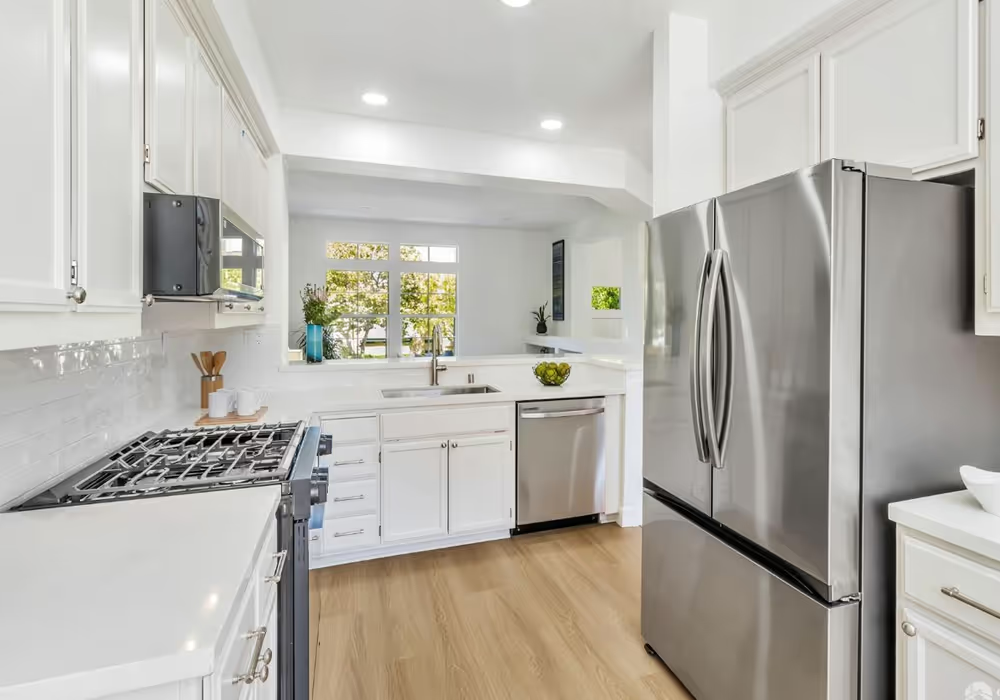
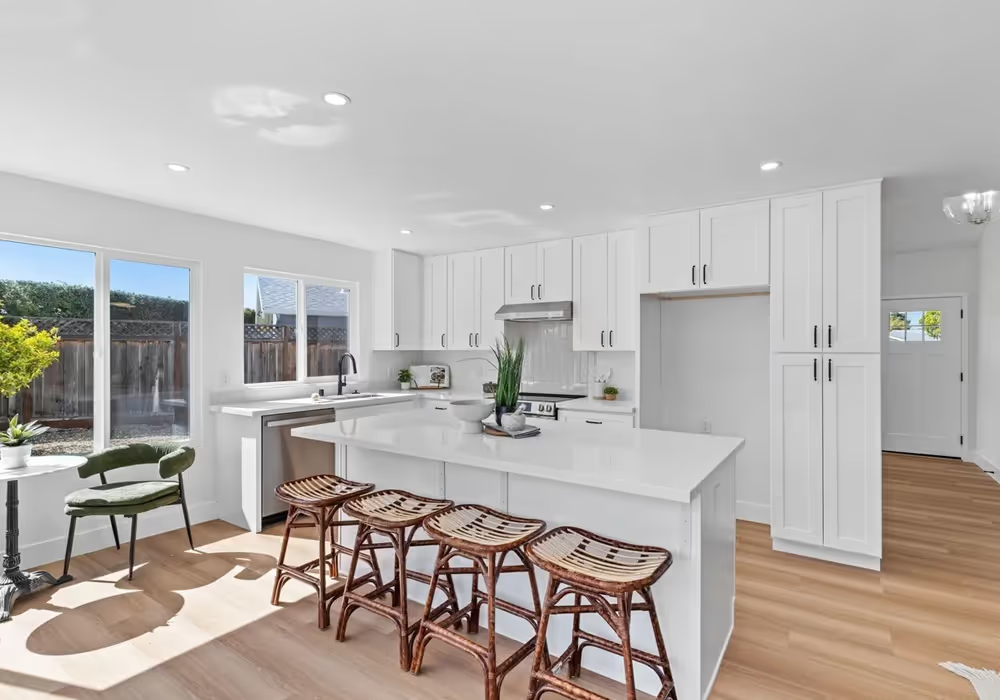
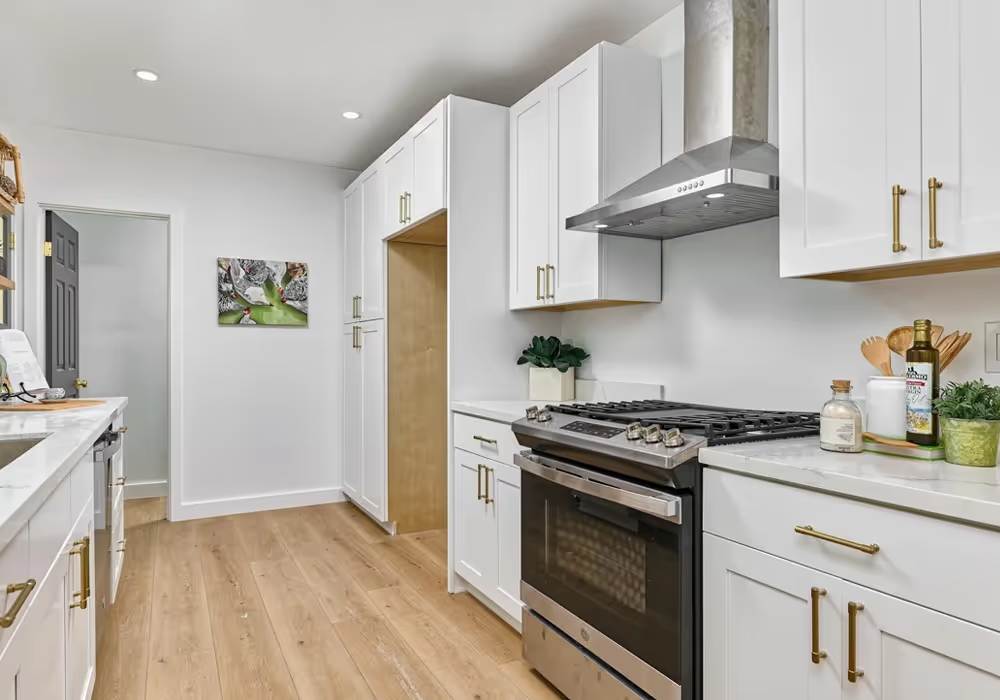
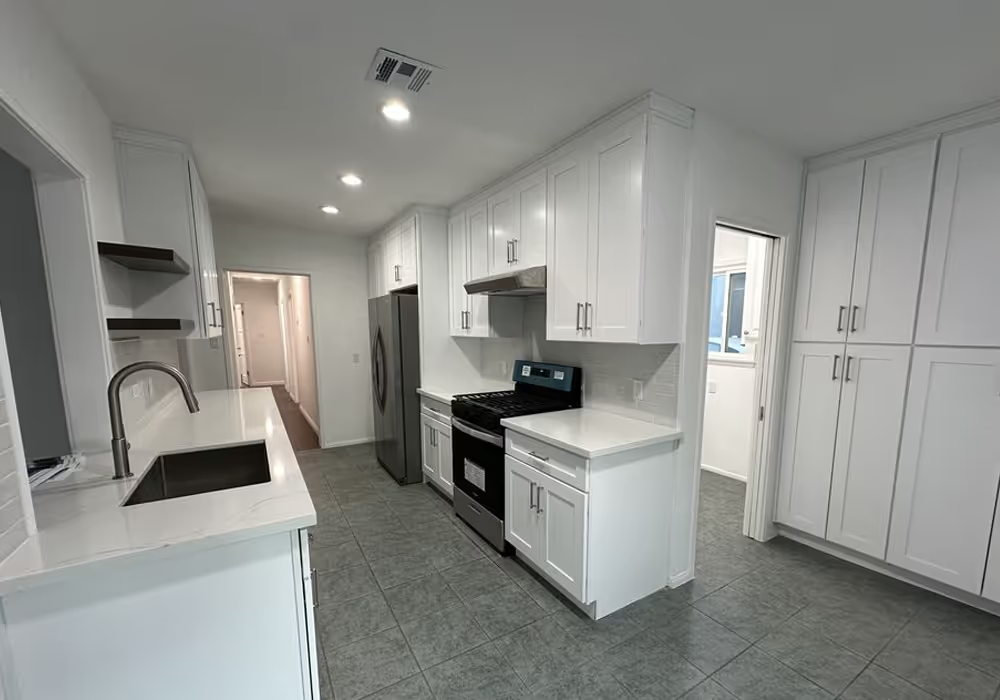
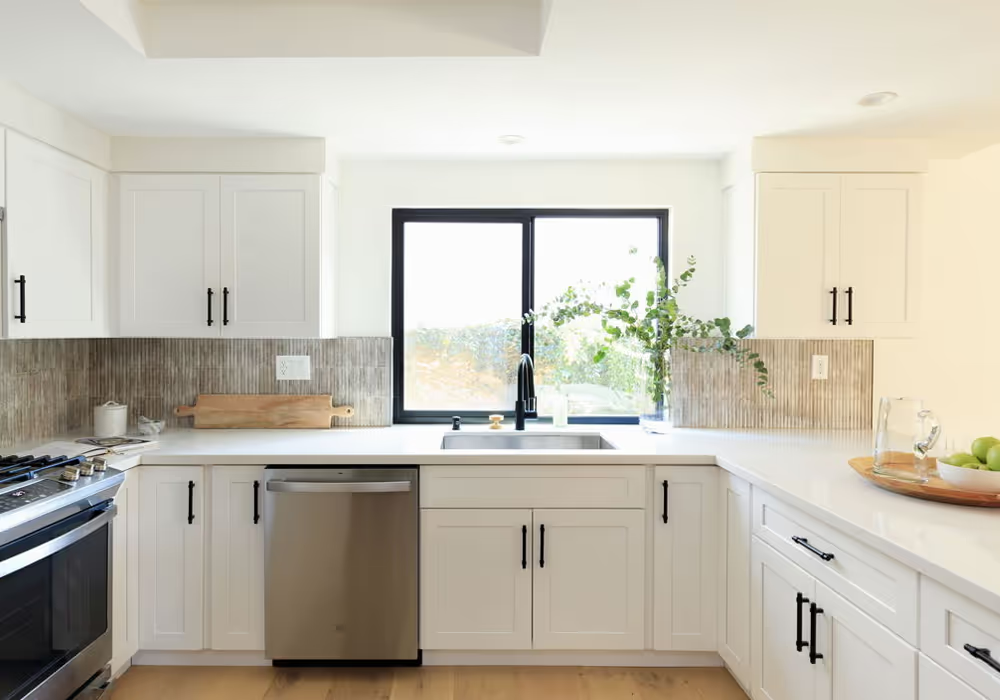
Kitchen remodels in Orange County typically cost between $45,000 and $100,000. High-end or fully custom kitchen remodels can exceed six figures.
The specific cost of an Orange County kitchen remodel depends on:
- Size
- Materials
- Reconfiguration
For a breakdown of budgets, timelines, and material options, see our Orange County kitchen refresh vs. kitchen remodel guide.
Considering a kitchen remodel? Click here for more information or request an estimate.
Bathroom Remodels
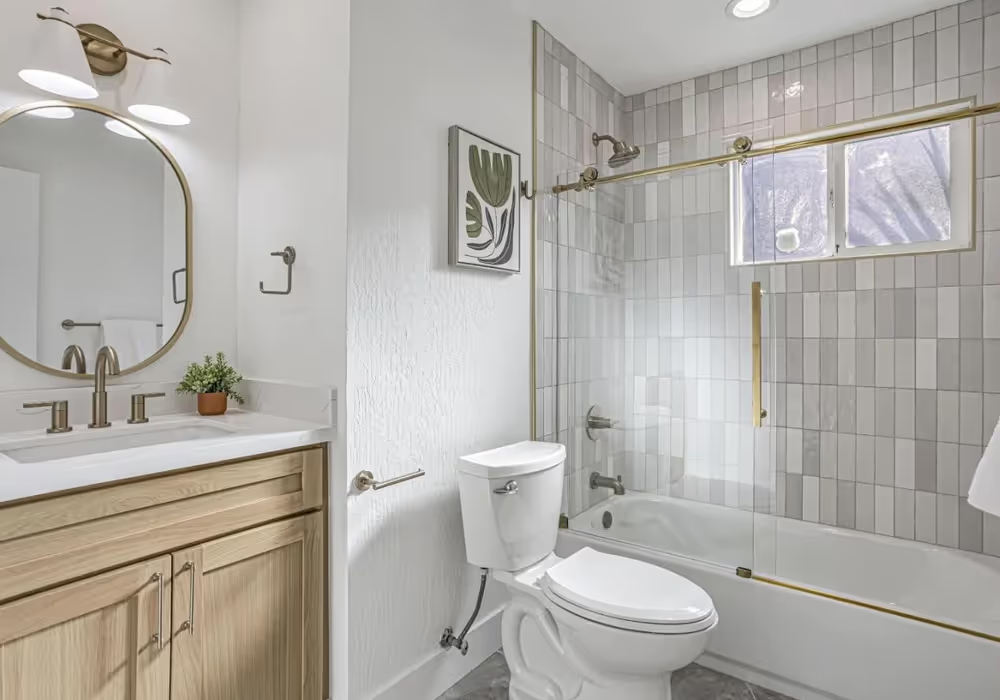
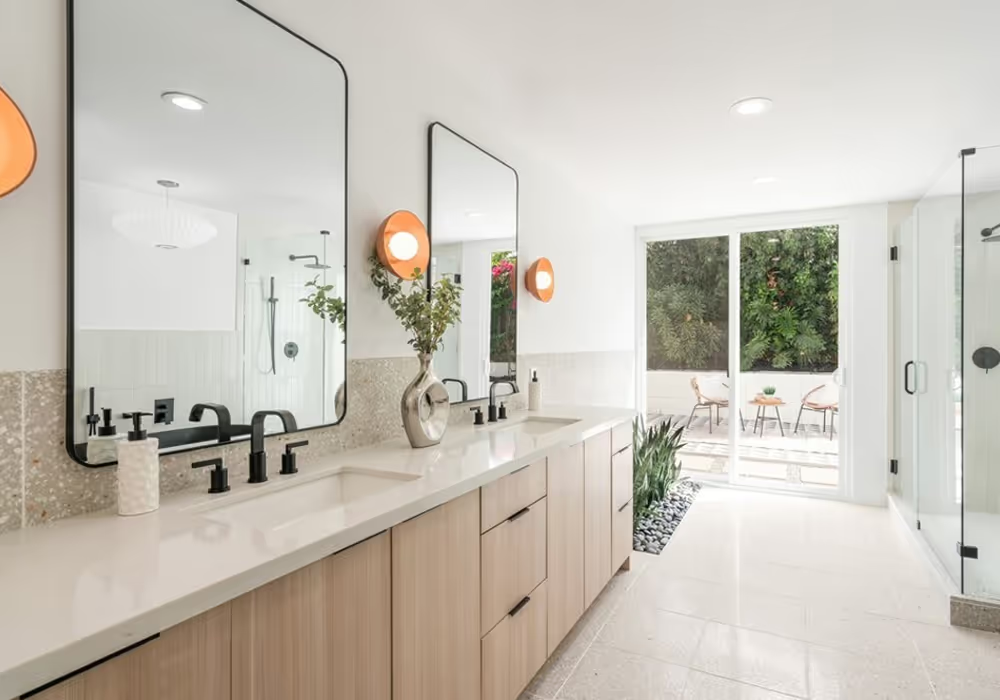
Bathroom remodels in Orange County typically cost between $25,000 and $60,000. Smaller or secondary bathrooms may cost less, especially if you use budget options for materials and don’t need to alter the plumbing or electrical fixtures. Larger, spa-style bathroom remodels can exceed $60,000, depending on scope and finishes.
Read our full Revive Real Estate guide to Orange County bathroom remodels for a thorough guide to getting your ideal bathroom. We also offer a bathroom remodel DIY guide for homeowners focused on minimizing costs.
Considering a bathroom remodel? Click here for more information or request an estimate.
Home Additions
Home additions such as deck expansions or outdoor living additions come with a much wider price range. Additional rooms and second-story additions typically cost between $250 and $400 per square foot.
Costs for Accessory Dwelling Units (ADUs) and Garage Conversions
Accessory dwelling units in Orange County typically cost from $150,000 to $400,000. These detached units can provide lifestyle or financial benefits, depending on your reason for building them. An ADU can be used as a rental unit or to create additional living space for family members.
If you have less ambitious goals for a secondary living unit on your property, you can consider junior accessory dwelling units (JADUs). A typical JADU in Orange County costs between $50,000 to $100,000, but offers less livability than a full ADU. JADUs can still be rented out or used to house relatives, but are more commonly used as flexible living or work spaces.
Keep in mind that ADUs in California may be subject to different regulations, depending on the amenities they are equipped with. Utilities are an obvious area of concern. However, many seemingly small amenities can also subject your ADU to state or homeowner’s association scrutiny. Staying current on California state laws and your HOA CC&Rs is essential when planning an ADU project.
Whole Home Remodels and Larger Projects
Full home remodels can cover a wide range of individual improvements completed as part of a single project. Orange County whole home remodels normally cost from $100 to $300 per square foot.
The main home remodel considerations are the major cost centers and potential unexpected costs.
In general, kitchens, bathrooms, HVAC, plumbing, and electrical represent the largest cost centers. Windows and floors typically cost less, as they don’t require structural or utility changes. Unexpected costs are also typical, and we will cover them in detail below.
Factors That Influence Remodeling Costs in 2026
These are the factors that go into the final cost of your home remodel. Understanding them helps you balance your budget with your long-term equity, lifestyle, and financial goals.
Material Costs
Material costs are normally the second biggest expense of a remodel after labor. The type and grade of materials you choose are often the second-largest cost driver in a remodel. However, it’s also the area where you have the most freedom to increase or decrease the total cost.
Determining which materials are available, and how much they cost, for every aspect of a remodel is beyond the scope of this guide. However, it is important to remember that each material category includes a wide range of quality grades and final costs. This is especially important when you consider wood and steel.
Labor Shortages
Labor costs are always the biggest expense for a home remodel. This is especially true in Orange County, where construction and skilled trade labor costs are significantly higher than average.
In addition, there is currently a shortage of skilled labor in Orange County directly affecting home construction and remodel costs. Construction workforce analyses point to a national shortage of more than 500,000 construction workers in 2026, up from approximately 439,000 in 2025. The labor supply continues to tighten while the demand, particularly for skilled workers, is climbing. Private housing and development is the focal point of this shortage.
Unfortunately, the labor markets in Orange County and nearby high-cost counties are more affected than other areas. Contractors are competing for a smaller pool of available labor, and Orange County workers can command premiums for their local certifications and work experience.
Perhaps even more affected is the average private development timeline. You can expect longer remodel timelines overall, but especially if yours requires licensed plumbers or electricians. This is a simple issue of contractors facing delays finding complete crews and being forced to extend project schedules or absorb additional costs.
There is no concrete data point available for how this shortage will affect Orange County remodels. However, extrapolating Bureau of Labor Statistics data, it is reasonable to assume a roughly 4-6% year-over-year increase in labor costs for 2026.
Design Trends and Market Demands
Design trends don’t automatically play a part in the cost of remodels. However, there are certain trends that come with predictable price ranges, which can be compared against the returns in both demand and final price. The three leading trends are smart home technology, energy efficiency, and wellness features.
In terms of smart home technology, there is demand for:
- Smart thermostats
- Integrated security systems
- Whole-home or room-based automation features (such as lighting, shades)
- App-based home control systems
- Wired infrastructure upgrades
In terms of energy efficiency, there is demand for:
- Improved insulation
- Energy-efficient HVAC
- Solar panels
- Battery storage
- Energy-efficient home appliances
- Water-saving and drought-resistant features
In terms of wellness features, there is demand for:
- Improved indoor air quality via ventilation/filtration systems
- Natural light optimization
- Spa-style bathrooms
- Quiet/acoustic work and relaxation spaces
- Indoor-outdoor living features
These features all share one thing in common: they increase modern homebuyer demand for your home and can support stronger buyer appeal and perceived value. The market for smart home devices was $163.3 billion in 2025 and is projected to rise to $179.7 billion in 2026. However, by 2034 the same projections place the market size at $278.3 billion. The Consumer Technology Association reports a trend of systems of an average of eight interconnected devices managing homes. It’s not about simply using one smart feature or device. A fully smart home can feel more move-in ready to today’s buyers.
58% of real estate professionals say that highlighting energy-efficient features in listings can add value, according to an NAR report. There’s also a direct financial incentive for future homeowners; the Department of Energy estimates 43% of a home’s utility bills go to heating and cooling. Homeowners value minimizing energy usage for environmental and financial reasons. The DOE also cites research pointing to homes with solar panels selling at a premium compared to similar homes without them.
Wellness features have evolved from a niche into a growing mainstream demand, with Southern California leading the trend. Busy, financially stressed, and digitally connected generations are increasingly aware of the importance of lifestyle variables on physical and mental health:
- Air quality and filtration
- Balanced sunlight exposure
- Spa features
- Noise control
- Indoor-outdoor interchangeability and living features
- Relaxation spaces and spatial and mental compartmentalization
The Global Wellness Institute reports this trend as a quantifiable global phenomenon. They forecast the wellness real estate market to reach $1.1 trillion by 2029, up from $584 billion in 2024.
How to Budget for a Home Remodel in 2026
First, start with a realistic preliminary breakdown of the costs:
- Labor estimates
- Materials
- Design and engineering
- Permits, inspections, and fees
- Contingency reserves (at least 10% of the estimated costs)
Next, it’s important to account for the timelines you can expect amidst Orange County labor shortages:
- Account for potential delays in contractor availability
- Build in time for permitting and inspections, particularly for more complex projects
Next, make sure you have a checklist of the tasks you need in order to ensure a smooth remodeling process with minimal time and budget overflows:
- Choose contractors with local certification and experience
- Get at least three detailed quotes
- Compare quotes against material expertise and previous projects
- Look for missing scope or unrealistic pricing as you compare different quotes
- Ask for elaboration on any vague allowances or missing details
- Establish a single point of contact to manage pre-planning steps and handle any issues that arise during the renovation
When you’re budgeting a remodel, avoid the “lowest bid trap”. Sometimes, a lower bid can cost you more due to delays or from slow or shoddy work. A lack of local experience can also lead to bureaucratic delays as you juggle HOA complaints and local bylaw concerns.
Home Renovation ROI in Orange County: What to Expect in 2026
This is what you need to know about remodel return on investment in Orange County.
High ROI Renovations in Orange County
Not all home remodels are equal. If your goal is a higher ROI, the best investments are:
- Kitchen remodels: $45,000 - $75,000 typical costs; 60 - 75% ROI (NAR)
- Bathroom remodels: $25,000 - $45,000 typical costs; 55 - 70% ROI (NAR)
- Accessory dwelling units (detached): $150,000 - $400,000+; variable ROI (University of California Berkeley Terner Center)
- Energy-efficient upgrades: costs and returns vary widely depending on scope and systems
These are the areas that gather the most attention and play an outsized role in appraising your home’s value. Some of them, such as kitchen and bathroom remodels, are more expensive than other remodels. However, due to the strong buyer appeal and the potentially high and consistent returns, they are often worth more attention.
Factors Affecting ROI in 2026
The main factors that will affect Orange County remodel ROI in 2026 are:
- The rising rental costs and property prices
- The shortage and high cost of skilled labor
- Your neighborhood
- Shifting homeowner preferences and trends
Economic conditions may be rough, but Orange County homebuyers still value the features we’ve discussed here. The lifestyle, ROI, and equity protections certain remodels offer continue to keep them in high demand.
Rising home prices, rental costs, and the cost of living continue to raise homebuyer expectations. So, remodels that offer liveability benefits or long-term financial sustainability hold their value within your home more than aesthetic or complex remodels.
The labor shortage also affects Orange County remodel ROIs by putting pressure on remodel budgets. The more focused a remodel’s scope is and the more predictably it’s executed, the higher the returns should be. The wait times and unpredictable workplace occurrences can cut into your ROI.
Lastly, your ROI depends on your location and how it affects your property’s value. Depending on when you bought your house, a high-ROI remodel could have even larger effects on the total returns you receive. Your renovation’s value is capped by similar nearby homes. So, no matter how extensive your remodels are, alignment with neighborhood standards also plays a critical role in determining your ROI.
Timing Your Remodel for Maximum Return
While less significant than the other factors we’ve covered, timing can have an effect on your remodel ROI. The best remodel schedule for a maximum ROI remodel in Orange County is:
- Start pre-planning in late winter.
- Aim for early spring to early summer for outdoor remodeling, roofs, windows, and landscaping, while demand is lower than in summer but weather conditions are good for work.
- Aim for summer for indoor remodeling, kitchens, and bathrooms, while families are often on vacation.
- In fall, get exterior work done before winter, as market shifts often favor renovations that boost year-end sales.
Navigating the Home Remodel Process in Orange County
Now let’s look into what you can do to make each step of the remodel process smoother.
Choosing the Right Contractor
Finding the right contractor for an Orange County remodel is a gradual process of elimination. The process is most effective when you start with the fundamentals.
The first factor to consider is California license status. Your search should only include contractors with active licenses in good standing. Their insurance certificate should be issued directly from their insurer. The coverage limits should also match the scale of your project.
Next, look into their overall reputation. Pay closer attention to projects from the recent past and make sure you’re looking at multiple reviews on multiple platforms. Ask for photos or better yet, to see completed projects in person. This isn’t always possible but may be when you’re looking into making a significant investment. Otherwise, look for consistency, quality, good communication, and timelines.
The professionalism a contractor demonstrates also provides insights into how they perform their remodels. They should provide:
- Detailed written estimates for scope and materials
- Realistic timelines that are not overly optimistic
- A willingness to explain their pricing logic and cost structure
Once you’ve sorted through your options and selected a contractor, ensure you know who your single point of contact is. It pays to have someone you can trust, while still understanding how subcontractors are selected and supervised.
DIY vs. Professional Remodels
Some remodeling tasks can be done yourself or with non-professional helpers. In general, the DIY tasks are those that:
- Do not require permits
- Do not require licensed trades
- Are low-risk
- Are primarily cosmetic
- Can be reversed easily if something goes wrong
If a situation can be described as the opposite of any of the above, hire a professional. In cases where you’re unsure about any of these factors, the safety, legal, financial, and bureaucratic risks are simply too high.
Hidden Costs in Home Renovations
Finally, there are also often hidden costs that can arise. By knowing about them and being prepared for them, you can often budget well enough to avoid an unexpectedly challenging financial position.
First, there are the surprises that can arise in the middle of a project. While it’s possible to make initial estimates for whole home remodels, they don’t factor in previously unseen:
- Asbestos
- Outdated plumbing and electrical work
- Structural damage
- Mold
- Permit requirements
- Temporary housing needs
- Storage
- Debris or waste removal
In general, the older your house is, the more likely you are to face these kinds of unexpected costs. However, because you can’t know for certain whether unexpected issues will arise, you should be prepared for the possibility. In general, a 10% to 20% contingency fund is advisable for older homes.
Orange County Cost of Living Conclusions
In 2026, Orange County homeowners can expect a high-cost housing and remodel market that continues to reward careful planning. The cost of living is expected to continue growing, albeit at a slower rate. However, labor shortages and regional demand dynamics can add complexity and costs to remodel projects.
If you’re planning a home remodel in Orange County, the most important step is preparation. The costs are higher and the permitting, HOA rules, bylaws, and other limiting factors are more extensive. The cost of mismanagement or mistakes is higher, but the rewards for great planning and execution continue to grow in 2026. Kitchens, bathrooms, energy-efficient upgrades, and well-planned ADUs continue to offer strong value when they align with neighborhood standards and broader market conditions.
How much is your home's worth?
Get your personalized estimate today.




















Bryten Hanson brings a wealth of experience to Revive as a licensed Realtor and seasoned business owner. Her expertise in customer service, sales, marketing, and business management, coupled with her real estate acumen, makes her an invaluable asset to the team.