Small bathrooms are common in San Francisco homes, but remodeling them is not just a design decision. It is a decision about how to use your space more effectively while supporting your home’s long-term value.
With limited square footage, every choice matters. Layout, storage, lighting, and materials all impact how functional the space feels today and how it performs if you decide to sell later.
Here are practical ideas to help you approach a small bathroom remodel with more clarity, so you can make smart decisions that balance livability, cost, and value.
Start With a Smart Plan for a Small Bathroom Remodel
Planning matters more in small bathrooms than larger ones because the economy of your square footage is tighter. There's no leeway for unused space or fixtures that disrupt flow of movement. Set priorities with layout, storage needs, lighting, and durability before falling in love with a specific aesthetic.
Based on your budget, you can consider partial or full small bathroom remodels to get the features that are most important to you. At Revive, we help homeowners evaluate renovation options with clear data, project scope insight, and funding considerations, so they can move forward with confidence. Talk with a Revive expert to understand your options based on your goals, budget, and home value potential.
Define the Scope Early
Decide early on if you're doing this for the sake of a cosmetic makeover or full-on layout change. That's going to affect both your budget and how much work you're able to do on your own instead of hiring contractors. One of the defining choices when defining scope is plumbing work versus no plumbing work. Plumbing can add to the cost of a bathroom remodel significantly due to the need to hire professionals and likelihood of needing permits.
While bathroom remodels with plumbing involved are costlier, the payoff can be huge. For example, Zillow shares that adding something like a curbless shower to a bathroom can boost a home's value by 3.6%. In some cases, features like this can contribute to stronger resale appeal, depending on the home and market.
We also know that not having a bathtub in your home can make it harder to sell. Many families are turned off by shower-only homes because this setup is rough with young kids. By not making room to add a tub during your bathroom remodel, you could be reducing your buyer pool. In fact, agents speaking to the National Association of Realtors (NAR) say that a home absolutely has to have at least one bathtub to attract a wide pool of buyers.
Of course, tinkering with plumbing doesn't always make sense. There's a chance that the existing vanity sink in your bathroom is located where it is because it's connected to plumbing pipes that run through that wall. Moving the vanity simply to do something new can become unnecessarily expensive when you're trying to place it against a wall that doesn't already have piping running through it. Consider a move like that only if it adds usable square feet to your layout that you feel would be worth the cost.
Many homeowners struggle with knowing what a reasonable bathroom remodel budget in San Francisco looks like. Overall, San Francisco full bathrooms average around 32 to 40 square feet in size. For comparison, the average American full bathroom is often between 40 and 100 square feet.
Based on how intensive your renovation is, you can expect to pay around $70 to $300 per square foot. For most homeowners, this works out to between $3,000 for minor cosmetic tweaks to more than $100,000 for full-on, full-scale structural bathroom renovations. Unsure about where to even start with a San Francisco bathroom remodel? At Revive, we set you up with in-network contractors and project oversight using a plan with no out-of-pocket costs. Come discuss your home vision with us whether you're remodeling to sell or stay.
Layout Ideas That Maximize Limited Space
Here are layout strategies that can help a small bathroom feel more open and functional.
Keep (or Improve) the Existing Footprint
By keeping as much as your existing footprint and possible, you're reusing your plumbing. That's a big deal for your budget.
True open-concept bathrooms aren't always the best for older San Francisco homes. Not opening walls to add new plumbing lines just to move fixtures to new spots saves time and money. In many cases, upgrading to a different type of vanity that frees up floor space or switching from a built-in tub to a freestanding tub can instantly make the bathroom airier without knocking down walls. It's about creating an open concept by decluttering the space instead of opening it up.
Space-Saving Fixture Choices
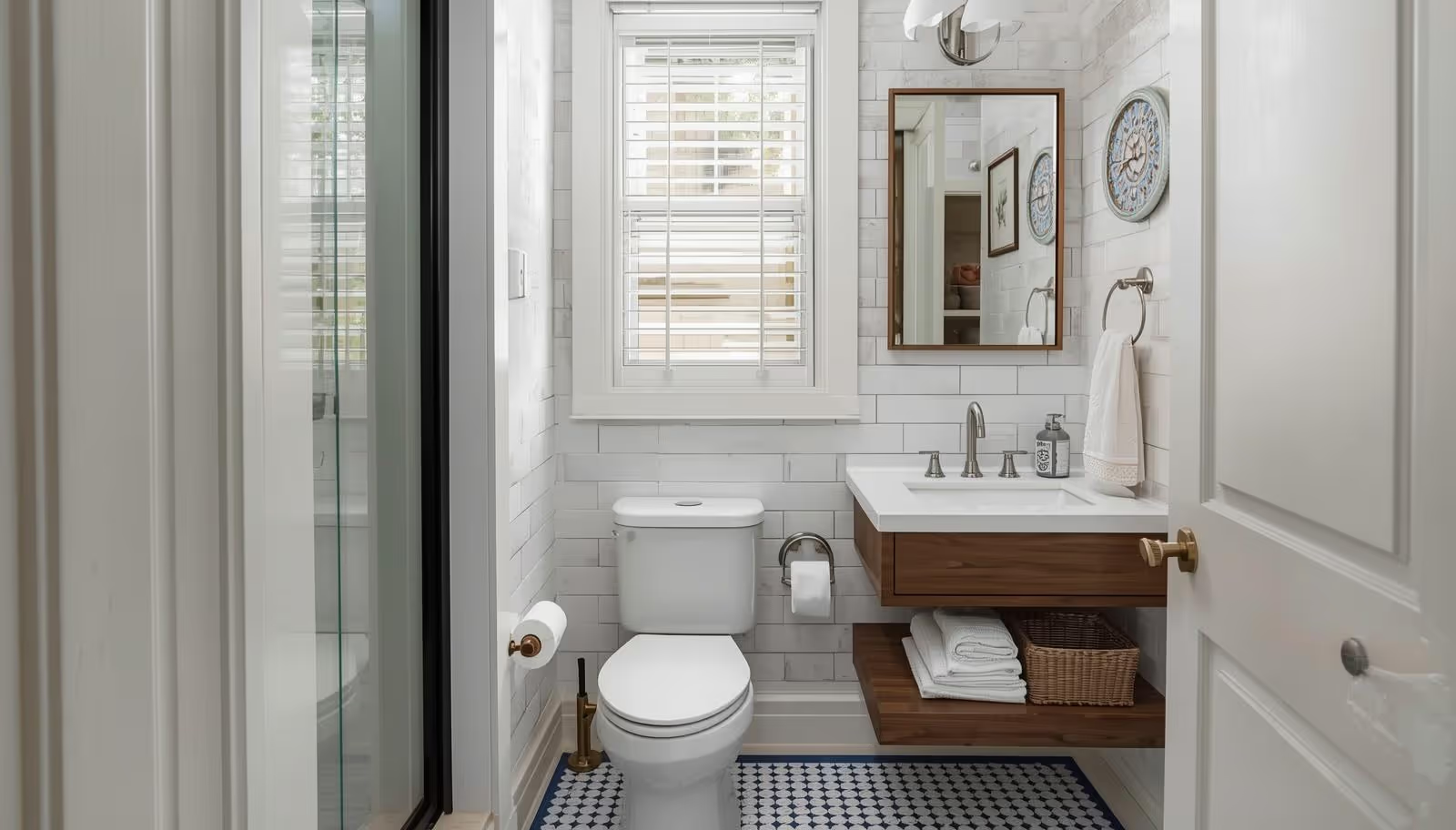
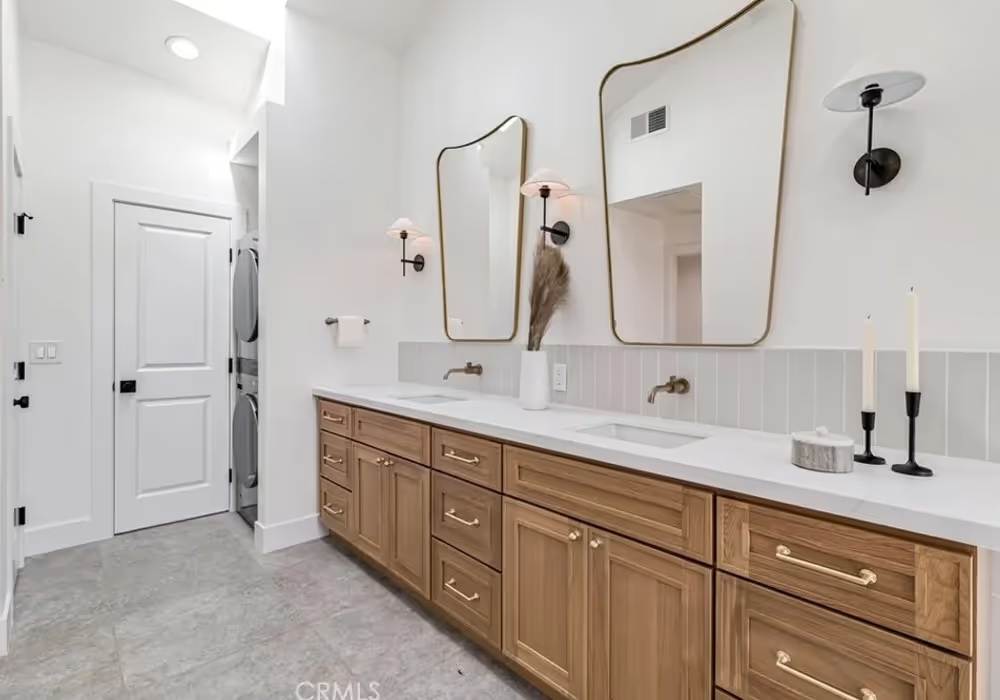
For saving space without creating too much of a bare-bones aesthetic, designers love wall-mounted or compact toilets. These toilets can also be much easier to clean! A similar design trick is the floating vanity that is mounted to the wall without legs that close off the space. Furniture-style vanities that have tons of drawers and storage also do lots of heavy lifting by being practical while also defining the style of the bathroom.
Tubs and showers are often the trickiest parts of a bathroom remodel because they take up the most space. Ideally, a bathroom that's the only bathroom in the home will have both a shower and a tub. The most energy-efficient choice for San Francisco homeowners is a tub/shower combo. If this is still too large for your bathroom, consider a space-efficient shower like an alcove shower that fits between two walls or a neo-angle shower that fits into a corner.
Small Bathroom Shower Ideas
As we covered above, there are some compact walk-in shower options that can significantly improve functionality and perceived space in a small bathroom. The aforementioned neo-angle shower is a corner shower with an angled door that lets you pop a shower into a tight space without a door that swings out too far. Here are some other classic choices for tight or narrow bathrooms:
- Walk-in showers: Walk-in showers give the look of a luxury shower with seamless entry while having practical, compact dimensions that maximize space. Open glass panels facilitate an open look that enhances a bathroom's size.
- Frameless glass: Frameless glass creates the illusion of a spa shower at a fraction of the cost and footprint. Losing the frame also generally saves perimeter space that can be used for a vanity or toilet without a crowding effect.
- Curbless and low-threshold shower designs: The ultimate hack for an open layout when space is tight, a curbless or zero-entry shower flows seamlessly into your bathroom floor without any visual disruptions that cut the space up. This is a bathroom that grows with a family because it provides excellent mobility and room for things like mobility aids that need to travel into the shower.
Glass & Enclosure Choices
Spend extra time really understanding the type of glass you want for your shower. Your first big choice will be frameless vs. semi-frameless glass. Frameless is the higher-end look that creates a cleaner aesthetic. However, it can cost up to 15% more because the heavy clips that support your shower glass require expert installation. The big perk is that frameless glass is easier to clean because there's no frame to catch shower "gunk."
Semi-frameless preserves the water-tight quality of traditional framed glass. This type of glass is less expensive both materially and for installation because the design is much simpler.
Next up is clear vs. textured glass. Clear glass gives an airy, clean, and spa-quality aesthetic. However, this option can feel a little too exposed if you're remodeling your home's only or main bathroom. Textured glass is preferred when privacy matters.
Finally, keep waterproofing considerations in small bathrooms in mind. Prioritize moisture-resistant options like porcelain and ceramic for surfaces. If you're doing a curbless shower, a plumber will need to design drainage and curved surfaces to ensure water drains into the shower instead of pooling on the floor. Finally, you'll need a good venting system to ensure air circulation that prevents mold and mildew in your bathroom.
Storage Solutions for Small Bathrooms
In reality, most San Francisco homes don't have huge bathroom pantries where you can store all of your toiletries and towels. Luckily, a remodel presents the perfect opportunity to build storage into your layout naturally.
Vertical Storage
Make your vanity work overtime by selecting a tall option with multiple cabinets and drawers. This puts about 90% of the personal-care items you're using directly in your radius when standing at the sink. Recessed medicine cabinets are also becoming popular because they can double as mirrors and storage spots for toothpaste, toothbrushes, and beauty items. Every unused corner in a tight San Francisco bathroom should be seen as an opportunity to pop in some built-shelving or storage niches.
Hidden & Multi-Use Storage
Don't just choose your bathroom vanity based on things like its aesthetic look or length. Decide if you prefer drawers or cabinets. Drawers are easier for quickly grabbing personal items. However, they often lack the depth for things like a trash can, first-aid kit, or heat-styling tools that you use daily. You may need to physically measure drawers and cabinets in comparison to some of your bigger items to see if they provide enough practical room for what you really need them for.
Don't underutilize your shower's interior as a storage space. Shower niches that are built into your tiling provide perfect spots for shampoo, soap, and razors. If inset storage isn't possible because of your home's design, consider ledges that pop up to provide storage.
Finally, don't leave the empty space on the wall behind your toilet untapped. This isn't just a place for art. Consider built-shelves or a custom over-the-toilet cabinet that matches your bathroom vanity to add storage space. This means you can put things like bulk toilet paper or cleaning supplies behind the toilet instead of trying to find room in a pantry in your home.
Lighting Strategies That Make Small Bathrooms Feel Bigger
Dim lighting shrinks a bathroom. Use lighting hacks to brighten up the space and create that "wow" factor in luxury bathrooms.
Layered Lighting
Don't rely on just one form of light. First, recessed ceiling lights are great for brightening up every corner of the bathroom. However, that light can sometimes "wash out" your reflection in the mirror. That's why vanity task lighting that can either function alone or complement overhead ceiling lights is so essential. If your bathroom has walls that break up the space, use accent or niche lighting to add extra light to the different zones. This can be something like a sconce on a wall that hugs the shower.
Natural & Reflective Light
An oversized mirror over your vanity is a great trick for maximizing natural light in your bathroom if you only have a single tiny window. You can also create a similar effect by using light-reflective finishes and surfaces. Think of things like chrome faucets instead of wrought-iron ones and white or cream quartz countertops instead of black or brown marble. Choose coverings for existing windows or skylights that allow light to pour in while still providing enough privacy.
Tile, Color & Finish Ideas for Small Bathrooms
Don't accidentally shrink your bathroom with the wrong finishing touches. Here's how to choose tiles, colors, and finishes for maximum impact.
Tile Choices That Expand the Space
While it may seem counterproductive in a small space, large-format floor tiles actually work best. Unlike small mosaic tiles, they don't break up the space. While floor tiles should be larger, there's room for mosaic accent tiles in spots like the wall behind the vanity or the shower interior.
You can fake your way to a wide bathroom by using horizontal tile patterns. If the goal is to make a shallow San Francisco bathroom feel like it's longer, draw the eye across the room with a vertical tile pattern. Regardless of which method you use, stick to minimal grout lines to avoid breaking up your floor. You may want to go a shade or two lighter than what is technically the right color match for your tile just to cut down on contrast.
Color & Material Selection
When space is precious, light and neutral palettes really open a room up to create an illusion of "bigness." Very subtle striations and texture can add interest to tile and wall paint without creating visual clutter. Designers also generally recommend keeping finishes on things like faucets and drawer handles consistent to create cohesion that helps to not break up the space.
Fix the Basics Before the Design
Structural integrity beats beauty when it comes to bathrooms. Make sure you and your contractor are signing off on these non-negotiable basics:
- Leveling floors and correcting slopes that could cause pooling water or trip hazards
- Updating plumbing and drainage to the latest city codes.
- Using permits and proper inspections for all electrical upgrades for modern lighting and ventilation. Keep in mind that doing work without permits can make selling your home and recouping ROI on your upgrades difficult or impossible.
- Waterproofing using essentials like water-resistant backer boards, waterproof membranes, and quality silicone sealants for mold protection.
Cost Considerations for Small Bathroom Remodels in San Francisco
Many homeowners are surprised to learn just how much control they have over costs for a bathroom remodel in San Francisco. Let's look at how different choices affect cost.
What Typically Drives Cost
Tile and stone are two of the major costs in a mini bathroom renovation. Any kind of natural stone will be the most expensive option. Options like onyx, marble, and granite can run anywhere from $5 to $300 per square foot. Glass tiles for wall accents go as high as $100 per square foot. Meanwhile, high-quality ceramic tile can create similar visual effects for as low as $1 to $8 per square foot.
The same goes with everything from faucets to countertops. It's smart to ask your contractor to show you the luxury and budget versions for each project to help you decide what's worth prioritizing and what's worth saving on.
If you're doing any kind of plumbing and electrical work, this can increase project costs by up to 30%. For example, professional shower installation can cost between $5,000 and $15,000 based on design complexity. A project like recessed lighting averages $1,500 to $5,000 for a modest room.
You may also be wondering about custom vs. prefabricated fixtures. Ultimately, custom and luxury features aren't necessary in your home unless you'd be competing with actual luxury homes if you sold. Remember that your home's resale value is measured against "comps." This means the price won't go higher than homes within the same neighborhood with the same size and layout that have sold within the past one to three months.
If you're unsure about the benefits of remodeling versus moving in San Francisco in order to get what you want, Revive helps homeowners compare renovation scenarios, understand potential value, and decide whether remodeling aligns with their goals.
Budget Ranges
How much do you really need to save or borrow to make this bathroom happen? Here's a look at average prices for small bathroom remodels in San Francisco:
- Basic small bathroom refresh: $9,000-$28,000
- Mid-range remodel: $12,000-$60,000
- Higher-end small-space upgrades: $24,000-$100,000
If you’re unsure how these costs apply to your home, Revive can help you map out a realistic project scope, budget, and expected return.
Permits & SF-Specific Considerations
You or your contractor will have to pull a permit for any plumbing, electrical, or layout changes. In general, a like-kind replacement of something like a toilet or sink won't require a permit.
You also need to keep in mind that you may need to pay for asbestos remediation or professional lead removal if your home was built before 1980. While smaller remodels have quick, over-the-counter permits that cost a few hundred dollars, larger projects that require full permits and inspections could have permit fees over $1,000.
You're also probably going to get very acquainted with ventilation code requirements in San Francisco by the time this project is over. City code mandates that all bathrooms have at least one openable window that has a minimum size based on the room's square footage. Based on where your bathroom is situated, it may also require mechanical ventilation.
Common Small Bathroom Remodeling Mistakes
Some homeowners end up with regrets after bathroom remodels. Learn from them with these common and easy-to-make mistakes to avoid:
- Overcrowding the space with features just to say you have them.
- Poor lighting planning that creates dark corners or washes out the room.
- Skipping waterproofing or ventilation that would protect your bathroom against mold and water damage.
- Chasing a style so much that you overlook poor functionality.
Final Thoughts: Making a Small Bathroom Work Harder
A successful small bathroom remodel is not just about making the space look better. It is about making decisions that improve how your home functions while supporting its long-term value.
When you understand your options, costs, and potential outcomes, it becomes easier to move forward with confidence and avoid costly missteps.
Revive helps homeowners bring clarity to renovation decisions by combining project insight, funding options, and expected value in one place. Whether you are remodeling to improve your space or preparing to sell, we help you make a smarter decision with your home.
Talk with a Revive expert to explore your options with more clarity and confidence.
How much is your home's worth?
Get your personalized estimate today.















Amanda Steele, a Sales Expert at Revive, previously a Realtor with Berkshire Hathaway, excels in real estate knowledge and customer service. Her skills significantly enhance Revive's client experiences.