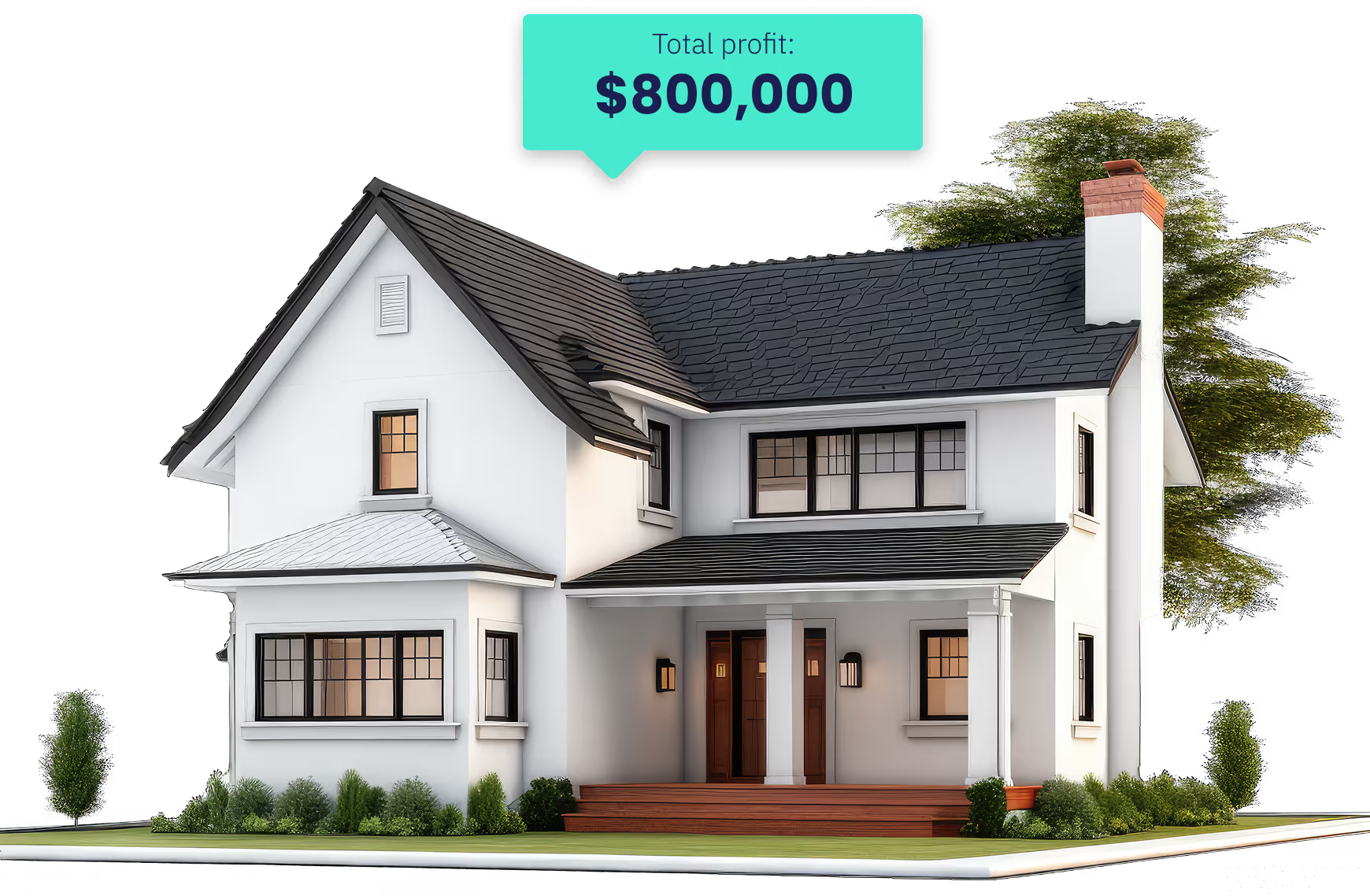
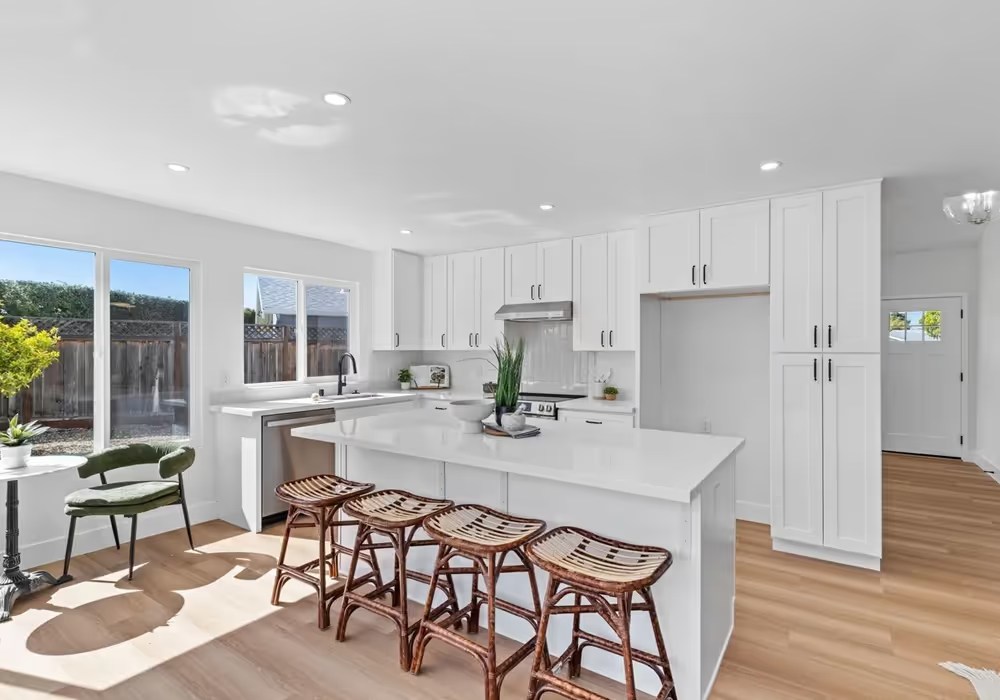
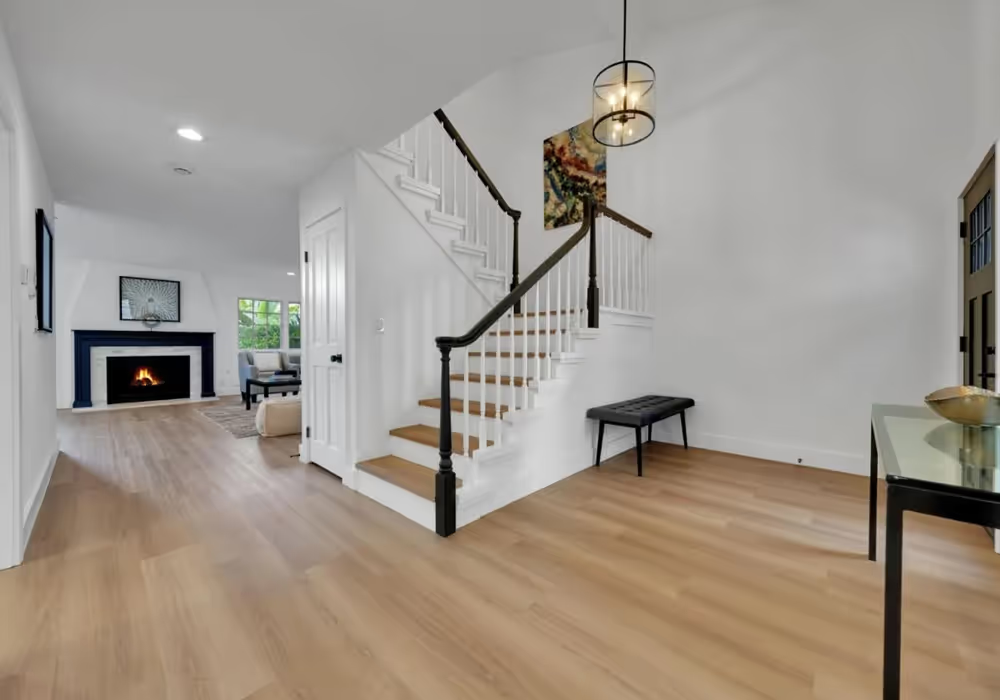
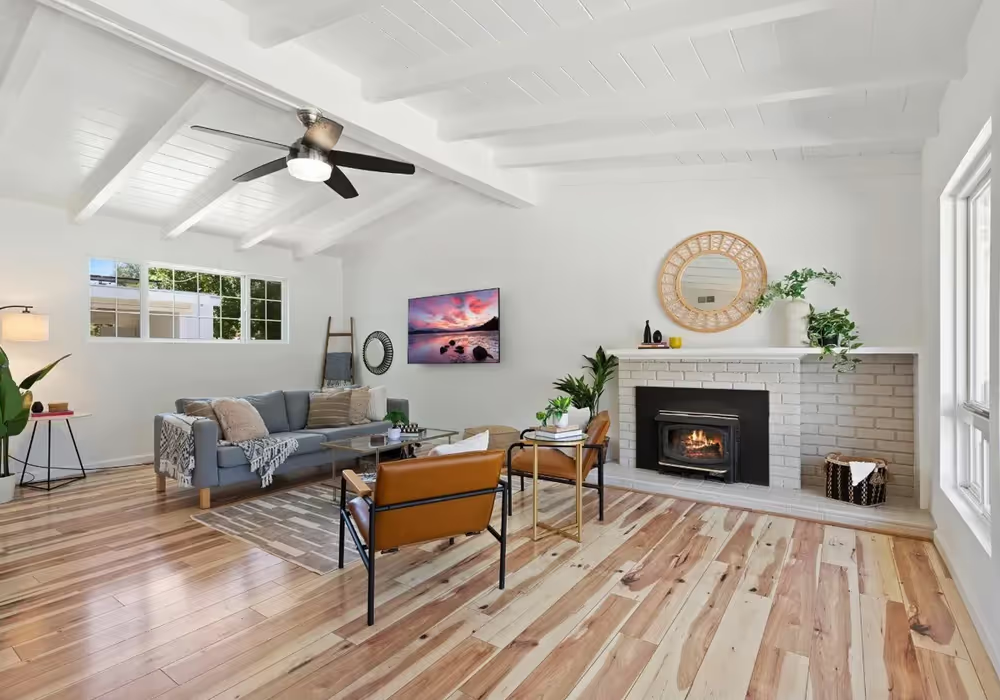
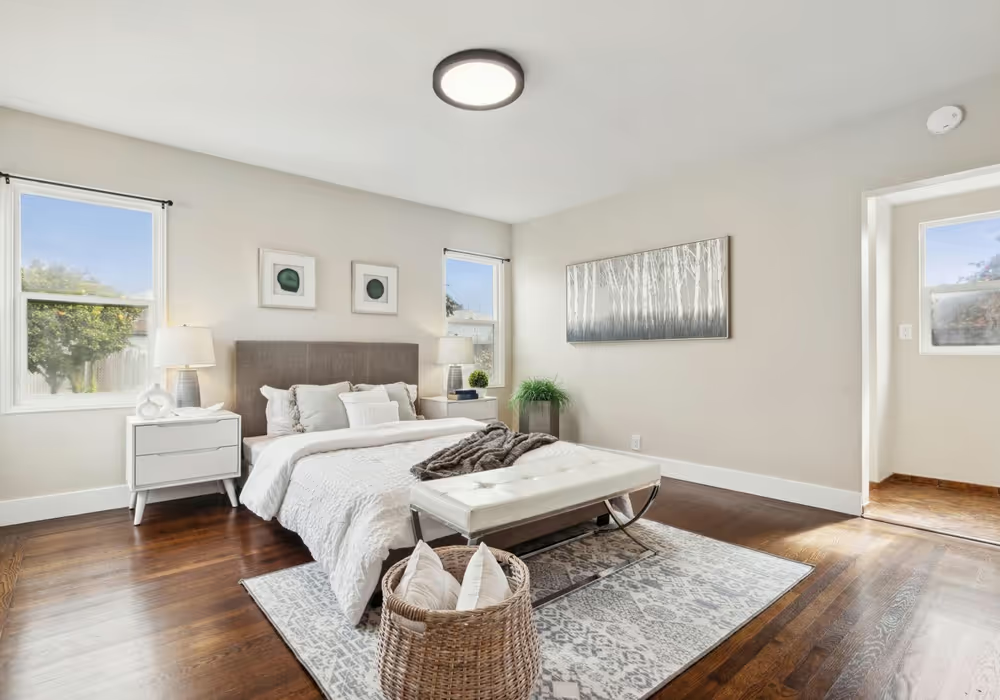
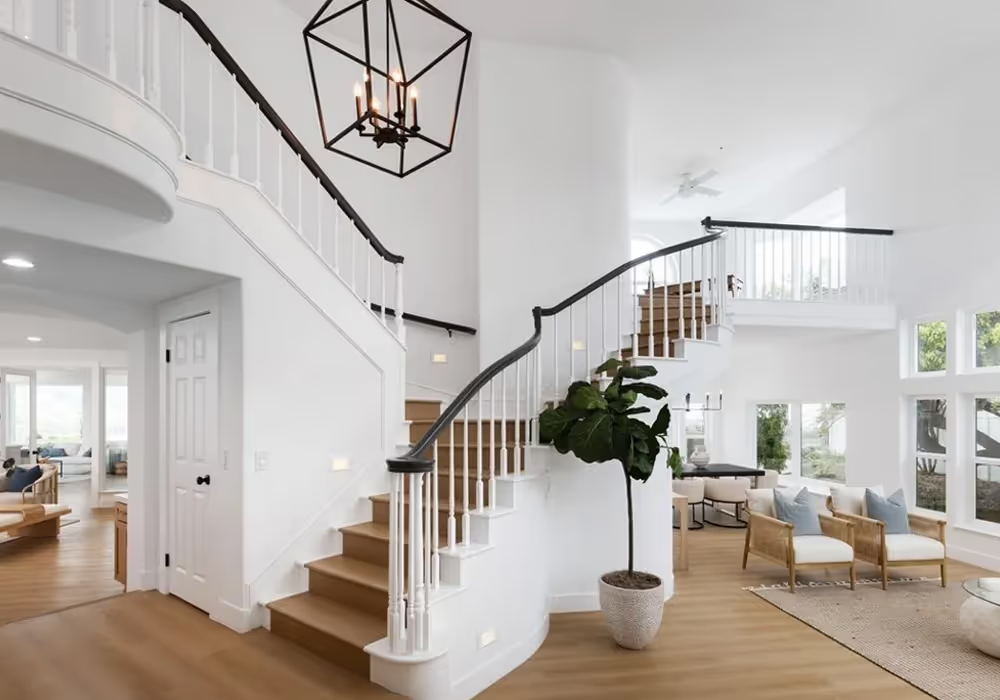
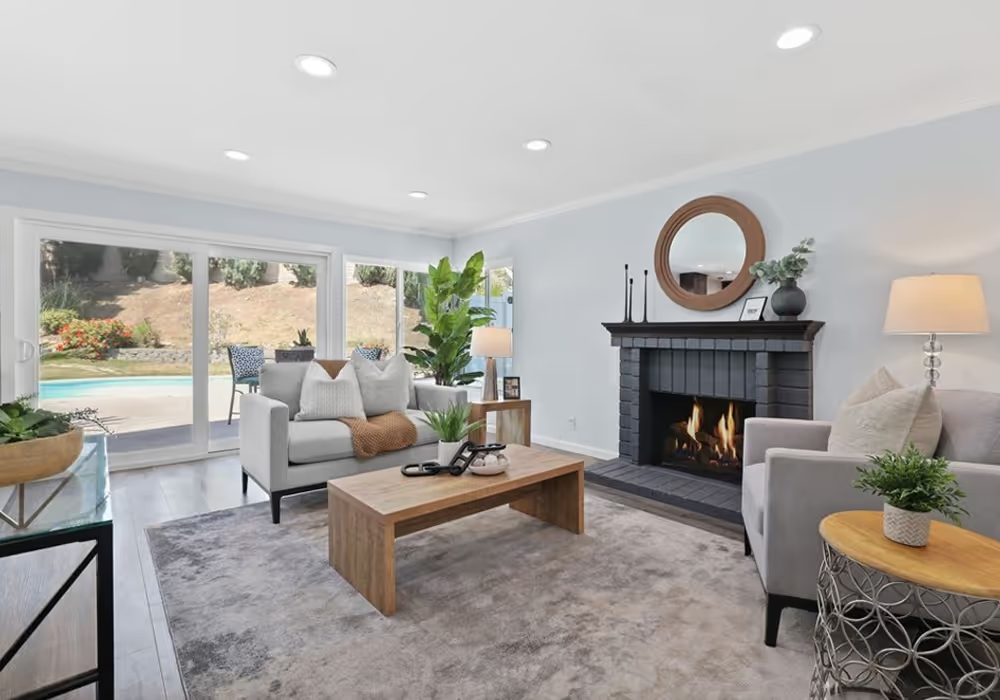
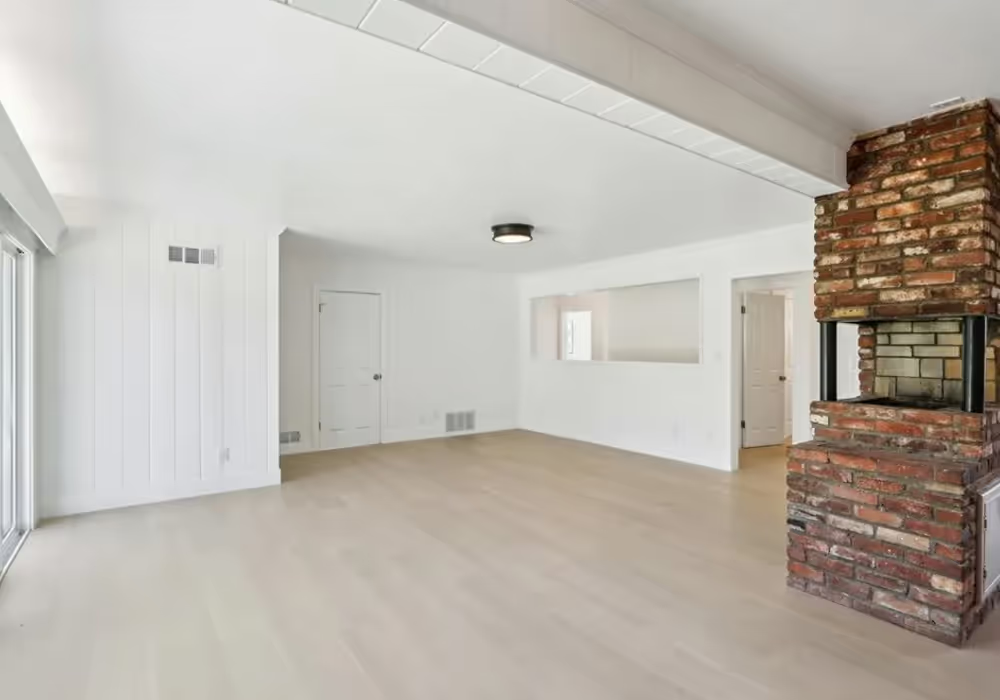
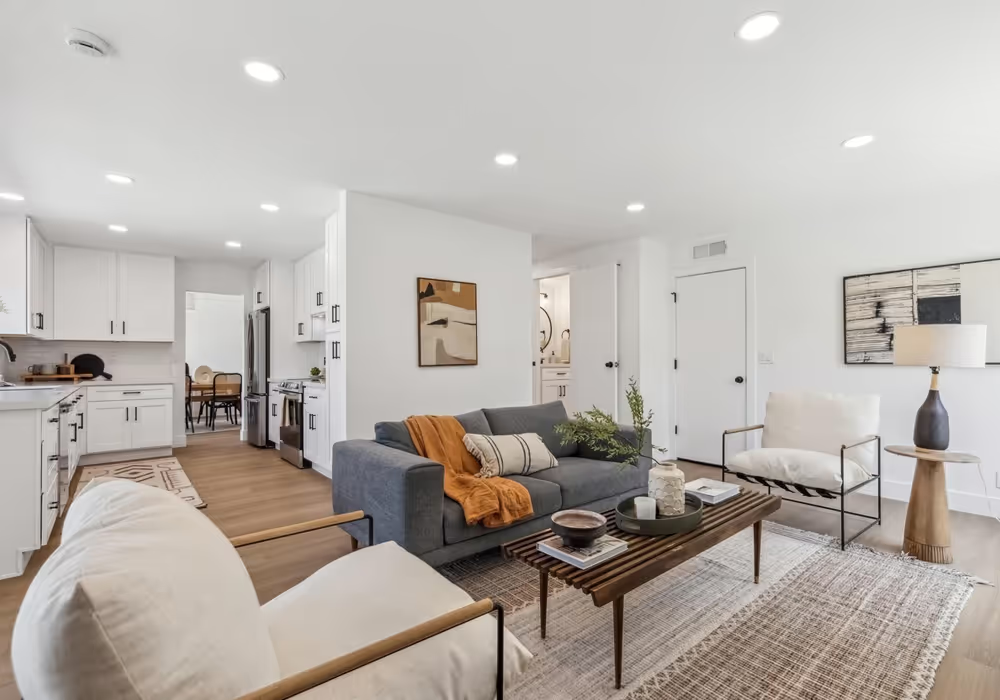
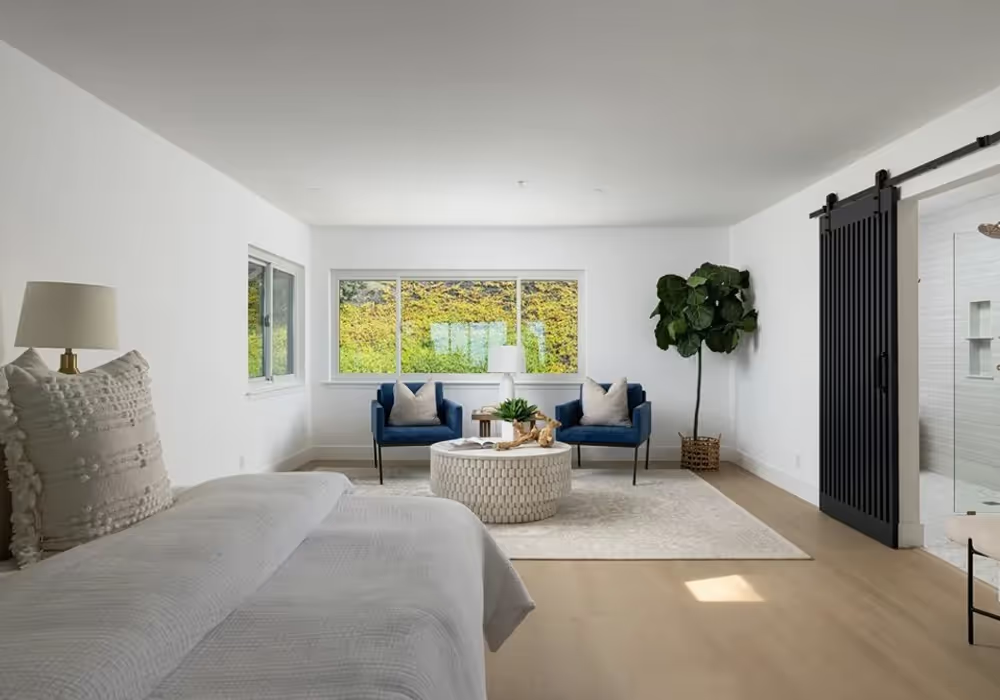
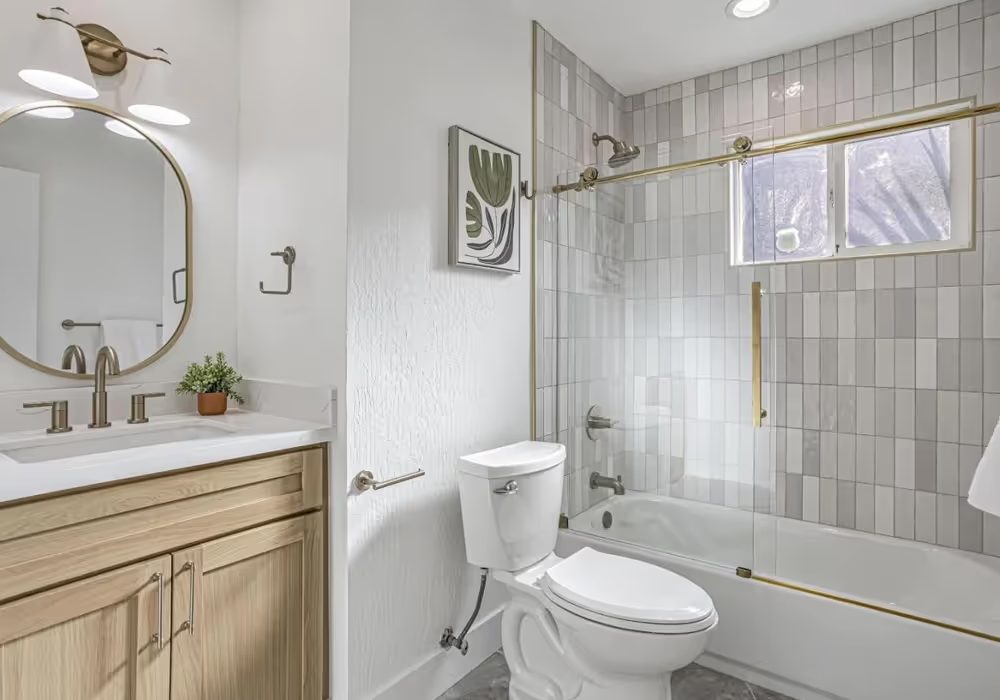
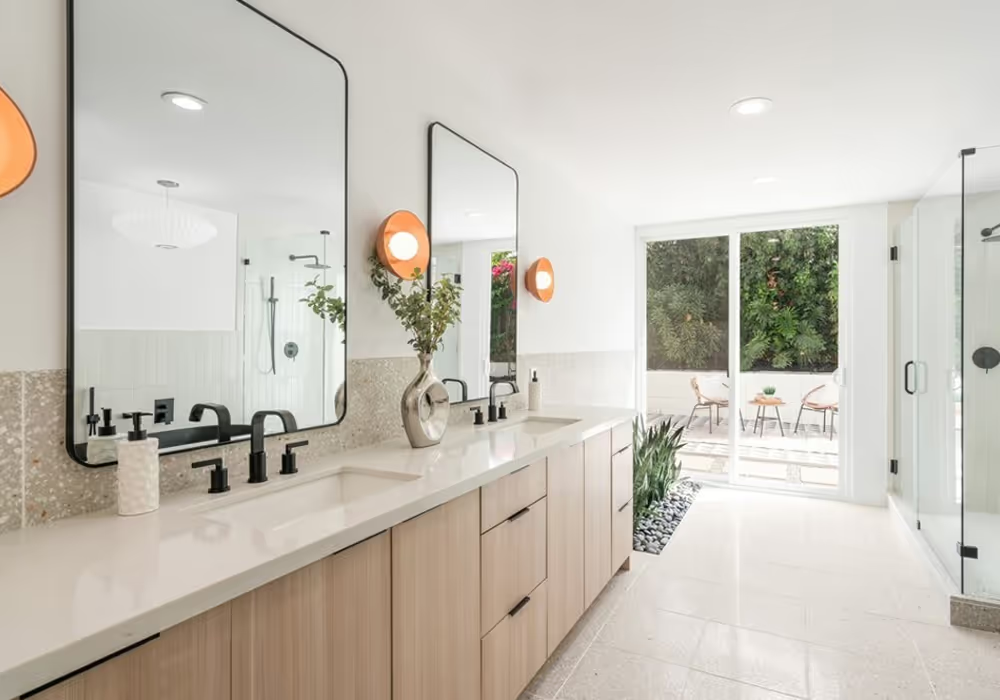
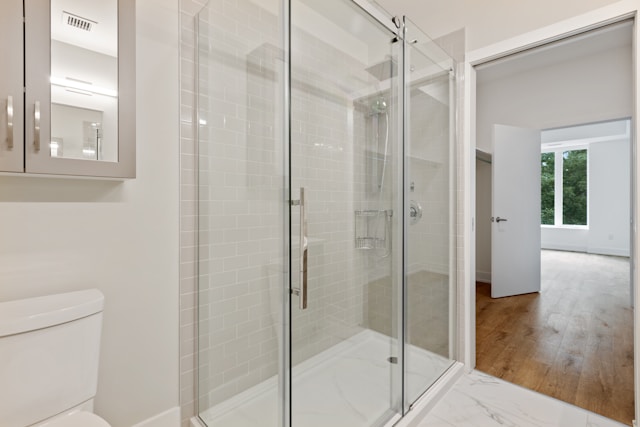
In early 2026, the median home price in Los Angeles was $933,111 according to Zillow. Redfin and Realtor.com place median prices between $930,000 and $1.1 million depending on the neighborhood.
With prices so high, construction costs rising, and limited inventory, many LA homeowners are pondering the potential costs and benefits of remodeling.
In this article, we cover:
- The popularity of remodeling in LA
- Local cost and demand factors
- Which remodels drive ROI in LA
- Lifestyle vs investment, or how to strike a balance
- Mistakes to avoid and how to maximize remodel returns
Why Remodeling Is So Common in Los Angeles
Beyond the January 2025 rebuilding and repairing tailwind caused by the fires, a few trends have been consolidating before the demand for materials and labor surged.
The remodeling market in Los Angeles is unusually active and primed for growth. According to Redfin, LA homeowners hold onto their homes for about 20 years. That’s 8 years longer than the national average.
The best way to understand the LA home remodel market is through market size, homeowner lock-in, housing values, and structural demand drivers. Los Angeles combines all four, creating a demand for remodeling that is stronger than that of most other US cities.
One simple matter of mathematics is that the longer people hold onto their homes, the more likely they are to renovate them instead of moving. Also, the more expensive homes in an area are, the more people can leverage them for additional equity and value. With low mortgage rates, this logic is solidified. It’s far easier, but still often expensive, to remodel your way into a dream home than it is to buy yourself into one in the LA housing market.
Overall, the particularly active Los Angeles remodel market is driven by:
- Housing scarcity and competitive buying conditions
- Emotional and neighborhood attachment
- Sustainability and reuse vs. teardown
- Zoning, lot constraints, and neighborhood character
Remodeling vs. New Construction in Los Angeles
In Los Angeles, remodeling is most often the practical and accessible path. New construction projects bring the LA economics, regulations, and labor and land constraints into focus. The same can be said of any multi-family construction, including ADU projects. However, access to new land for construction is becoming more out of reach.
In some cases, new construction can make sense, but homeowners and even investors are more often choosing to improve existing homes over starting from scratch.
In this section, we compare the differences between remodeling and new residential construction in LA:
- Costs
- Timelines
- Risk
- Other issues
Cost Comparison
So, with most single-family home remodels ranging from about $150 to $400 per square foot, they are clearly the cheaper option by a large margin. However, in some cases, a remodel can be more expensive than a new construction, but only when you compare the high-end of remodeling against low-budget construction projects.
None of the above accounts for the “soft costs” of remodeling and construction. With construction projects or remodels that involve structural changes, there may also be:
- Architectural and design services
- Permits and plan checks
- Structural engineering
- Title and survey work
The soft costs alone may cost between 10% and 20% of a project’s budget. New construction usually pushes the cost higher because the entire building must be compliant, while remodeling jobs may require little or no change in the areas that trigger these soft costs, depending on scope.
LA projects also often face extended plan check cycles and multiple review departments, adding more professional fees.
Also, because land is so valuable in Los Angeles, many homeowners determine that remodeling their existing homes offers better financial efficiency. It’s easier to increase the value of a structure than sell it at a premium than it is to rebuild from scratch. Remodeling enables you to preserve your home’s existing value while improving livability and resale potential. You also invest less to do so.
In practice, choosing between new construction or remodeling is about whether:
- The structure has enough layout flexibility to support your goals
- Your budget has a cap that’s high enough to support a new construction project
- One or the other aligns better with your budget, personal preferences, and/or long-term financial goals
In practice, the choice often comes down to whether the existing structure has enough structural and layout flexibility to support the homeowner’s goals. If it does, remodeling can offer substantial cost savings relative to a full rebuild.
Financing & Carrying Costs
Financing and carrying costs also vary depending on the path you choose.
All of the above also varies according to the project timeline. The longer the project goes, the more the financing costs accumulate, which adds much more to the cost of new construction projects.
Timeline Comparison
Overall, small renovations move the fastest, but structural remodels and constructions are often extended.
Permits & Inspections
Permitting complexity and inspection cycles are worth looking more closely at, as they create the biggest differences between different project scopes.
Remodels can sometimes fall into the categories of alterations or additions, meaning they work within existing building conditions. In these cases, they don’t trigger requirements that apply to the construction of new structures.
New building, on the other hand, requires full building code compliance, including:
- Energy efficiency standards
- Structural requirements
- Accessibility rules
- Fire safety systems
- Modern electrical and mechanical standards
Compliance can require more review steps, and may involve coordination between city departments.
Have any questions? Book an intro call and we will be ready to answer your questions about permitting and all other aspects of LA remodels.
Flexibility and Risk
Any work you do on your home will have some level of risk. For example, even a minor kitchen remodel may reveal mold or water damage, normally after the work has begun. However, there are a couple of factors that greatly increase the risks associated with a project:
- The age of the home
- The scope of the project
Naturally, a larger construction project like a full rebuild is more likely to run into more serious surprises. But new construction projects can also face risks:
- Unexpected soil or ground conditions that require additional grading, foundation work, or engineering
- Utility connection challenges
- Sewer
- Water
- Power upgrades
- Zoning or setback compliance issues that require design changes
- Permit delays or additional plan reviews from city departments
- Construction cost increases during long project timelines
- Legal or regulatory complications
- Easements
- Lot restrictions
- Neighborhood requirements
How Remodeling Impacts Home Value in Los Angeles
Several factors converge to make renovations particularly valuable in Los Angeles:
- High median home prices, so upgrading any property is more practical than moving and improves on the high resale value.
- The limited supply of housing leads more to look for updated, move-in ready homes over fixer-uppers.
- Older housing stock helps properties stand out and benefit more from modernization.
These factors lead to a premium being placed on renovated, functional homes in LA.
Most homeowners benefit most by thinking about remodeling as a long-term equity-building project. Thinking this way leads to decisions that make your home better to live in while raising its appraisal value.
To get the highest long-term equity gains, it pays to focus on:
- Kitchen and bathroom updates
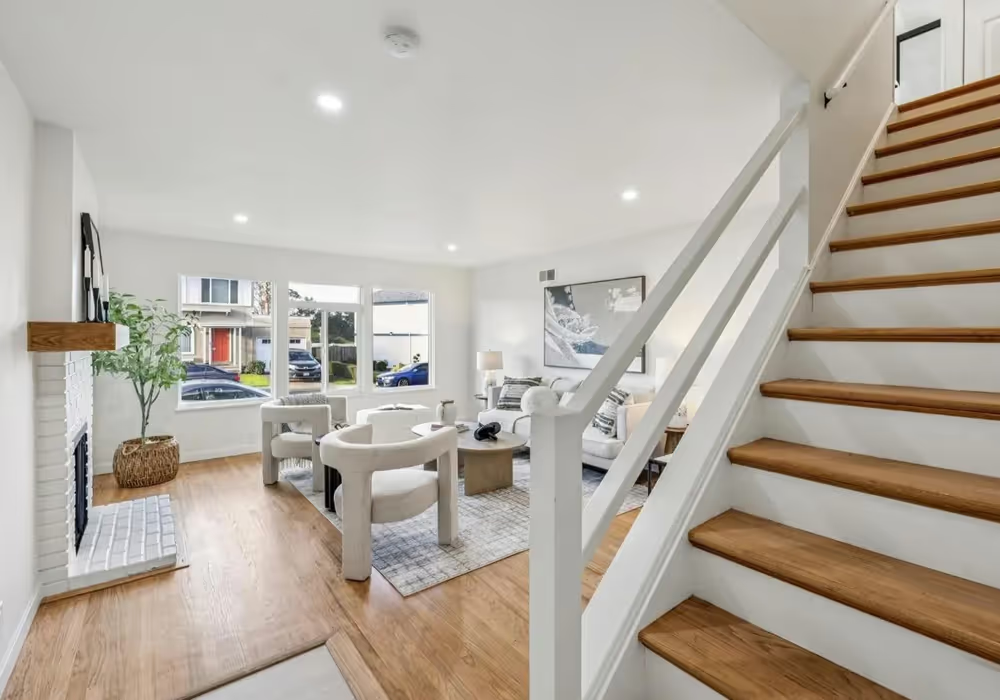
- Layout improvements or open floor plans
- System upgrades (electrical, plumbing, HVAC)
- Additions or ADUs that increase usable space
You don’t need to strictly focus on these aspects if you don’t want to. But be aware that they are the proven paths to higher long-term equity.
Some homeowners opt for renovations that suit their personal preferences for long-term living, and don’t plan to sell at any point. The above points often serve this purpose just as well.
Lastly, some homeowners who want to quickly renovate to sell will opt for riskier choices that they hope will maximize their home’s resale value in the short-term. This approach can and does often work, but it runs the risk of falling short of expectations or in some cases producing a loss, especially if the upgrades exceed the neighborhood’s expectations.
For many Los Angeles homeowners, remodeling works better as a long-term strategy where you can more carefully improve your home while gradually increasing its value.
Remodeling Projects That Typically Increase Value
Not all remodeling projects are the same. If you want to increase value, these are the remodel projects and features, driven by California buyer demand, that typically increase value:
- Kitchen remodels
- Bathroom renovations
- Room additions and ADUs
- Exterior and architectural upgrades
- Energy efficiency and smart home improvements
Which Remodels Deliver the Best ROI in Los Angeles
According to the NAR Remodeling Impact Report, most remodels don’t even fully cover their costs at resale. That’s why it’s often safer to stick with the highest-ROI remodels:
The above remodels are good choices if maximizing ROI is your main goal, above liveability or long-term equity. Lifestyle-driven remodels, by contrast, are those that increase the home’s liveability and your personal enjoyment.
If you want to do your best to ensure the above remodel options meet those ROI percentages or higher, remember to think about buyer expectations. Expectations usually start with your neighborhood, so it’s worth it to think about how you can align your spaces to match neighborhood expectations.
When homeowners over-improve their homes chasing a higher ROI, that is often when they ironically fall short. Over-investing may raise resale value, but the ROI percentage value often won’t reflect that. Likewise, under-investing may save you money, but have a negative effect on the project’s ROI.
Kitchen Remodeling in Los Angeles
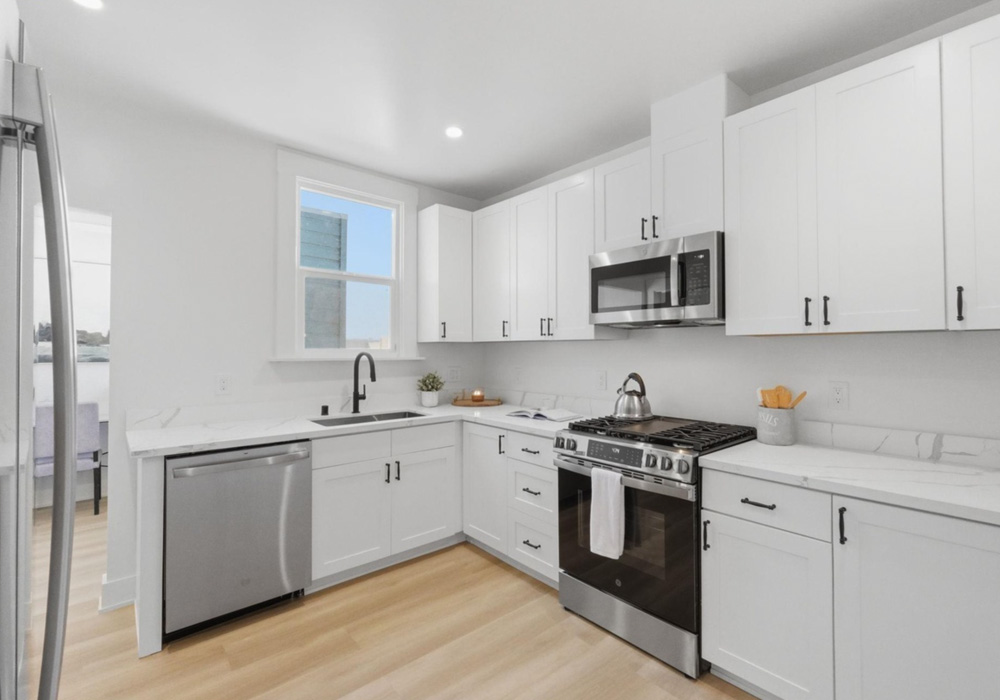
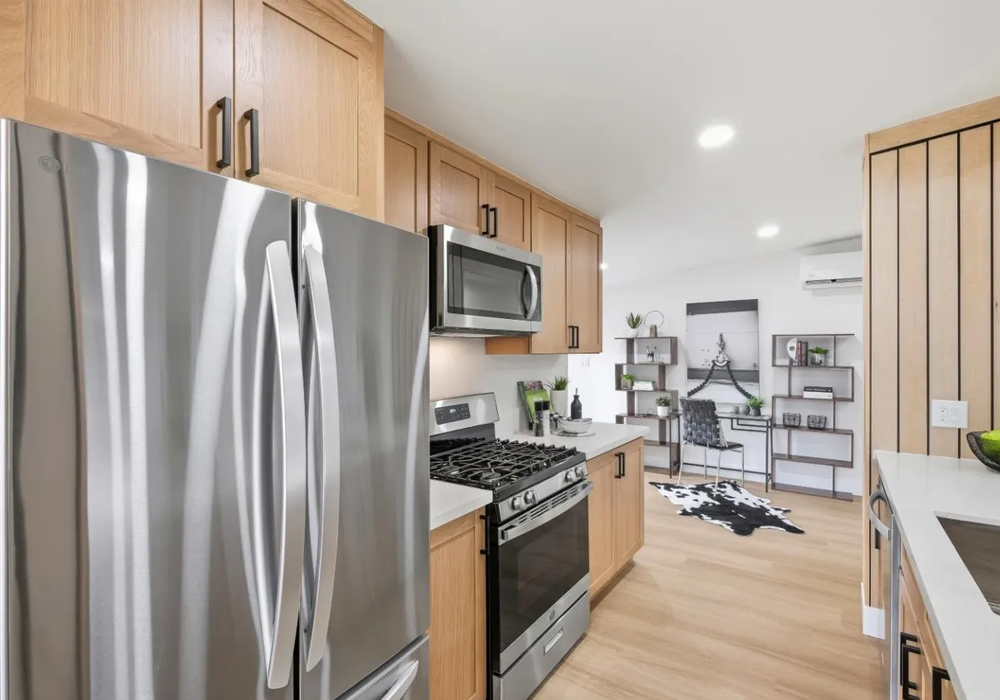
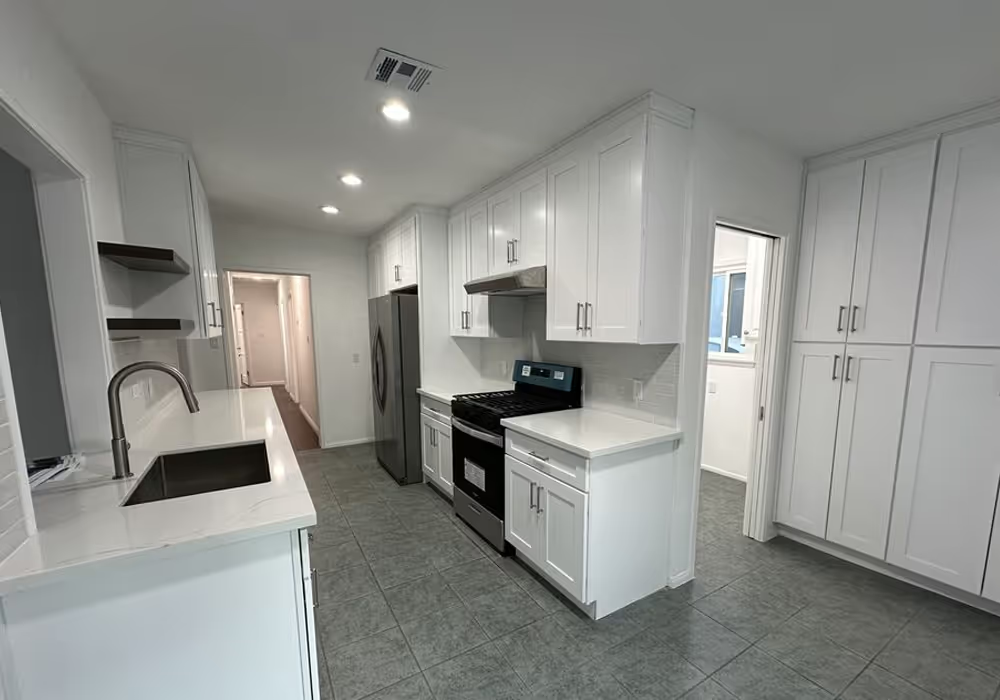
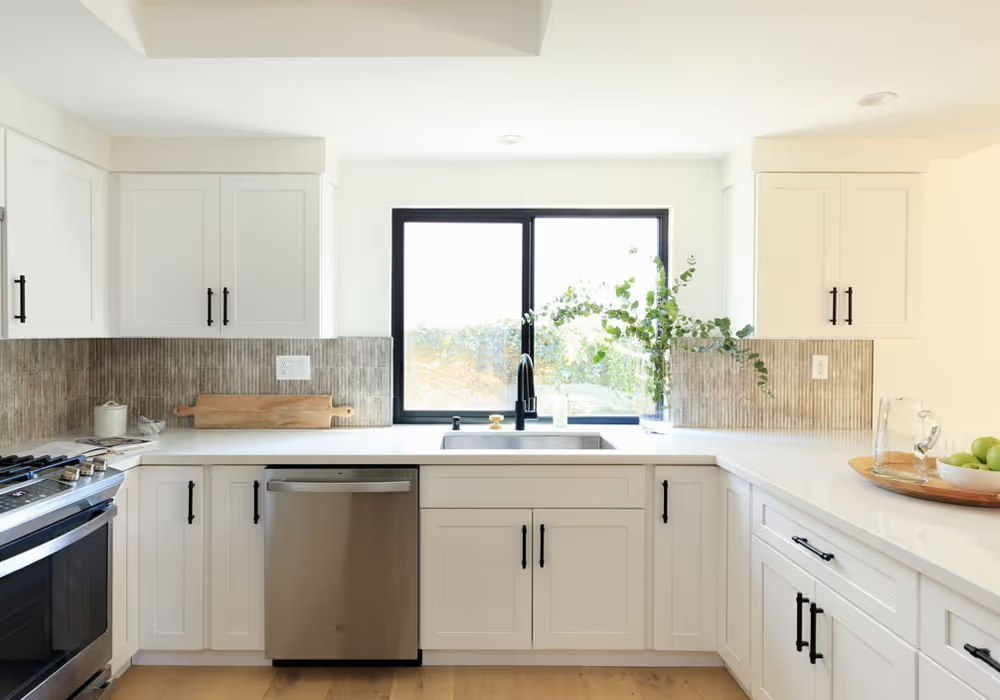
In terms of area-wide renovations, kitchens have an average ROI of 75%. That is by far the highest ROI for a room remodel that isn’t a full conversion. Why is that?
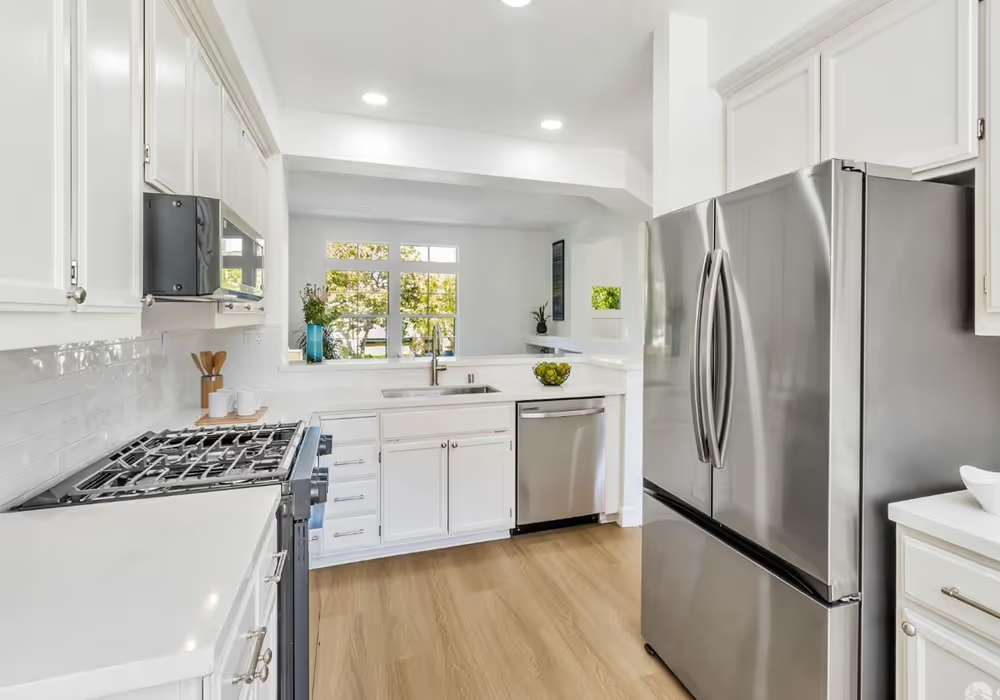
Kitchens are one of the most used spaces in any home. In Los Angeles, kitchens often double as gathering and socializing spaces with open concept designs. In LA, and in most other markets, kitchens are the first indoor spaces potential buyers evaluate.
Kitchens are also readily visible in most homes, setting strong impressions. For example, an outdated kitchen will make a modern, attractive home look older and less inviting or functional.
The median Los Angeles home was built in 1976. Compare this to the national average of 1981. Kitchen upgrades fill in a specific LA homeowner demand for major spaces that match modern expectations, without needing to demolish old structures in the high-cost real estate market. Modern LA kitchen remodels can do best when they include:
- Improved built-in storage
- Greater usability
- Better lighting
- A feeling of more space
- Sustainable materials
- Smart appliances
Kitchen remodels are also normally based on the homeowner’s personal goals. Many are ROI-centered, focusing on resale in the near future. But according to a Redfin study, LA homeowners own their homes, on average, far longer than homeowners in other US cities. That means it’s important to balance practical financial and lifestyle choices to ensure a more useful remodel. Often, this means making tradeoffs, especially within a budget.
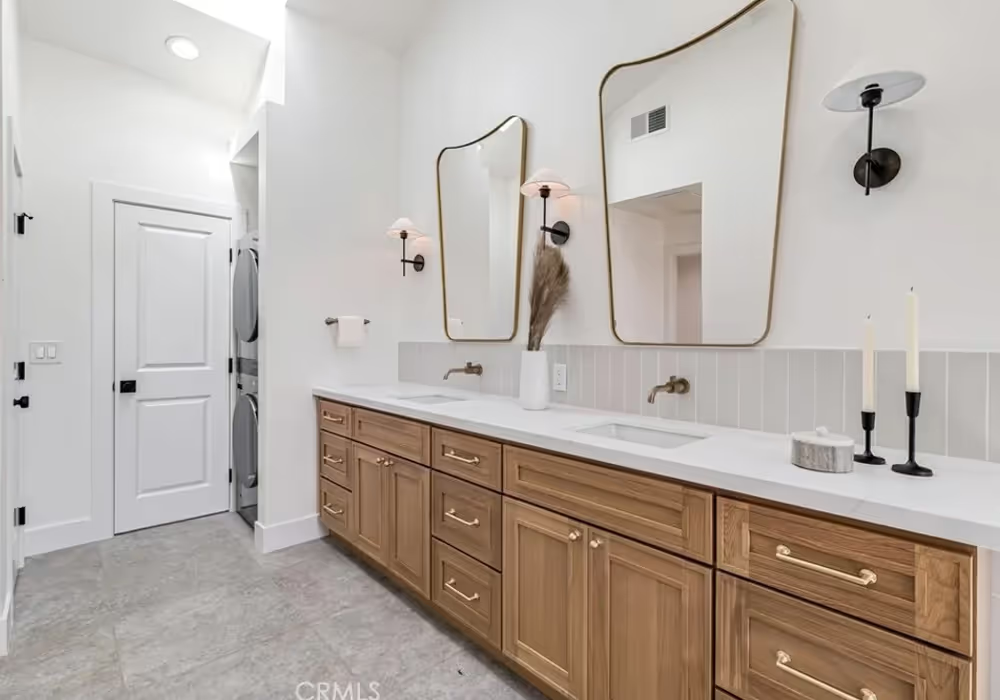
Bathroom Remodeling and Luxury Upgrades
Industry surveys like the National Association of REALTORS® Remodeling Impact reports repeatedly reveal that bathroom renovations and remodels rank highly in terms of both potential ROI and buyer satisfaction.
Some luxury bathroom features make a home score particularly high on NAR “joy scores” and on financial returns:
- Walk-in showers
- Rainfall showerheads
- Freestanding tubs
- Heated floors
- Double vanities
Homebuyers consistently value natural light as well as classy materials, especially those that are long-lasting and sustainable. Brighter, more open layouts can better maximize light and usability. Some upgrades, if possible and not overly burdensome, can further maximize the long-term value and enjoyability you get from a bathroom:
- Larger windows
- Skylights
- Improved lighting plans
- Light-reflecting materials
- Plans that make the bathroom feel more spacious
Also, if you’re considering any remodel in LA that involves plumbing, electrical, mechanical, or structural changes, read our “Risks and Downsides of Remodeling in Los Angeles” section.
Remodeling for Lifestyle vs. Remodeling for Investment
Each remodeling choice will depend on the broad goals you set for your home. Normally, the goals of a remodel fall into one of two categories:
Depending on which category your goals fall under, you may end up adjusting your decisions.
Homeowners
- Customization for work-from-home, family needs, aging in place
LA homeowners normally remodel for one of two reasons:
- Staying long-term
- Short-term resale
When you remodel your home for your own lifestyle, it’s important to balance timeless value with personalization that suits your day-to-day life. If you plan on staying in your home for a long time, good remodeling focuses on:
- Functionality
- Comfort
- Adaptability and aging in place considerations
- Applicable work-from-home utility
- Family needs
Those who want to sell faster benefit more by focusing on the high-ROI features we discussed. However, it’s important to not lose sight of the big picture, which is long-term value and equity building. Long-term value improvements may not always maximize resale value next year, but they are more often reliable and safer than speculative, resale-focused projects.
Investors
Investor remodeling decisions focused on financial performance can make the most use out of smart forecasting. Renovating apartments or rental properties is different from remodeling for resale, as you have to consider livability concerns and rental value drivers.
For rental investors, the value drivers are not usually the flashiest. Investors are also required to consistently cover basic livability costs, so having the best appliances won’t benefit them in the same way as they would for an individual homeowner.
Instead, investors can do better by focusing on the proven rental value drivers that prospective renters are always looking for, which start with:
- Off-street parking
- In-unit laundry
Listings with just these two features got 85% more daily saves and 103% more daily shares amid Zillow's 5.6 million+ rental listings.
If the essentials are covered, renters start looking for perks that just make renting there a little bit better, piece by piece, but within their budget. These perks range widely and include:
- Core Rental Value Drivers
- Air conditioning or modern HVAC
- Dishwasher
- Garbage disposal
- Reliable internet wiring or fiber readiness
- Adequate kitchen storage
- Updated bathrooms and fixtures
- Convenience Features Renters Search For
- Private outdoor space (balcony, patio, small yard)
- Pet-friendly policies and pet accommodations
- Secure package delivery areas
- Covered or secured parking
- On-site storage space
- Upgrades That Help Units Rent Faster
- Modern lighting and brighter interiors
- Durable flooring such as vinyl plank or tile
- Neutral paint and updated finishes
- Functional kitchen layouts
- Updated appliances (mid-range, not luxury)
- Operational Improvements for Investors
- Low-maintenance materials
- Water-efficient plumbing fixtures
- Energy-efficient lighting and appliances
- Easy-to-clean surfaces
- Durable cabinetry and hardware
For investors, the goal is a balance between rent lift against renovation cost and lease-up speed. In this case, the better upgrades are the ones that help a home with more:
- Day-to-day convenience and functionality
- Leasing appeal
- Pleasant spaces indoor and outdoor, including for pets
- Durability
Lastly, it’s important to leverage this knowledge with the goal of reducing time-on-market. Buyer behavior changes as a rental unit remains listed unoccupied for longer, especially when you lower the rent in response.
Check out our Revive AI tools for deep analysis, planning, marketing, and insights, all in seconds.
ADUs, Additions, and Expansion Opportunities
- Why ADUs are especially valuable in Los Angeles
- Rental income and multigenerational living
- Regulatory considerations and long-term value impact
In Los Angeles, the low availability of land and high property prices lead some homeowners to find alternatives to moving or buying a new home. Also, the city government has aggressively expanded ADU rights since 2017. So, the increasingly common alternative to moving or buying a new home is through remodels that add more space to your home. These options include:
- Garage or attic conversions
- Extensions to the structure
- Accessory dwelling units (ADUs)
These options enable you to expand the livable area within your property. If your remodel is thorough enough, you can also create rental income and multigenerational living opportunities.
However, there are potential risks that come with extending your liveable space. In some cases, like a garage or attic conversion, minor improvements may not trigger major requirements, but converting a space into habitable living area typically does. If the space becomes habitable, it’s likely to trigger the need for building permits, code compliance, and potentially zoning considerations. However, the state of California and the Los Angeles Department of Building and Safety regulations on ADUs list the extensive regulations for extensions that meet the legal definition of ADUs.
Basically, when your renovation crosses the fine line and becomes an ADU construction, there are a lot more regulatory hurdles to cross. ADU regulations are, broadly, meant to control for the safety of the inhabitants and congruency with the neighborhood. The city aims to have a managed increase in population density, and many homeowners are happy to create multigenerational households or additional rental units.
Risks and Downsides of Remodeling in Los Angeles
There are always potential risks or downsides to remodeling anywhere. In LA, the same rules apply, but risks like budget creep or scope expansion may be more costly. So, let’s break down the risks of remodeling so you know what to prepare for, and if possible, avoid.
One: Hidden plumbing, electrical, and structural issues
Plumbing, electrical, and structural issues are the most potentially costly. Unfortunately, they are often only found after demolition or construction have begun. That’s why they often lead to the second problem on this list.
A thorough remodel often includes plumbing and electrical upgrades. If your home is particularly old, modern plastic piping may be a worthwhile investment, reducing the chances for future leaks, water damage, and mold. Likewise, modern electrical upgrades reduce risks while increasing efficiency.
The problems that can arise are due to the fact that many homeowners overestimate the condition of their home’s hidden structures and utilities. This is surprisingly common in the older 1920s-1970s housing stock of the city. Many understand that their home may have these problems, but they underestimate the extent of the problems. Or, they can guess that demolition will uncover faults, but they don’t actively plan for it.
Not including the potential realities of hidden plumbing, electrical, and structural issues in your remodel plan makes it much more likely that you will go greatly over-budget.
Two: Budget creep and scope expansion
Many LA remodel project scopes need to be reassessed in the middle of the project. Older housing stock, labor availability, and other issues often lead to unforeseen changes. In other cases, homeowners simply decide to change or upgrade finishes, or to expand the scope of a remodel that is going well.
There are many factors that can lead to budget creep or scope expansion:
- Discovery of technical or engineering issues
- Change of preferences mid-project
- Changes in material prices (lumber, fixtures, appliances)
- Contractor availability
- Labor cost increase or the need for new specialized labor
- Design decisions made too late
- Upgrade needs triggered by code compliance requirements
- Scope changes driven by resale expectations or market trends
There are only two good ways to prepare for these kinds of issues.
First, have a budget overdraft of 10% to 20% prepared. It’s usually just easier to prepare for something to go wrong. Best case, you don’t need to cut into your overdraft and you just keep the money. Worst case, you aren’t spending much more than you prepared to.
Second, ensure that the planning stages are thorough enough to minimize the chances of needing to go over budget. The planning stage can be optimized with highly detailed design plans, early contractor input, and clear priorities.
Three: Permitting delays and inspection timelines
Across the US, but in California in particular, permitting and inspection requirements can take time and be costly. LA adds more requirements, including the need for multiple plan review departments (building, planning, safety).
Depending on the scope of your remodel, it may require additional approvals for ADUs, additions, or structural changes. There are also zoning and setback compliance reviews to consider, and sometimes utility approvals or upgrades required during permitting.
In addition, there are risks such as:
- Required revisions after initial plan check feedback
- Contractor scheduling delays while permits are pending
- Inspection scheduling delays during peak construction periods
- Re-inspections if work fails inspection requirements
- The impact of local housing policies and code updates on project timelines
The best way to deal with these risks is to simply hire a good reputable local contractor. A good contractor will understand local permitting processes and help navigate delays.
Four: Living through construction
Some people don’t fully process the reality of living through the entire remodeling process. Depending on the scope, any of the following could go on for months:
- Noise, dust, and limited access to parts of the home
- Temporary loss of kitchen, bathroom, or utilities
- Construction timelines extending longer than expected
- Safety considerations for children and pets
- Temporary relocation costs for major remodels
- Reduced privacy due to contractor presence
- Storage needs for furniture and belongings
- Daily schedule disruptions during demolition and installation phases
- Emotional stress of long renovation timelines
It’s crucial to consider your plans for living during a major remodel. Day-to-day life will inevitably include many interruptions and discomforts even near, but especially in, a home undergoing remodeling.
Common Remodeling Mistakes to Avoid
Below, we briefly cover the common remodeling mistakes, and how to avoid them. Most of these mistakes are simple failures in risk mitigation.
Chasing trends over functionality
At Revive Real Estate, we always reiterate the importance of long-term value and timeless design choices over trends. Trends have their place in riskier short-term resale strategies, and even in near-term planning. But timeless design is functional, aesthetically pleasing, and offers greater long-term value and therefore lower risk.
Ignoring neighborhood comps
Neighborhood comparables provide data you can apply to see what buyers value in homes in your area. You can see what they’re paying for similar properties, including what they value and what they can do without.
Ignoring your neighborhood comps may add several types of risk, depending on your property’s specifics. Financial and transactional risks are more common. The result is often mispriced homes, as you are not well-positioned to compete in your local housing market.
Underestimating soft costs and contingency
It’s natural to focus on the biggest numbers when it comes to significant investments. But “soft costs” can end up taking up a widely varying percentage of a remodel’s budget:
- Permits
- Legal fees
- Architectural and engineering fees
- Inspection fees
- Insurance
- Builder’s risk policies
- Contingency
These factors can lead homeowners to stretch their finances, delay projects, and potentially even have to stop work. In Los Angeles, regulatory, environmental, and permitting-related costs can sometimes lead to substantial, project-threatening problems, especially in tight zoning areas.
When it comes to a contingency fund, soft costs are what often leads to needing a 10% or more buffer. Apart from unexpected structural or technical issues, they are the ones that can balloon into serious budget overruns. Often, it’s the repeated evaluations, repermitting, and other extended processes that kill time and money.
Choosing contractors without local expertise
As we’ve covered, there are a lot of particulars when dealing with remodeling regulations in LA. If the contractor you choose is sub-par, and especially if they lack experience navigating the LA regulatory environment, it can cause several serious threats to your remodel:
- Lack of familiarity with LADBS requirements
- Logistical challenges
- Unfamiliarity with local seismic requirements
- Falling afoul of local zoning laws
These kinds of issues can lead to substantial rework costs, permit-related delays, liabilities, and even lien issues and project abandonment.
How to Maximize the Value of a Remodel
With this short checklist, you can make sure you’re doing all you can to maximize the value your remodel brings to your home.
First, set clear goals early. Many financial challenges result from goals being changed mid-project. There are already enough problems that can arise. So, clarity helps avoid compiling soft costs and other expenses that cause you to go deep over-budget.
Second, prioritize functionality and flow. The improvements that make the greatest impact on your home’s long-term value are the ones that make it easier to use. A focus on functionality and flow narrows your budgetary focus while doubling to ensure you get the most value out at a more modest cost.
Third, balance design ambition with resale reality. Your personal style matters to you, but highly niche additions often don’t create higher resale values. Instead, focus on durable materials and broadly appealing finishes.
Fourth, incorporate sustainability and energy efficiency. Energy-efficient features aren’t the cheapest upfront, but they lead to long-term savings. Your monthly expenses can be reduced greatly with remodels that include features like:
- better insulation
- efficient HVAC systems
- LED lighting
- energy-efficient appliances
- modern windows
Lastly, work with experienced, local professionals. Good contractors and sub-contractors are usually not the cheapest options. However, they can save you a lot of money by avoiding the pitfalls and soft costs that often arise during LA home remodels.
Is Remodeling Worth It for You?
This is a highly personal question. What we can provide is a quick checklist for signs that remodeling may or may not make sense.
Remodeling Makes Sense If…
- You like your location and lot
- There is potential to build on strong foundations
- You want customization without relocation
- You have sufficient equity or budget to fund improvements
- Comparable homes in your area (neighborhood comps) support the upgraded value
- The remodel scope fits within your long-term plans (5+ years)
- You can improve functionality without major structural rebuilds
New Construction or Moving May Be Better If…
- The structure is beyond economical repair
- You need major square footage increases
- Zoning allows a better use of the property
- Renovation costs approach or exceed new construction costs
- The existing layout cannot support your needs even after remodeling
- Permitting or code requirements make remodeling overly complex
- You plan to sell soon and cannot justify the renovation timeline
Frequently Asked Questions
How much value does remodeling add in Los Angeles?
Remodeling in Los Angeles adds significant value because of high home values and land scarcity. Bathroom and kitchen remodels add the most value overall, each offering relatively high ROIs as well.
Is remodeling cheaper than new construction in LA?
Remodeling is generally cheaper than new construction in LA, unless you’re comparing highly luxurious remodels with very tight-budget new construction projects. For simple cosmetic remodels and minor updates or additions, remodeling can cost under $40 per square foot. New structural construction often costs $350 to $700, or more, per square foot.
What remodel has the highest ROI?
New hardwood flooring, garage door replacement, and front door replacements offer the highest ROIs, according to multiple industry studies by the NAR and HGTV. There is a clear trend of the most readily visible, often-used features of a home offering the highest returns for each dollar spent on improvements. These improvements are low-cost, low-reward, but are stable and worth investing in for the strong appraisal and retail value they offer. In terms of major remodels, kitchens and bathrooms offer some of the highest returns, with kitchen renovations averaging around 70% to 75% cost recovery and bathroom remodels typically ranging from about 60% to 70%.
Should I remodel before selling in Los Angeles?
Most of the time, yes, but not necessarily always. Remember that LA home values are driven by local market dynamics more than finishes. Location, local expectations/comparisons, architecture, and positioning matter at least as much. However, remodeling, especially with the highest-ROI remodels, can lead to better returns and a more profitable resale.
Is Remodeling Worth It in LA?
Remodeling in Los Angeles is a strategic decision. That means remodeling is normally best thought of in terms of long-term value. You can measure a remodel’s value in terms of both the personal joy you get from living in an improved home and in the equity it builds, giving you more flexibility in the long-term.
Whether remodeling is worth it is a question of financial return, lifestyle, and market conditions. That’s why it’s important to take a measured, professional look at the consequences of remodeling.
How much is your home's worth?
Get your personalized estimate today.