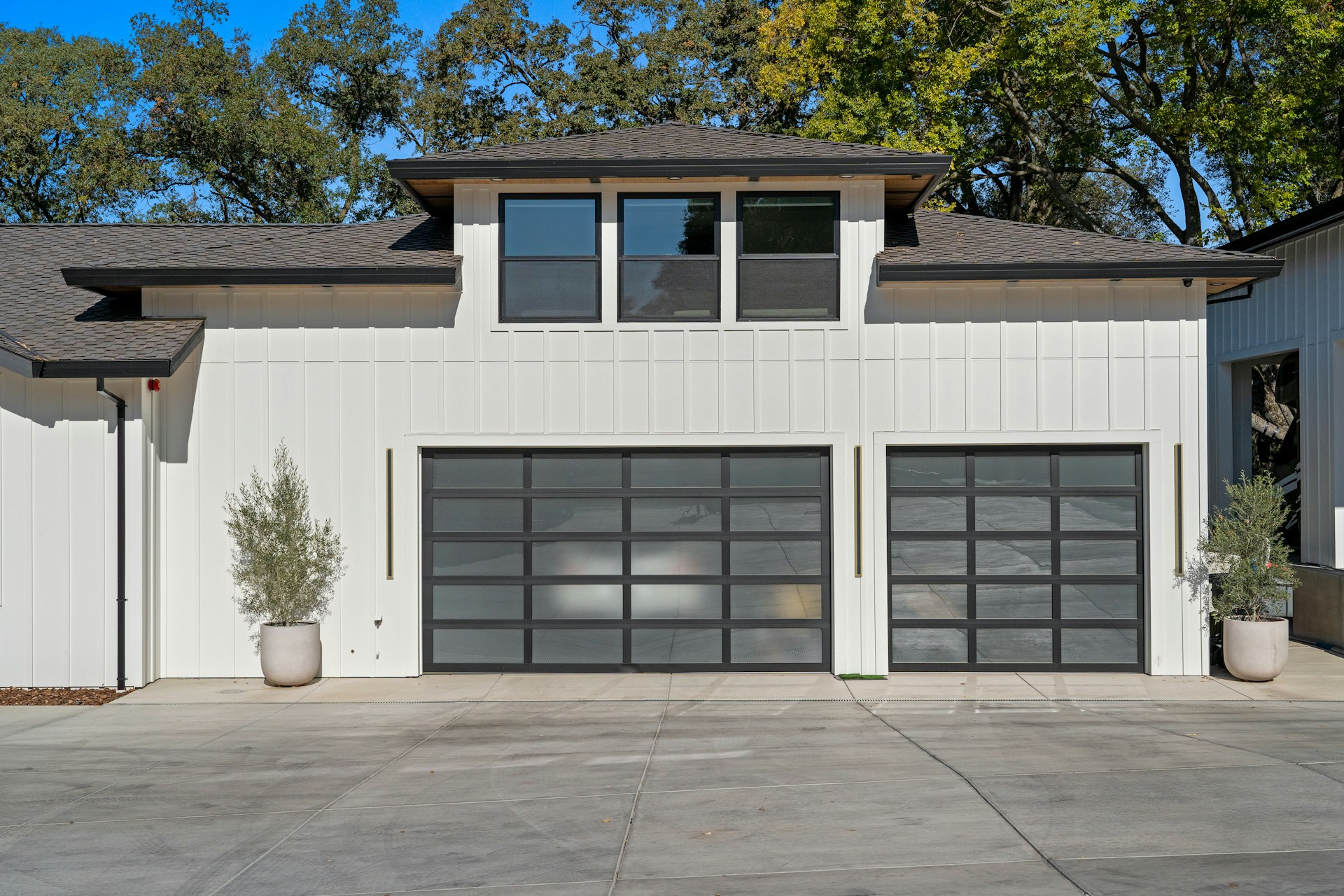
Across Los Angeles, homeowners are asking a question that used to feel straightforward: Should I move, or should I remodel? In decades past, starter homes weren’t forever. When a home no longer suited your needs, you traded it in for a new one. Why, then, is this question of moving or remodeling showing up more than ever now?
What has changed is not just the market, but the math behind that decision. Homeowners today are sitting on meaningful equity, often paired with historically low mortgage rates, while facing a very different reality if they try to buy again. Should they choose to look elsewhere, they’re going to face high purchase prices (according to the California Association of Realtors, the median home price in Los Angeles County is around $900,000), limited inventory (which continues to sit well below per-2020 levels), and elevated interest rates.
At the same time, expectations around how a home should function have shifted. More time at home, hybrid work, and long-term lifestyle planning have pushed homeowners to reconsider whether their current space can be adapted rather than replaced.
This is no longer a simple housing choice. It is a decision about how to deploy capital, manage risk, and shape daily life. The right answer depends on how those factors come together in your specific situation.
The homeowners who make the best moves in this environment are evaluating their options with a clear understanding of cost, timing, and long-term impact. At Revive, we focus on the smartest way to unlock the full potential of the home you already own. Sometimes that means selling, and sometimes it means staying. But what it boils down to in either case is a better decision and a smarter starting point.
To start the conversation, enter your address.
Why More Los Angeles Homeowners Are Remodeling Instead of Moving
The shift toward remodeling is a rational response to current market conditions. Limited inventory continues to push buyers into bidding wars, particularly for fully renovated homes that attract multiple offers and sell above asking price.
Inventory in Los Angeles remains constrained (the shortage is estimated at hundreds of thousands of units), especially in neighborhoods where homeowners actually want to stay. Even when homes are available, buyers are often paying not just for location, but for finishes and design decisions that may not fully align with their needs.
At the same time, the cost of “trading up” has become harder to justify. Moving to a slightly larger or more updated home often means taking on a much higher monthly payment, even if the price difference is modest (a $200,000 price increase at current rates could add $1,200 to $1,800 to your monthly mortgage payment). Higher interest rates amplify that gap, and property taxes reset based on the new purchase price, increasing long-term carrying costs.
For many homeowners, staying put offers a different kind of advantage. They already have a favorable financial position, a known neighborhood, and a home with untapped potential. Remodeling allows them to target specific problems, improve functionality, and increase value without starting over entirely.
It’s not remodeling for the sake of it, but rather making more efficient decisions with the asset you already have.
Remodeling vs Moving — The Cost Comparison
The Cost of Remodeling in Los Angeles
Remodeling costs in Los Angeles vary widely. Kitchens and bathrooms tend to anchor most renovation budgets because they drive both daily use and perceived value. However, the gap between a functional upgrade and a high-end renovation can be substantial, and not all spending translates into proportional value. The difference between a well-planned, ROI-conscious remodel and an overbuilt one often comes down to discipline in scope.
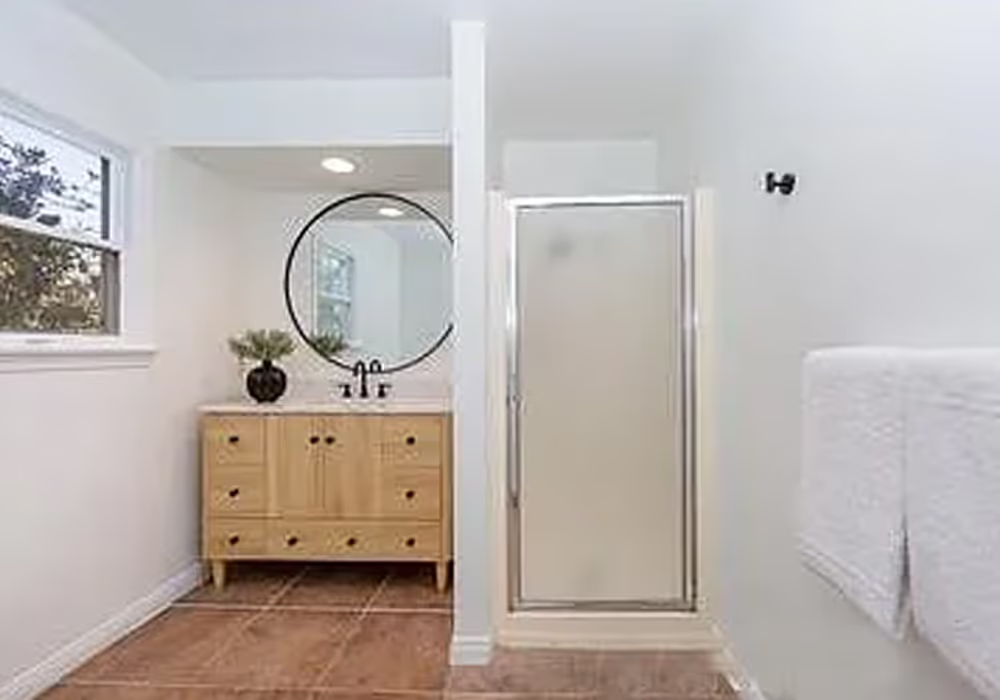
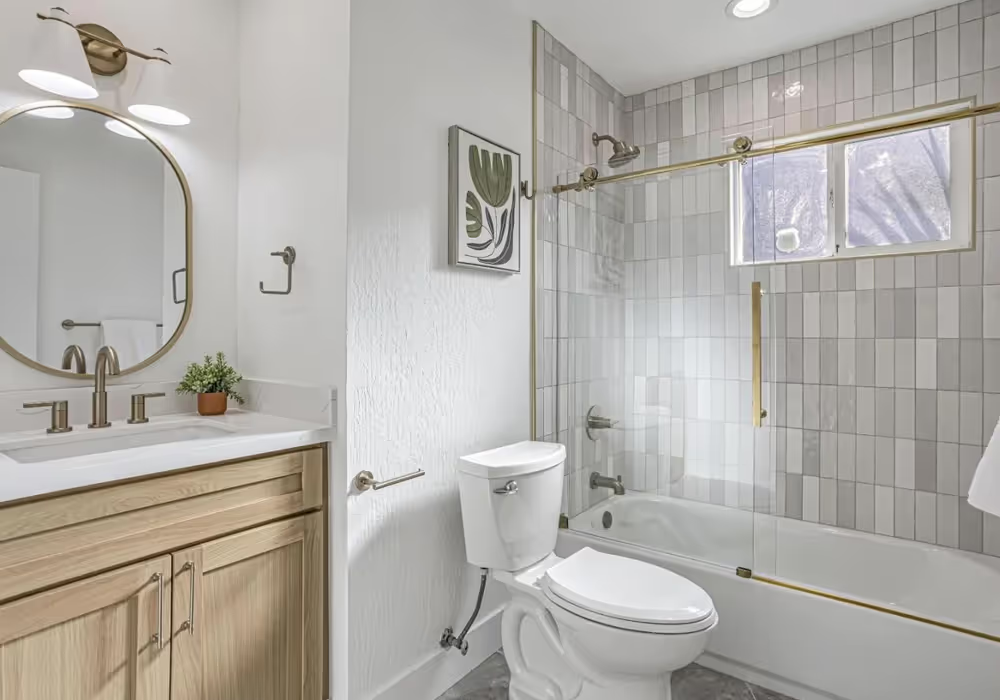
In LA, a typical kitchen remodel can range from $40K to $120K, while a bathroom overhaul can span $20K to $60K, or beyond in both cases. Mid-range kitchen and bath remodel projects will typically return 60-70% of their cost, so homeowners have to thread the needle between doing too little that it doesn’t help their lifestyle or improve their home’s value, or going overboard. This is where our experts can help guide you toward the most impactful upgrades aligned with market expectations.
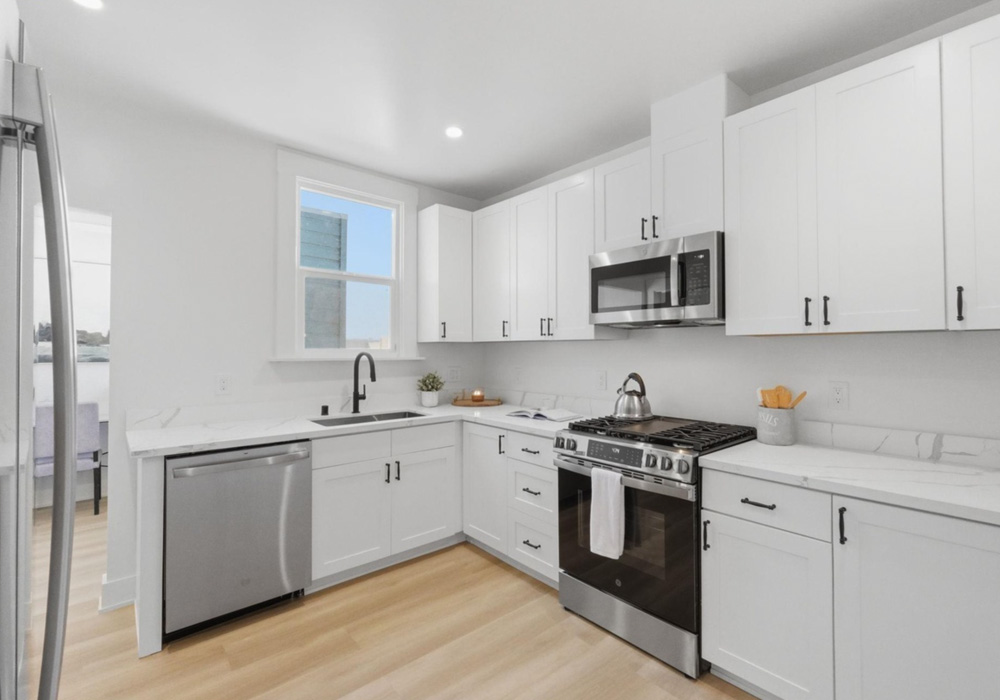
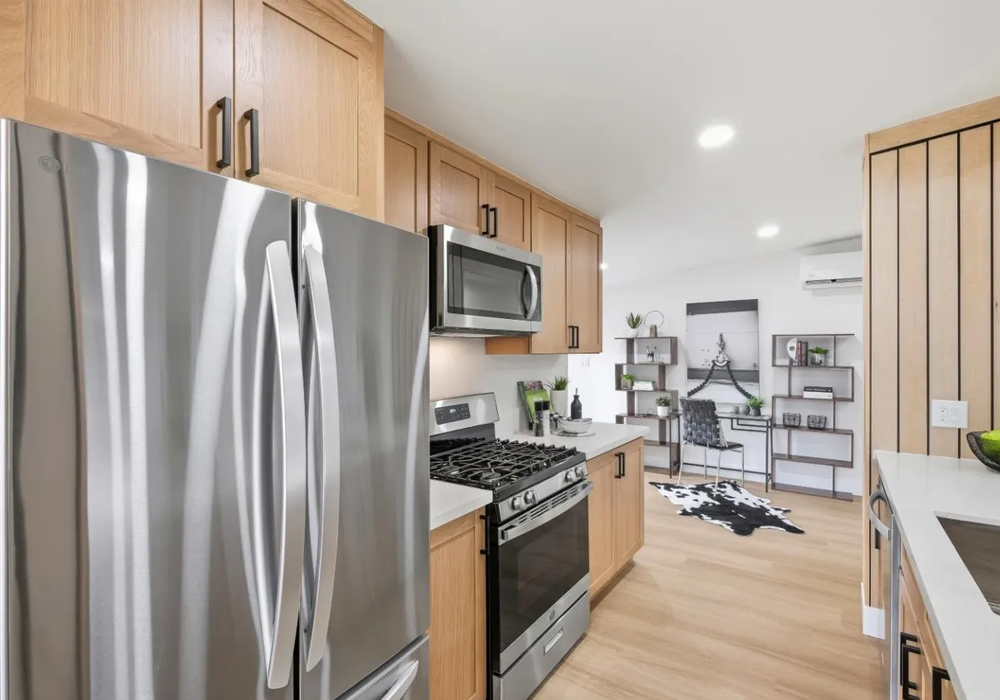
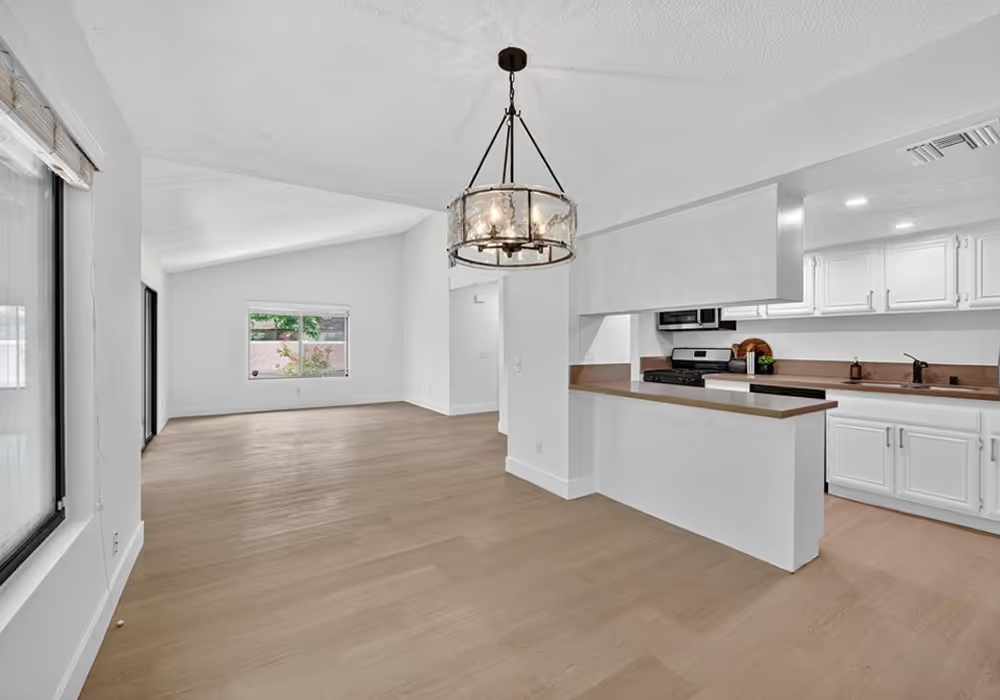
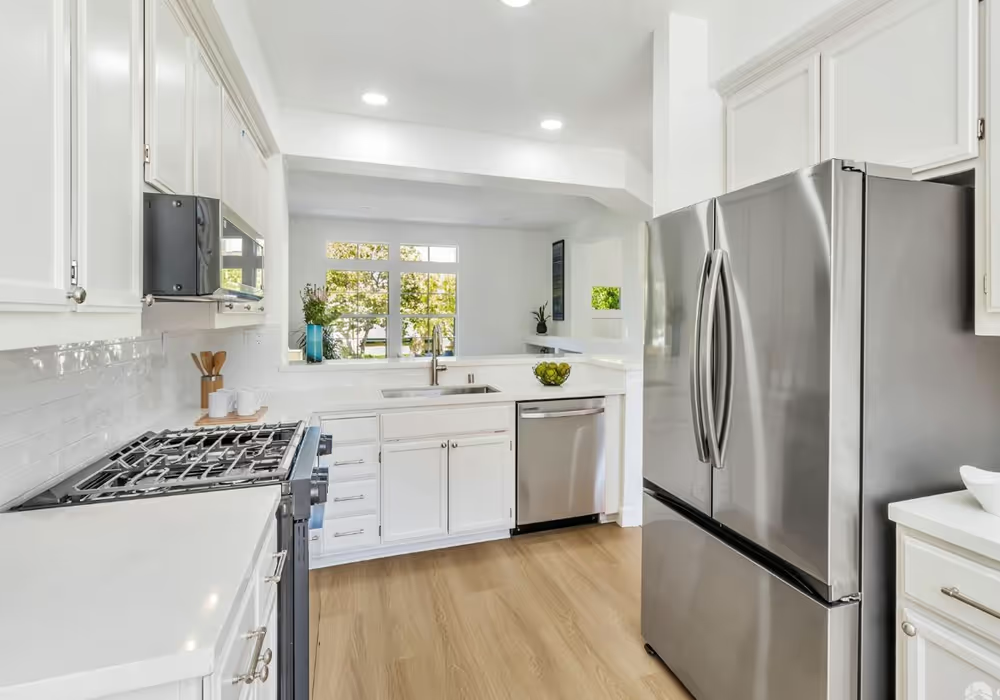
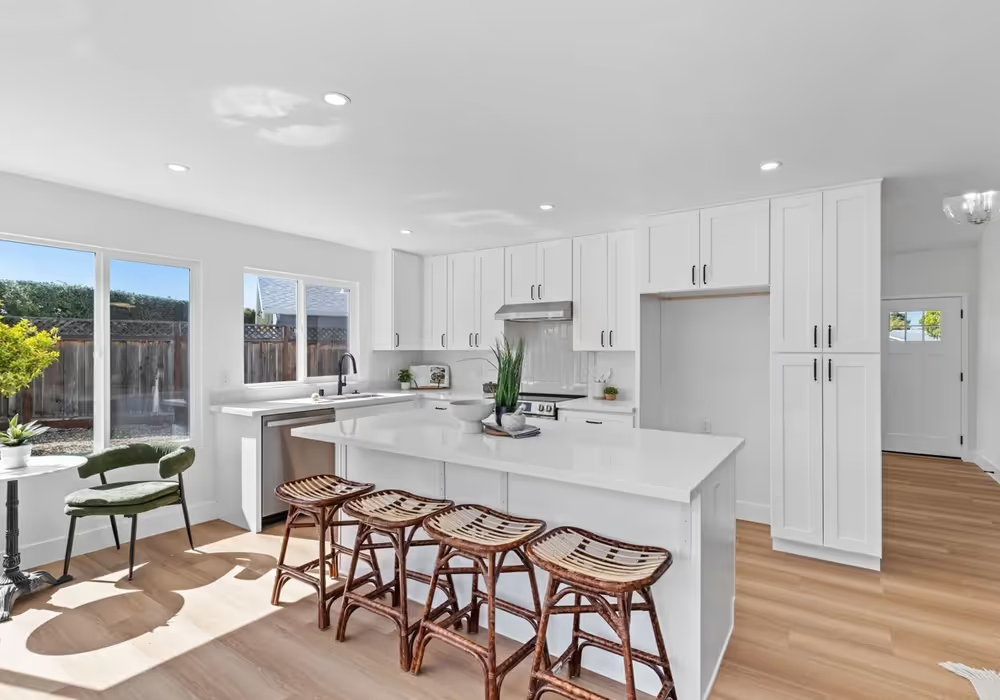
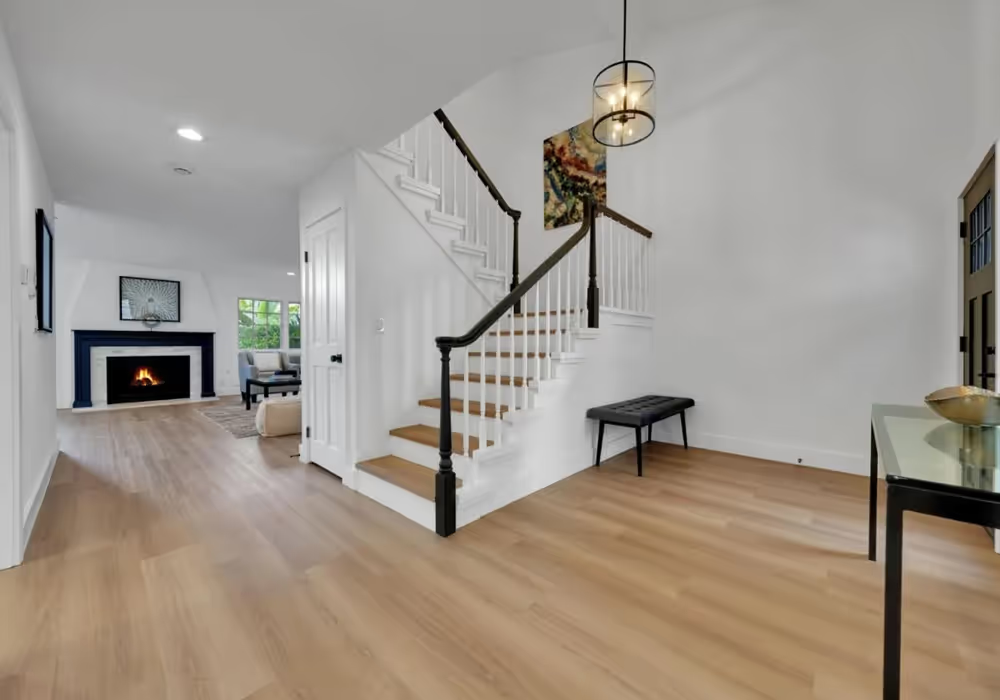
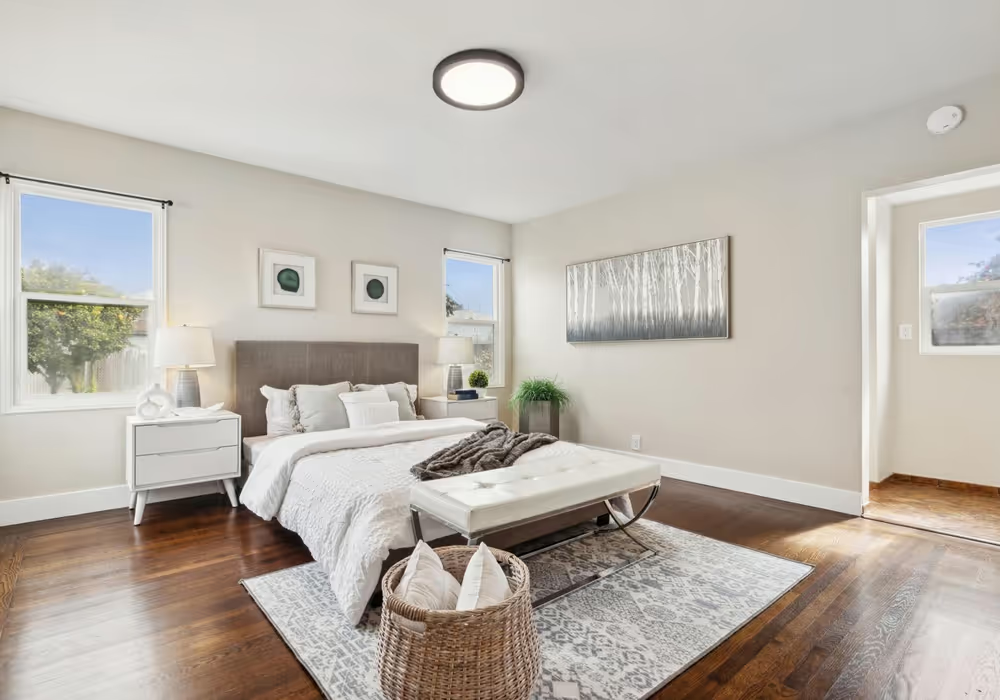
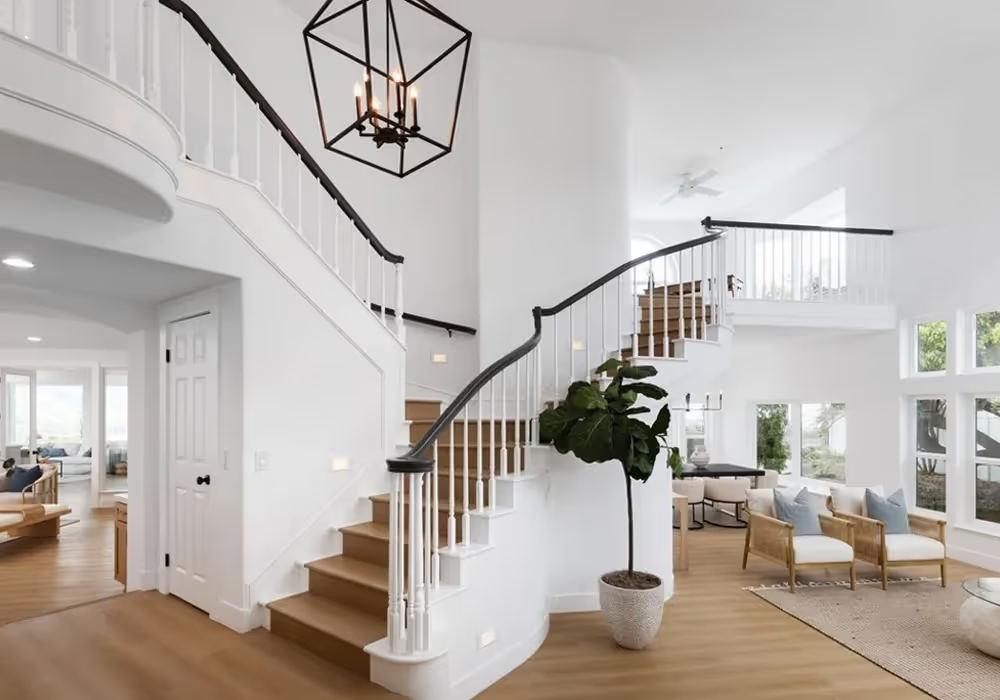
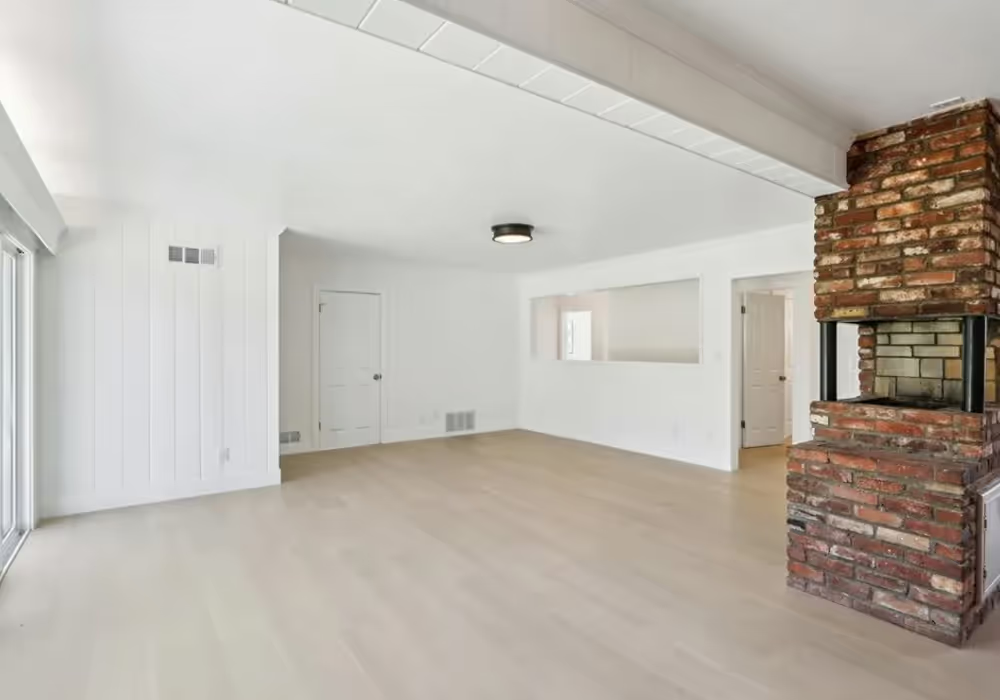
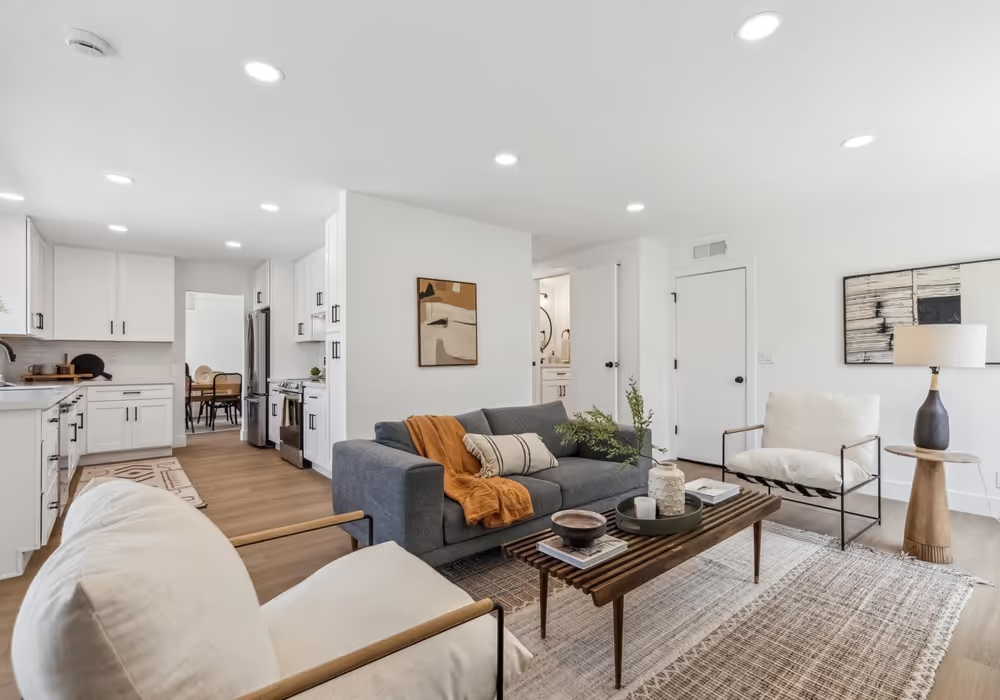
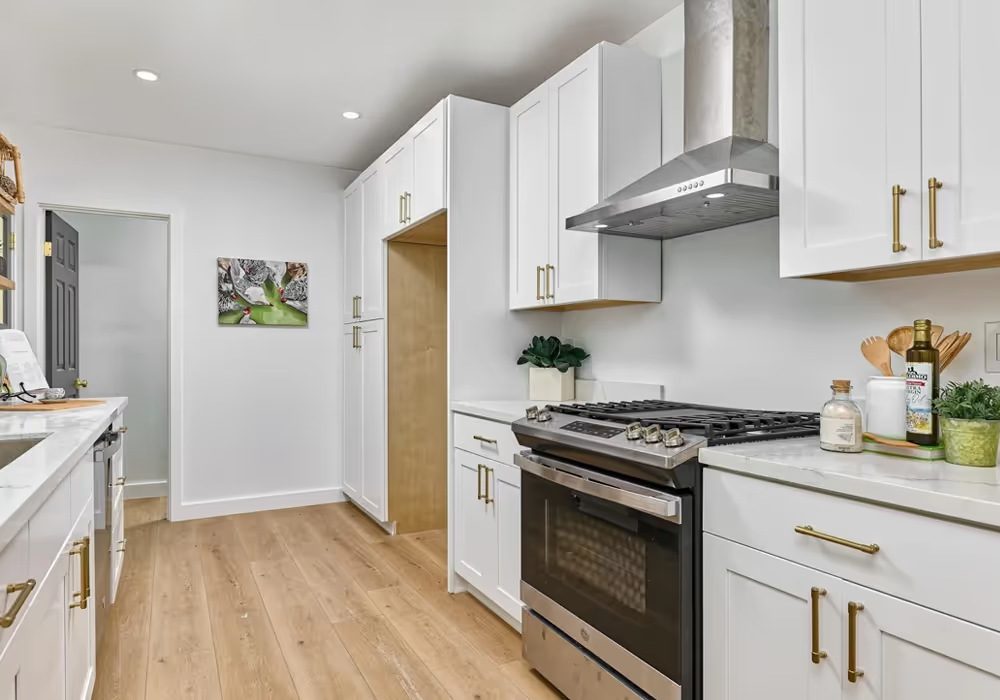
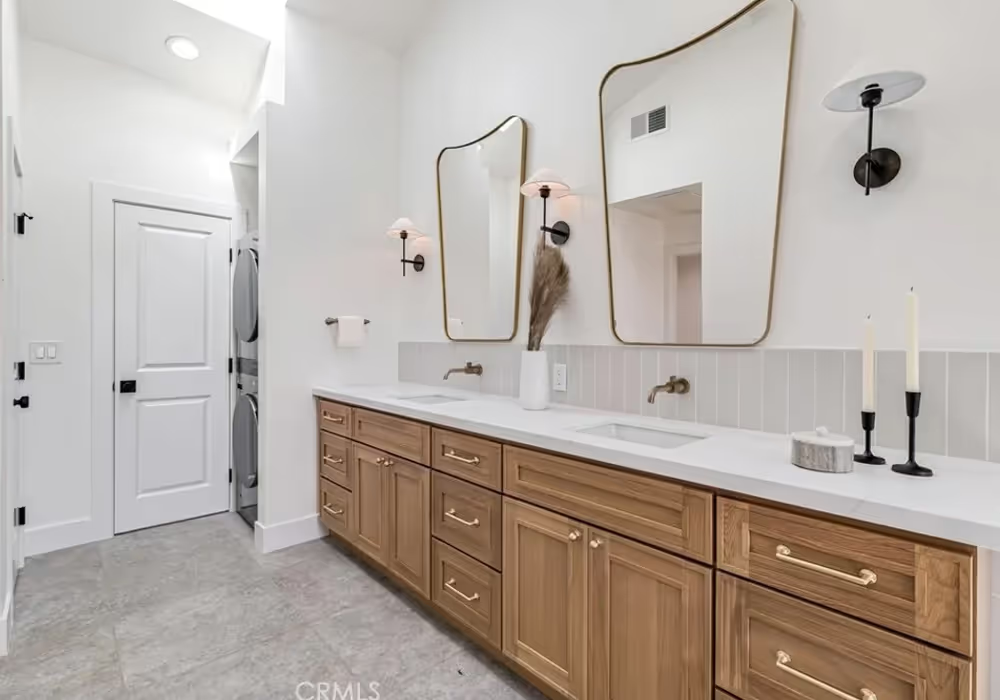
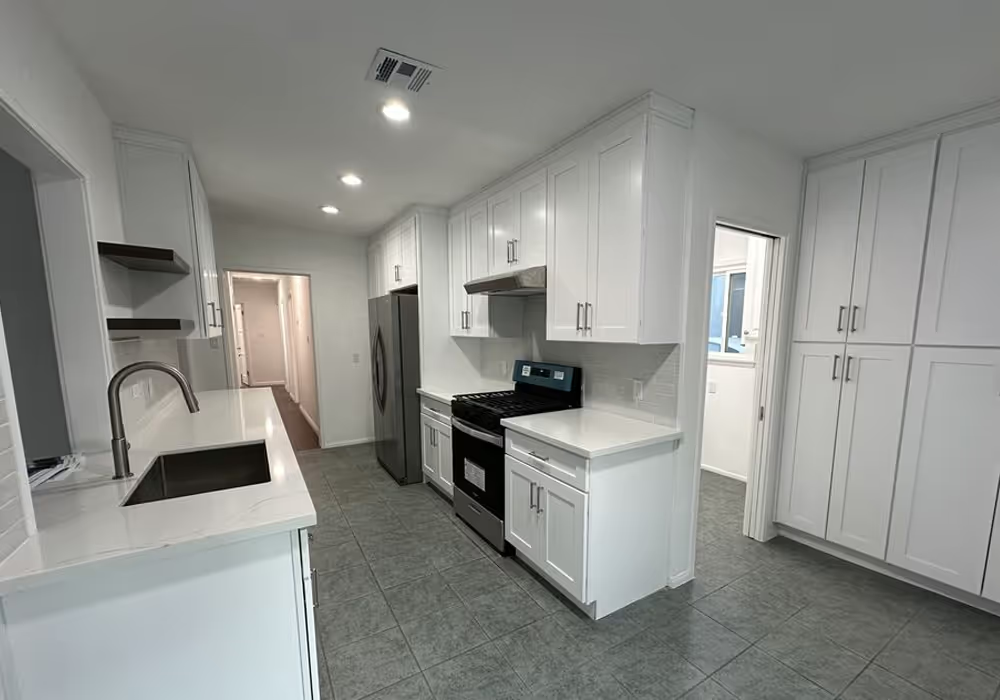
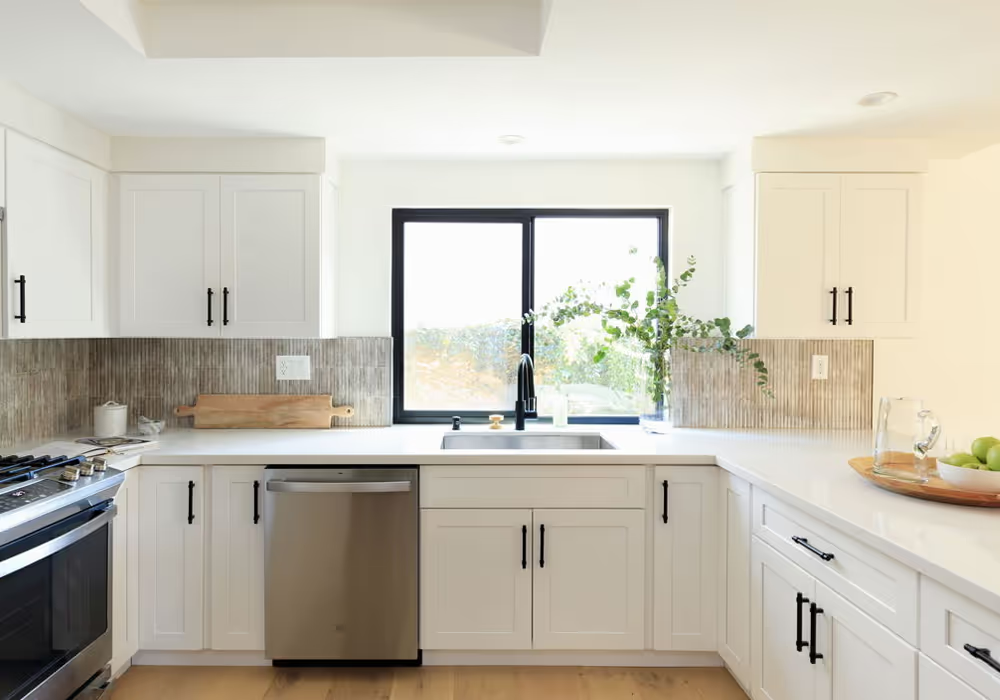
Take a look at some of our recent kitchen renovations that made a huge impact in our owners’ lives.
Another important distinction is between maintenance and improvement. Many homeowners approach remodeling as optional, but in reality, part of the budget is often used to address deferred maintenance. Roofing, plumbing, electrical systems, and structural issues, though not the sexiest of remodel projects, are not discretionary. These are foundational investments that protect your home’s value. And, buyers price these projects in, meaning that sellers with fix it upfront or accept a lower sale price.
A more strategic approach, which has become increasingly common, is phased remodeling. Instead of committing to a full-scale renovation upfront, homeowners prioritize high-impact areas first, then sequence additional improvements over time. This reduces financial pressure and allows decisions to be made with more clarity as the project evolves.
The Cost of Moving in Los Angeles
Moving introduces a different, often underestimated, cost structure.
On the selling side, homeowners face agent commissions, preparation costs such as repairs and staging, and closing costs, which often add up to 7-10% of the home's value. These are relatively predictable, but they still represent a meaningful reduction in net proceeds.
On the buying side, the financial shift is more significant. Down payments are larger in absolute terms, and interest rates directly affect monthly affordability. A one-percent increase in mortgage rates can reduce a buyer’s purchasing power by roughly 10%, adding yet another hurdle to today’s restrictive buying environment.
There are also costs that rarely make it into initial calculations. Moving itself (local costs range from $2-8K), temporary housing (which can exceed $3-5K a month in LA), storage, and the general disruption of relocating all add up. More importantly, they introduce friction into the process, both financially and emotionally.
Which Is Typically Cheaper?
There is no universal answer, but the comparison becomes clearer when you separate short-term cash outlay from long-term financial impact.
Remodeling often requires upfront investment, but it allows homeowners to preserve their existing mortgage terms, which in many cases are significantly more favorable than anything available today.
Moving, on the other hand, may appear simpler in the short term, but it often results in a higher ongoing cost structure. The combination of a new loan, higher rates, and reset taxes can create a long-term financial burden that outweighs the benefits of the move. For example, a homeowner with a sub-4% mortgage rate could face increased monthly housing costs of 40-60%, even for a similarly priced home.
Remodeling tends to win when you have a lower interest rate, your home is in a desirable area, and your renovation budget is targeted at improvements that directly address how you want to live, and aren’t excessive. Then again, moving makes more sense when the gap between the current home and the ideal home cannot realistically be closed through renovation (for example, more space that can’t be solved with an addition), or when the renovation cost exceeds 60-70% of the home’s value increase.
The good news is that we have options, whichever path you choose. Our Renovate to Sell program offers pay-later renovations designed to maximize your home’s sale value. Staying put, and making changes? Renovate to Stay is the easiest way to transform your living space. In both scenarios, you’re guided by Revive experts, vetted contractors, top-line designers, and industry experts who help you make coordinated, value-added decisions.
Timing and Market Conditions
In the current Los Angeles market, selling conditions can still be favorable, particularly for well-positioned homes. However, that advantage is offset by the challenges on the buying side, where affordability constraints and competition remain real factors.
Interest rates are the central variable. Mortgage rates have more than doubled since 2021, fundamentally changing the cost of moving. Replacing a low-rate mortgage with a significantly higher one changes the economics of moving, even if the new home is only marginally more expensive.
Remodeling timelines are more controllable, though not without complexity. Permitting (which can take months in Los Angeles), contractor availability, and scope can all influence duration, but homeowners retain more control over pacing. Projects can be phased, adjusted, or paused if needed.
Buying, by contrast, is less predictable. The timeline depends on market availability, competition, and the alignment of multiple transactions. It is a single, high-stakes transition rather than a series of controlled decisions.
Lifestyle and Emotional Factors
What You’d Lose by Moving
Financial considerations are only part of the equation. Moving also involves giving up intangible advantages that are difficult to replicate. Location is one of the most significant factors, particularly if you love the park down the street for your kids, the ability for them to walk to school, or your easy commute on the days you’re in the office.
There’s also emotional equity in the home. Over time, people invest memory and identity in where they live, not just money, whether it’s because your first child was born here or because the home has been in the family for a few generations.
What Remodeling Can (and Can’t) Fix
Remodeling is powerful, but even we know it has limits.
Renovation is highly effective at improving layout, functionality, and day-to-day usability. Walls can move, kitchens can open up, and underutilized space can be repurposed. Square footage can be added through extensions and ADUs. Systems can be modernized, and deferred maintenance can be addressed in a way that strengthens the home over the long term.
However, certain constraints cannot be changed. Lot size, zoning restrictions, and fundamental location characteristics are fixed. If the core issue is a lack of space or a neighborhood that no longer fits, remodeling may not fully solve the problem.
Remodeling Trends Driving the “Stay Put” Decision
While your style of living in your home has changed over time, the nature of remodeling itself has also evolved.
We no longer see kitchens as just a resale play. This is the beating heart of the home, where people live, gather, and spend time. Investments here are increasingly driven by the kitchen as the home’s lifestyle hub, not just future value.
Work-from-home adaptations have also reshaped priorities. With a significant portion of the workforce still operating in a hybrid or remote environment, homeowners are redesigning their spaces to include dedicated offices, flex rooms (goodbye, formal dining room), and multi-use rooms. These are changes that are often easier to achieve through remodeling than through moving.
There is also a broader shift toward long-term planning. Instead of making decisions based on short-term market timing, homeowners are thinking in terms of five, ten, or even twenty years. Remodeling becomes a way to align the home with that longer horizon.
When Remodeling Makes More Sense
Remodeling is often the smarter path when the home itself is strong, but the way you live in it is not. If you love your neighborhood yet struggle with your home’s layout or functionality, a remodel lets you fix what matters without the cost and uncertainty of moving. Improvements tend to compound in both daily livability and long term equity. It becomes even more compelling if you plan to stay longer, giving you time to realize both lifestyle and financial returns.
When Moving Makes More Sense
Moving becomes the better choice when your needs have clearly outgrown what your current home can offer. If you need more space, need a different school district or are moving out of state for work, need specific amenities that a renovation cannot realistically deliver, or are going through a life transition that forces change, it makes more sense to find a home that fits from the start. The financial case for remodeling also weakens when costs approach or exceed the cost of buying a better option.
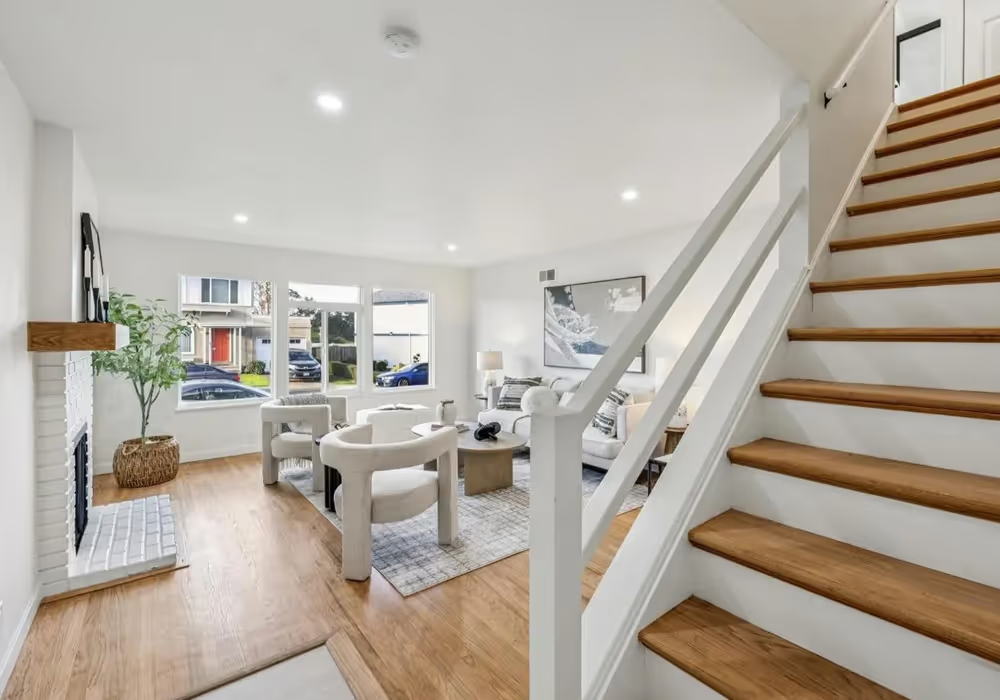
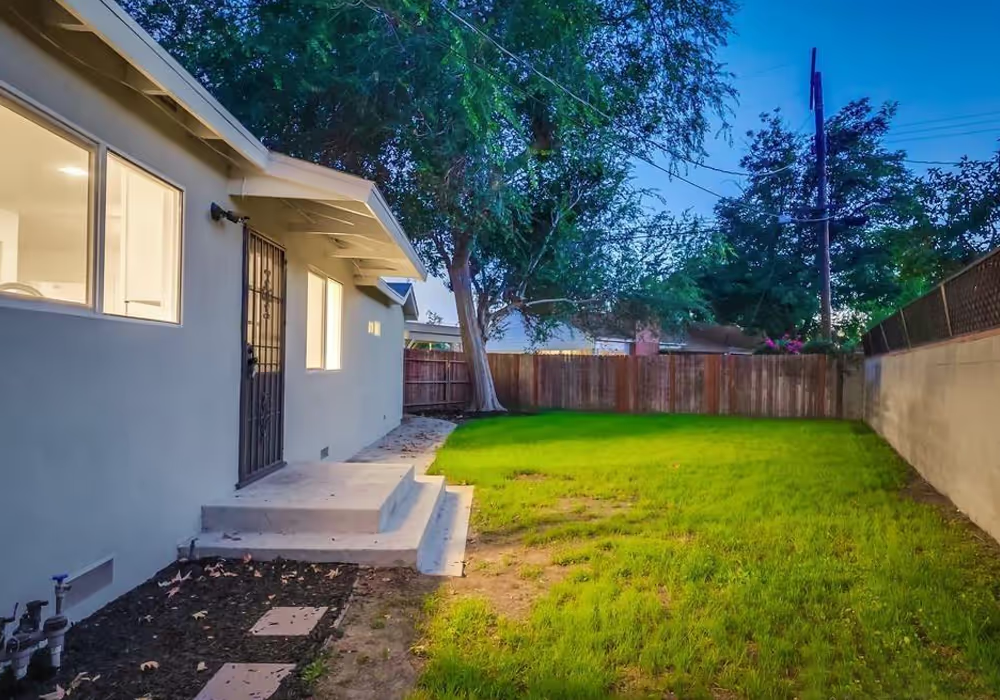
Here’s proof: At 18 Chenery Steet in San Francisco, the homeowner partnered with Revive to unlock more value from their property without taking on the stress of managing a renovation alone. Instead of selling as-is, they used our Renovate to Sell approach to make strategic upgrades that improved both presentation and market appeal. Revive handled the planning, design, and execution, allowing the homeowner to stay focused on their next move. The result was a stronger sale outcome (from an as-is price of $1,700,000 to a selling price of $2,295,000), with increased buyer demand, demonstrating how the right improvements, guided by data and expertise, can significantly boost both confidence and returns.
Key Questions to Ask Before Deciding
These are the questions Revive can help with. We’ve been here, many times, and can help you navigate:
- If it would be cheaper to move or remodel in my specific situation when factoring both upfront and long-term costs.
- What aspects of my current home or neighborhood would be difficult to replace.
- How disruptive a renovation might be compared to relocating.
- Whether this decision aligns with how long I realistically plan to stay.
These questions help shift the decision from reactive to intentional.
A Simple Decision Framework
Think of it like this: Remodel = optimize. Move = replace.
Remodel If
- You want to improve how your home functions without replacing your current financing
- You are invested in your neighborhood and its long-term value
- You are thinking in terms of long-term ownership and value creation
Move If
- The home no longer supports your needs in a fundamental way
- You are already planning a major life transition that requires relocation
- The financial comparison clearly favors buying over renovating
Conclusion
The decision between remodeling and moving is about cost, but also about control, predictability, and alignment with how you want to live.
In Los Angeles, with mortgage rates still near 6-7% and inventory constrained, many homeowners are finding that staying put offers more financial control and predictability. It allows them to shape their environment, manage their finances more deliberately, and unlock value that already exists within the asset they own.
At Revive, this is how we approach the decision. Not as a binary choice, but as a strategy to help homeowners unlock the full potential of their home and build long-term wealth with clarity and confidence.
How much is your home's worth?
Get your personalized estimate today.





















Past callings as mechanic, engineer, Project Manager, Realtor and Handyman coupled with his attention-to-detail give Doug Miyaki valuable experiences and the aptitude to guide Homeowners and Real Estate agents through the home renovation process.