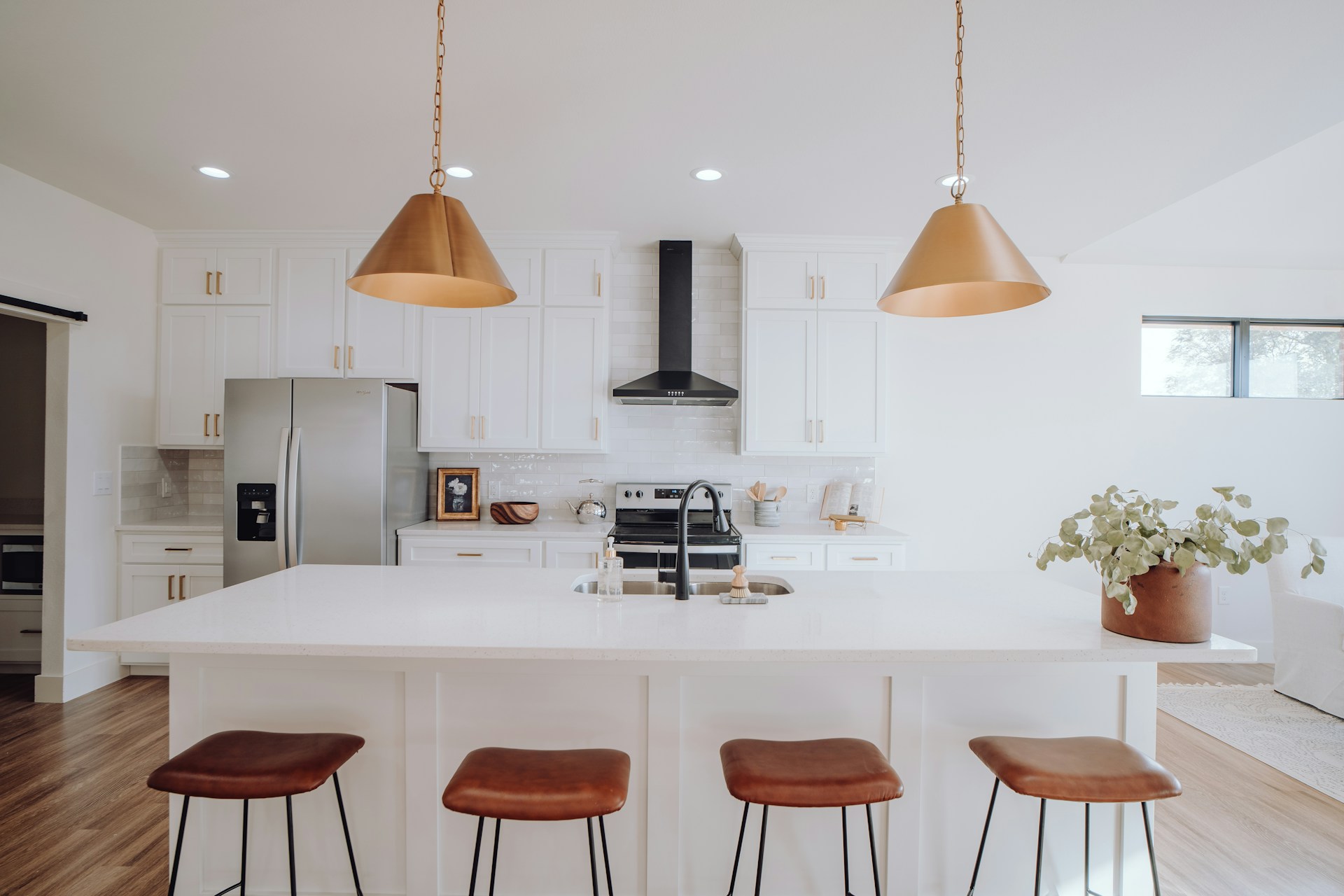
The average kitchen remodel cost in Los Angeles is higher than the national average, but more comparable to major metro areas in California. Like those other areas, LA homeowners can expect higher costs for kitchen remodels overall, as well as extra permitting and regulatory requirements.
While costs are high, you still have many choices and significant flexibility. Depending on your goals for your home, you can choose from a range of finish qualities. More importantly, the scope of your kitchen renovation will immediately place your project in the low-cost or high-cost category.
Below we explore:
- A quick peek at the exact price ranges you can expect for your kitchen and renovation goals
- The factors that affect your final cost
- Size and finish considerations
- Components and costs
- Permits and regulatory concerns
- Tips for a successful LA kitchen renovation
- A fast way to get a quick peek at what your kitchen remodel should cost
Kitchen Remodel Cost Overview
A typical kitchen remodel cost in Los Angeles falls between $25,000 and $60,000. However, more extensive high-end kitchens with luxury-level scope and finishes often cost $80,000 or even more, particularly when they involve:
- Custom cabinetry
- Premium appliances
- Layout changes
- Electrical, plumbing, or structural work
The national average for a full kitchen remodel falls in the low-to-mid five-figure range. According to the Journal of Light Construction's 2025 Cost vs Value Report, minor kitchen remodels cost an average of $28,458 and major kitchen remodels cost $82,793. One major exception is that costs in major metro areas tend to be significantly higher.
In Los Angeles specifically, our experience, combined with multiple local remodel guides, contractor estimates, and industry data, reveals these trends:
- A consistently high-cost kitchen remodeling market
- High average labor costs, particularly when skilled trades are involved
- Strong demand driving competitive contractor pricing
- Higher costs for permitting and regulatory compliance
However, LA’s competitive resale market also creates:
- Strong potential for strong kitchen remodeling ROI compared with most California markets
- Especially favorable returns in high-demand neighborhoods such as the Westside of Los Angeles and parts of Orange County
According to Verisk’s Remodel Index, labor accounts for roughly 60% of repair and remodeling costs. Bureau of Labor Statistics data places the LA area’s mean hourly wage for construction and extraction occupations 15%-25% higher than the national average, depending on trade and specific locality. Higher wage floors significantly increase the cost of labor-intensive renovations such as kitchen remodels.
Average Costs With and Without Structural Changes
A QUICK GLANCE:
Without structural changes: $25,000 - $65,000
With structural changes: $60,000 - $120,000
So, why the massive difference? Why should you even ask this question so early?
If you want a realistic (but still imperfect) estimate of your LA kitchen remodel costs, you first need to determine which category yours will fall under:
- A kitchen remodel without structural changes
- A kitchen remodel with structural changes
So, let’s start with a quick checklist to determine whether your remodel will be type A or type B.
A kitchen remodel without structural changes has:
- The same footprint
- No load-bearing wall removal
- No relocation of major plumbing stacks
- No beam installation
- No foundation modification
A kitchen remodel with structural changes has:
- An expanded footprint
- Removal of load-bearing walls
- Installation of beams or posts
- Significant relocation of plumbing or gas lines
- Reframing or ceiling alterations
- Opening to a living/dining room
The reason these categories are so different in their final costs are the expenses of structural changes themselves. The more structural changes, like those listed above, that you need, the deeper into the 6-figure range your kitchen remodel will go.
To get a closer estimate of how much remodels of each category cost, consider the cost drivers that will be a part of your remodel:
Kitchen remodel costs without structural changes are primarily driven by:
- Cabinets
- Countertops
- Appliances
- Flooring
- Lighting
- Minor plumbing fixture updates
- Demolition and disposal
- Finish carpentry and installation labor
- Painting and drywall repair
Kitchen remodel costs structural changes are primarily driven by:
- Everything listed above (though those items account for a smaller portion)
- A structural engineer
- Load-bearing beam installation
- Electrical rerouting
- Plumbing relocation
- Permit complexity
- Inspection cycles (which may multiply)
- Framing labor
- Temporary supports during construction
- Structural calculations and stamped plans
In LA, some local structural regulations also increase the potential costs of any remodel that includes structural changes:
- Seismic codes increase structural review requirements
- Permitting timelines and plan check cycles may extend project schedules
- Higher costs for skilled framing and engineering labor rates
- Title 24 energy code compliance updates
Kitchen Remodel Costs Per Square Foot
According to an NKBA study, the average kitchen size for US single-family homes is 161 square feet. Based on this figure and a compilation of data, we estimate the average cost of kitchen remodels as follows:
- Pacific region, minor, midrange: $184.65/sq ft
- Pacific region, major, midrange: $537.14/sq ft
- Pacific region, major, upscale: $1,068.01/sq ft
Given the increased Los Angeles expenses discussed above, it’s safe to assume that costs may be slightly higher than those listed here.
Keep in mind that these estimates rely on the same logic as the cost range regarding the need for structural changes, skilled labor, and other high-cost factors.
Factors That Affect Kitchen Remodeling Costs
Below, we list the primary factors that influence the cost of kitchen remodeling in Los Angeles:
- Kitchen size and total square footage
- Linear feet of cabinetry
- Countertop surface area
- Flooring coverage
- Ceiling height
- Number of windows and doors
- Level of finishes (stock, semi-custom, custom)
- Cabinet quality and construction type
- Countertop material selection
- Appliance tier and brand
- Backsplash type and complexity
- Lighting fixture quality
- Hardware selection
- Scope of renovation (cosmetic vs full gut)
- Demolition extent
- Subfloor or drywall replacement
- Framing or structural modifications
- Layout changes or reconfiguration
- Removal of load-bearing walls
- Beam installation
- Temporary supports during construction
- Plumbing relocation
- Electrical rerouting
- HVAC adjustments
- Labor rates for skilled trades
- General contractor markup
- Designer or architect fees
- Project management complexity
- Permit fees
- Structural review and plan check fees
- Inspection requirements
- Title 24 energy compliance
- Material price fluctuations
- Custom fabrication requirements
Finish Levels and Design Impact
The level of your finish is one of the most significant factors in determining a kitchen remodel’s cost in Los Angeles. Let’s look at data to see how finish costs vary by budget range, and what you can expect for your budget.
The statistics we cite reflect finishes that typically include:
- Stock or RTA cabinetry
- Laminate or entry-level quartz countertops
- Limited layout changes
- Standard appliance packages
- Surface-level updates
Budget Finish
Budget LA kitchen remodel finishes, based on the average size of kitchen, often cost between $19,000 and $30,000. A Houzz Kitchen Trends Study points out that the average costs for kitchen remodels are skewed by the top 10% of spenders, who spend at least $180,000. About half of homeowners spend less than $35,000, meaning a budget in this range is achievable in Los Angeles.
Of course, a budget LA kitchen remodel won’t get you a flashy finish. However, stock options can provide solid value, including some entry-level quartz countertops and meaningful surface-level improvements.
A typical budget, sub-$35,000 finish for an LA kitchen remodel should include:
- Stock or RTA cabinetry
- Laminate or entry-level quartz countertops
- Limited layout changes
- Standard appliance packages
- Surface-level updates
Mid-Grade Finish
A mid-grade finish in the Pacific region of the United States, which includes many of the most expensive areas of the continental US, a major remodel with a mid-grade finish typically costs around $85,000. This estimate follows our experience, various industry estimates, and reflects the median spend of $60,000 according to the 2024 Houzz Kitchen Trends Study.
LA kitchen remodel costs are significantly higher than the national average. As the complexity and quality of the finish increases, prices in LA tend to increase faster than national averages. However, between $75,000 and $95,000, you can expect a major remodel with a mid-grade finish that includes some combination of:
- Semi-custom cabinetry
- Quartz or natural stone countertops
- New flooring throughout
- Full lighting plan update
- New appliance suite
- Moderate layout adjustments
- New plumbing fixtures
- Electrical panel upgrades if required
- Complete demolition of existing finishes
This list covers the most common features of the “full remodel” tier in higher-cost metros.
High-End Finish
The high-end part of the spectrum includes major kitchen remodels approaching luxury quality, but with more conservative budgetary choices typically costing between $95,000 and $150,000. This covers major remodels that approach luxury quality but stop short of a fully custom, no-compromise scope.
A high-end LA kitchen remodel finish will typically include many of the following:
- Custom cabinetry
- Premium stone slabs or waterfall islands
- Professional-grade appliance packages
- Designer lighting and layered lighting plans
- Expanded island or dual-island layouts
- Structural wall removal
- Plumbing relocation
- High-end flooring materials
- Integrated storage solutions
- Architectural detailing
Luxury Finish
Luxury finishes don’t hold back. Starting around $150,000+, they normally include a full range of fully customized exquisite work, and materials, including most of the following:
- Fully custom millwork
- Architectural redesign
- Structural reconfiguration or expansion
- Integrated panel-ready appliance suites
- Slab backsplashes and bookmatched stone
- Custom hood systems
- Smart home integration
- High-end plumbing fixtures
- Concealed storage systems
- Imported or specialty materials
- Significant permitting and structural review
Scope of Kitchen Renovation
The scope of your remodel includes a series of choices about exactly what you want done. Most remodels are either done on a lower-cost “rip-and-replace” or on a higher-cost “gut renovation” scale.
Rip-and-Replace Renovations (Full Remodels)
After the remodel is completed, a “ripped and replaced” kitchen maintains the same:
- Footprint
- Wall locations
- Plumbing layout
Basically, no structural engineering is required.
Instead, a rip-and-replace remodel typically includes:
- Full demolition of cabinets and finishes
- New cabinetry
- New countertops
- New appliances
- New flooring
- Lighting upgrades
- Cosmetic drywall work
- Possibly minor electrical/plumbing adjustments
The effects on cost tend to match the well-studied category of midrange major renovations. Depending on the size of the kitchen and the quality of the new finish, if you’re trying to control costs by not triggering structural reviews or major utility work, rip-and-replace renovations may be the better option.
Gut Renovations (Structural Reimagining)
Gut renovations involve real structural changes and all the permitting and reviews that go along with them. If you want a completely new kitchen layout, a broader open-concept interior, indoor-outdoor transitions, or other serious changes, a gut renovation is the way to achieve it.
Keep in mind that gut renovations add complexity and take you into a new regulatory space. These differences also result in higher costs, driven by the skill and time required for tasks such as:
- Removing walls
- Installing beams
- Relocating plumbing
- Reworking electrical wiring
- Possibly raising the ceiling
- Possibly expanding the footprint
- Hiring framing crews
- Installing temporary structural supports
- Rerouting utilities
- Plan check review
- Seismic compliance review in LA
Overall, during gut renovations, several additional factors typically apply:
- Structural engineers become involved
- Permit complexity increases
- Inspection cycles multiply
- The timeline often gets extended
Kitchen Components and Their Costs
We provide a breakdown of the costs of each individual kitchen component below. You can compare the costs to help create a plan that fits your aesthetic and functional expectations as well as your budget.
Kitchen Cabinets
According to NKBA guidelnes, cabinetry and its installation together account for slightly less than one third of most kitchen remodels.
- Budget: $5,000-$12,000
- Mid-Grade: $10,000-$27,000
- High-End: $22,000-$45,000
- Luxury: $40,000-$80,000
Kitchen Countertops
- Budget: $2,000-$5,000
- Mid-Grade: $4,000-$11,000
- High-End: $9,000-$18,000
- Luxury: $18,000-$30,000
Tile or Slab Backsplash
- Budget: $800-$2,000
- Mid-Grade: $1,500-$4,500
- High-End: $3,000-$9,000
- Luxury: $6,000-$18,000
Kitchen Appliances
- Budget: $2,500-$7,000
- Mid-Grade: $5,000-$16,000
- High-End: $12,000-$30,000
- Luxury: $25,000-$60,000
Kitchen Island
- Budget: $1,500-$5,000
- Mid-Grade: $3,000-$11,000
- High-End: $7,000-$20,000
- Luxury: $15,000-$35,000
Sink and Fixtures
- Budget: $600-$2,000
- Mid-Grade: $1,000-$4,000
- High-End: $2,000-$7,000
- Luxury: $4,000-$12,000
Electrical and Lighting
- Budget: $1,000-$4,000
- Mid-Grade: $2,500-$9,000
- High-End: $6,000-$15,000
- Luxury: $10,000-$25,000
Flooring Options
- Budget: $1,000-$4,000
- Mid-Grade: $2,500-$9,000
- High-End: $6,000-$15,000
- Luxury: $10,000-$25,000
Hardware and Cabinet Pulls
- Budget: $300-$1,200
- Mid-Grade: $600-$2,700
- High-End: $1,500-$4,500
- Luxury: $3,000-$8,000
Pantry Options
- Budget: $500-$3,000
- Mid-Grade: $1,000-$7,000
- High-End: $3,000-$12,000
- Luxury: $6,000-$20,000
Kitchen Remodeling Services
According to the Verisk Remodel Index (2024–2025), just under 60% of total remodeling costs go to labor. That means for a $75,000 project, about $45,000 is labor and $30,000 is materials.
The Bureau of Labor Statistics reports that construction and extraction workers in the Los Angeles-Long Beach-Anaheim metro area earned a mean hourly wage of $37.00 in May 2024, compared with $30.73 nationally, a wage premium of about 20.4%.
Understanding how labor, the larger part of remodeling costs, breaks down across contractors, designers, and specialized services helps you plan more strategically. Below, we break down this broad overview into more specific categories so you can better balance your budget and long-term goals for your kitchen.
General Contractors
With about 60% of kitchen remodel costs going to labor, a contractor’s value is in coordinating the necessary labor:
- Subcontractors
- Scheduling
- Sequencing
- Inspections
- Closeout
The median annual wage for a construction manager is $106,980 as of May 2024, according to the BLS. That implies approximately $51.43 per hour, assuming regular full-time work hours. Broken down by scale, that means:
- For faster remodels requiring 60 to 140 hours of GC management time, $3,100 to $7,200 in management labor value
- For structural, more complex remodels requiring 140 to 300 hours, that increases to $7,200 to $15,400
Design Services (Interior Designers or Architects)
Using a similar logic as the GC estimates above, interior designers make about $30.53 per hour. However, design hours typically scale with the scope of your kitchen remodel and the number of decisions required. Structural work takes far longer, often requiring:
- Initial plans
- Revisions
- Coordination
- Working around permitting
Some general estimates for design services are:
- For a limited, non-structural remodel, $900 to $2,500
- For a complete, structural remodel, $2,500 to $5,500
Full-Service Design-Build Firms
Full-service design-build firms normally cost similar totals when compared to other paths to completing a kitchen remodel. The main cost differences are structural and organizational. You may spend more upfront with a full-service firm, but potentially spend less at the end.
What you get is a simplified bundle instead of the potential complexities of separate design and construction contracts. The cases where full-service design-build firms end up costing less are those where you would have otherwise faced misalignments between designers and contractors or similar issues. Those kinds of issues can add to the total cost of a kitchen remodel.
A design-build firm combines all of the major factors in a kitchen remodel into a single contract:
- Design
- Construction
- Project management
- Permitting coordination
- Procurement
A full-service design-build firm operates as a one-stop shop for the entire kitchen remodeling process. They take primary responsibility for the entirety of the design and construction process. The benefits include:
- Fewer contractual handoffs
- Reduced coordination gaps
- Clear accountability
How to Choose the Right Contractor
To find the best contractor for your situation, follow a checklist, in this order. Simple but complete checklists reduce risk, protect your budget, and keep your project on track:
- Verify licenses and insurance
- CSLB licence verification
- General liability insurance
- Workers’ compensation insurance
- Confirm experience with similar scope
- Experience with layout-preserving versus gut remodel
- Check reviews and references
- Look beyond ratings
- Final cost vs. original estimate
- Communication quality
- Change orders
- Inspection outcomes
- Compare detailed estimates
- Labor
- Materials
- Allowances
- Permit handling
- Timeline
- Payment schedule
- Look beyond totals, the lowest number is not always the lowest final cost
- Ask about change order process
- Ask how scope changes can trigger permit revisions
- Ask how inspection delays affect operations and cost
- Clarify whether the contractor:
- Pulls permits
- Attends inspections
- Handles corrections
- Review timeline expectations
- Material lead times
- Inspection scheduling
- Possible plan check cycles
- Schedule interviews
- Communication style
- Responsiveness
- Clarity
Trust your instincts. After you’ve verified credentials, reviewed bids, and compared your options, your final decision can only come down to your confidence.
Permits and Regulations
Permits and regulations are particularly heavy in California. Local metros often add complexity on top of the existing state requirements. However, the costs, project constraints, and time commitments that permits and regulations create can be handled by:
- Planning ahead to avoid surprises
- Consulting with local experts who know the ins and outs of kitchen remodel regulations
- Working with experienced and licensed contractors who handle permits and inspections
- Confirming permit requirements with the Los Angeles Department of Building and Safety before construction begins
- Adding extra time to the schedule for plan checks and inspection cycles
The permitting rules in LA are determined by the Los Angeles Department of Building and Safety (LADBS). The permits broadly ensure:
- Building code compliance
- Safety
- Inspection of electrical, plumbing, gas, and structural work
LADBS also offers an express-permit pathway for kitchen remodels with no structural changes.
Do You Need a Permit to Remodel a Kitchen in Los Angeles?
Permits are required for Los Angeles kitchen remodeling when:
- There is electrical work, beyond basic fixture replacements
- Plumbing is relocated or new lines are created
- Gas lines are modified
- Structural changes are needed
- Wall removals
- Beams replaced/moved
- Framing changes
In other cases, you can get express permits, normally online. You can generally take the city’s express-permit pathway if your remodel:
- Doesn’t alter walls or openings
- Doesn’t add new in-wall plumbing or electrical systems
Remember, separate permits may be required for:
- Plumbing
- Electrical
- Mechanical systems
Keep in mind that the LADBS inspection procedures state that inspections are required during the construction process. Periodic inspections to ensure code compliance are a regular part of most LA kitchen remodels.
Cost of Kitchen Remodeling Permits
Here are some example costs and estimates to provide a rough idea of what to expect:
$30,000 kitchen remodel
- Building permit: ~$300–$450
- Plan check: ~$270–$400
- Trade permits and surcharges: ~$200–$500
- Estimated total permit cost: ~$800–$1,300
$75,000 kitchen remodel
- Building permit: ~$600–$900
- Plan check: ~$540–$800
- Trade permits and surcharges: ~$400–$900
- Estimated total permit cost: ~$1,500–$2,600
$120,000 structural kitchen remodel
- Building permit: ~$1,000–$1,500
- Plan check: ~$900–$1,350
- Trade permits and surcharges: ~$600–$1,200
- Estimated total permit cost: ~$2,500–$4,000+
The logic of permit fee structures in LA is value-based. That means your building permit fees will be based on the project valuation (construction cost).
The plan check fee is normally approximately 90% of the building permit fee, when required.
Then there are separate trade permit fees for electrical, plumbing, and mechanical work. Each of these is normally calculated as a percentage of the building permit fee. Depending on the scope of the remodel, you may be charged flat permit fees.
Common Safety and Regulatory Considerations
The permitting and regulatory landscape in LA is focused on a few safety and environmental issues:
- Structural review requirements for removing load-bearing walls
- Title 24 energy compliance for some building component upgrades
- Gas and plumbing code compliance when altering lines, or when replacing or installing appliances
- Electrical code compliance when working with GFCI outlets or dedicated appliance circuits
As the homeowner, there isn’t much you can do personally. Instead, it’s best to protect your investment in a remodeled kitchen by carefully working with the right contractors and designers. Permitting and regulatory compliance are matters of professionalism.
Tips for a Successful Kitchen Remodel
For a complete guide to achieving the perfect kitchen remodel, read our essential tips for a kitchen remodel.
Kitchen Layout Planning
If you want to save money, keeping the current floor plan is one of the easiest ways to do so. Having the same kitchen footprint and layout means you can still radically change the appearance and utility of your kitchen, but without:
- Substantial skilled labor premiums
- Triggering the need for extensive permitting
- Moving your plumbing, gas, and electrical lines
Without these substantial changes, you can still upgrade your kitchen with:
- New cabinetry and hardware
- Updated countertops and backsplash
- Improved lighting design
- Modern appliances
Storage and Functionality Tips
Improving your kitchen storage layout is an easy way to improve your kitchen’s functionality and value with a relatively low investment. Storage options often don’t have a meaningful impact on construction costs.
To make the most of this opportunity, focus on upgrades like:
- Deep drawers for pots and pans
- Pull-out shelves or organizers
- Vertical cabinet storage for baking sheets and trays
- Pantry cabinets or dedicated pantry space
- Under-cabinet lighting for better work surfaces
Saving Money on Kitchen Renovations
Saving money on kitchen renovations is largely about planning and big-picture decisions like cabinetry, flooring, appliances, and hardware. Not all upgrades are equally valuable. Some provide an outsized ROI.
In some cases, you can control costs while still improving value through strategic options:
- Choosing stock or semi-custom cabinets instead of fully custom builds
- Mixing premium materials with more affordable finishes
- Choosing mid-range appliances over luxury brands
- Avoiding structural changes whenever possible
Remember, most over-budget projects end up that way because major changes to the scope were added later. Try to make sure as much as possible is accounted for before construction begins.
Preparing for Renovation
You can make the renovation process easier with a few simple steps:
- Order materials early to avoid delays
- Declutter and clean the kitchen space
- Move furniture and other important belongings
- Create a clear, clean, protected path to your kitchen
- Communicate your plans to the contractor
Avoiding Hidden Costs
Your contractor should give you a cost estimate and a general idea of the kind of issues that may arise. But depending on the age of your home and unforeseen circumstances, their estimate may end up looking too low.
First, remember that a contractor cannot predict every possible issue, especially before they’ve broken into the walls. They may find new issues, or determine that plumbing and electrical need to be updated, even though you wanted to avoid these changes. Situations like this are common, especially in older houses.
To protect yourself, be prepared with a contingency budget of at least 10%. You may not have much choice but to go over budget to complete the remodel.
Working With a Local Contractor
Hiring local remodeling experts, starting with a good general contractor that can simplify the local permitting processes, can help streamline your project. Local contractors make an LA kitchen remodel smoother with:
- LADBS permit requirements
- Local inspection procedures
- Regional labor and material costs
- Supplier networks and lead times
{{cta-banner}}
Frequently Asked Questions
Why is kitchen remodeling so expensive in LA?
Kitchen remodeling costs in Los Angeles are higher than the national average primarily due to high local wages. In addition, strict building codes and complex permitting requirements further push LA kitchen remodel costs further above the national average. High home values and a competitive real estate market also encourage more substantial kitchen renovations with higher budgets and higher-end finishes.
How can I estimate my kitchen remodel cost?
Kitchen remodel costs are based on a mix of size, quality, material type, and the scope and complexity of your design choices. Labor costs during structural changes can significantly increase total project costs. You can get a free Los Angeles kitchen remodel cost estimate with Revive Real Estate so you can make more informed decisions for your kitchen remodel.
What are some cost-saving tips?
The easiest way to save on an LA kitchen remodel is to refrain from changing the layout. Without structural or layout changes, you don’t need pricier plumbing, gas, and electrical work and permitting. You can also choose semi-custom cabinetry and mid-range appliances over more expensive options. If you want a strong finish at a lower cost, it’s common to mix premium materials with budget finishes for a balance between budget and kitchen appearance.
What kitchen layouts are most common in LA?
L-shaped kitchens with central islands and open-concept designs are particularly common in Los Angeles. U-shaped kitchens are also common. LA kitchens normally prioritize flexibility and efficiency, allowing more flow and offering additional places for social gatherings.
What are examples of past renovation projects?
Check out our catalogue of successful kitchen renovations for examples from our many past successful renovation projects.
How much is your home's worth?
Get your personalized estimate today.



















Seasoned architect with a B. Arch from Sushant School. Formerly at Brookfield Residential and Studio Niev's founder. Kanika's blend of aesthetics and efficiency is pivotal to our production team's excellence.