In recent years, San Jose homeowners have added more livable space to their properties instead of moving. In a high-cost market like San Jose, expanding a home can often be more strategic than re-entering a competitive buying environment. 488 ADU permits were issued in 2024, up from only 10 in 2015 according to the San Jose government.
Garage conversions and accessory dwelling units (ADUs) are two of the most common ways to add meaningful living space without taking on the cost and uncertainty of moving.
Across California, ADU permits are rising from the low hundreds to the high tens of thousands. At the same time, garage conversions have become a more popular way to improve a home’s livability and get additional use from existing space, at a lower cost. These two paths offer different trade-offs in exchange for more living space and long-term value.
In this guide, you’ll learn how to evaluate ADUs and garage conversions based on:
- Total estimated costs
- Permit requirements
- Timelines
- Rental potential
- Property fit
Understanding the Two Options at a High Level
First, we need to go over the fundamental changes that garage conversions imply.
What Is a Garage Conversion?
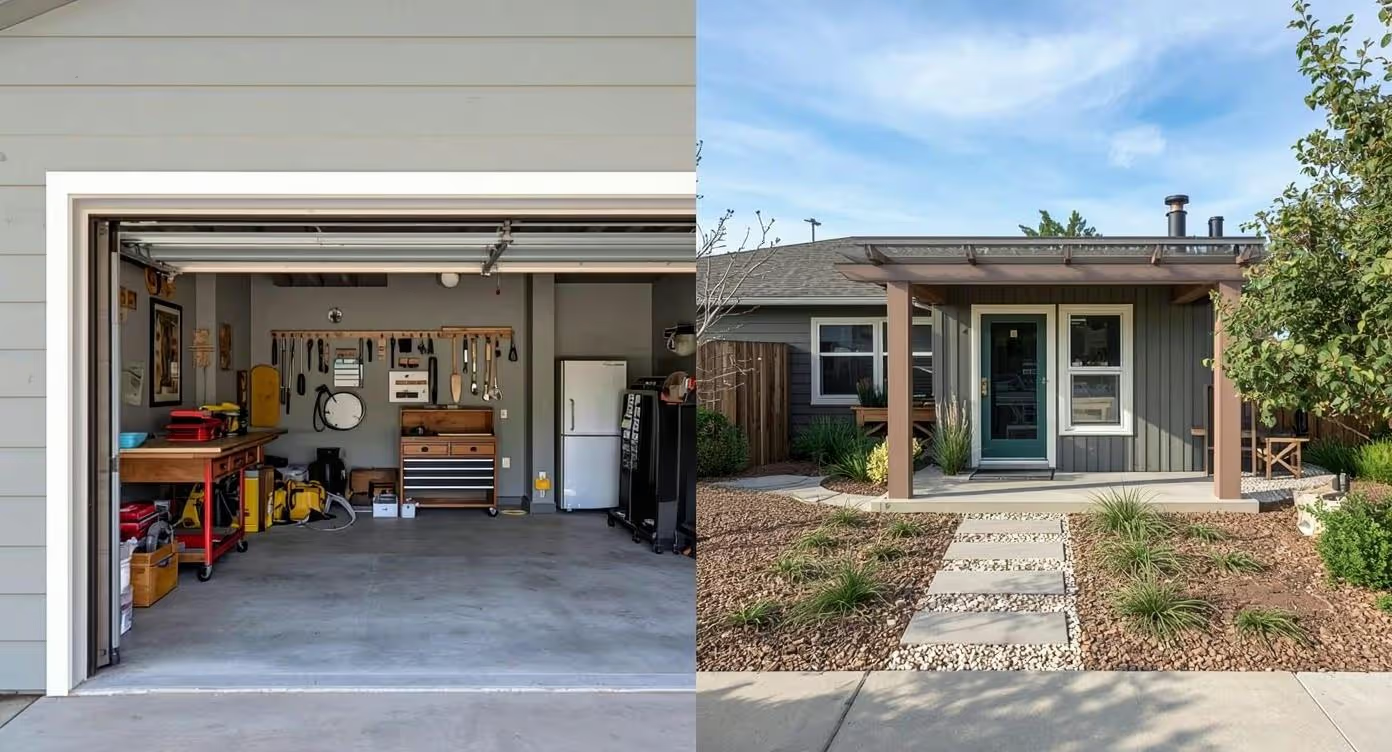
A garage conversion is a renovation that turns a garage into a livable space. Garage conversion projects can turn a simple garage into spaces like a:
- Studio
- Guest suite
- Rental unit (including kitchen and bathroom)
- Home office
- Gym
- Flex space
In San Jose, more residents are choosing garage conversions because of:
- Cost-efficiency for added living space
- Increased property value or equity
- Not requiring ground-up additions or moving efforts and expenses
- A need for more space for multigenerational households
- Possibilities for rental income with higher-scale (ADU-qualifying) conversions
To make any of these room types or goals possible, a remodel is usually required. However, garage conversions are often far easier than ADU alternatives. Utilities are normally far more accessible and serious structural changes or additions are not always needed.
In many cases, extensive plumbing and electrical work is needed for a garage conversion. In other cases, the space is expanded, which also takes time and money. But it’s often simpler and less expensive than building a new structure on your property. If you don’t need to turn your garage into someone’s full-time home, it’s often the more balanced option.
What Is an ADU?
An ADU is a legally recognized secondary housing unit located on the same lot as a primary residence. According to California Government Code §65852.2, an ADU is “an attached or a detached residential dwelling unit that provides complete independent living facilities for one or more persons and is located on a lot with a proposed or existing primary residence…”
An Accessory Dwelling Unit (ADU) is a different legal and functional category than a garage conversion. However, not all ADUs are detached from a property’s main building. In some cases, even a garage conversion can result in what legally qualifies as an ADU.
In general, the common ADU types in San Jose can be broken down into four categories:
- Detached ADU
- Attached ADU
- Garage ADU (conversion that qualifies as an ADU)
- Junior ADU (JADU)
A Junior ADU is defined by California Government Code §65852.22. A JADU is a unit of no more than 500 square feet, created within the existing walls of a single-family residence. A JADU must include an efficiency kitchen but may share sanitation facilities with the primary dwelling (Cal. Gov. Code §65852.22(a)(2)).
For a garage conversion to be classified as an ADU, it must meet ADU requirements, including complete independent living facilities. If your garage conversion does not meet the minimum standards we’ve discussed above, it does not carry the same permitting and other requirements.
So, ADUs differ legally and functionally from basic conversions by being formally recognized as secondary dwelling units. Any ADU must comply with building standards under the California Building Code and California Energy Code.
Garage Conversion vs ADU: Key Differences at a Glance
Let’s quickly break down the differences between a simple garage conversion remodel and an ADU project.
Cost Comparison in San Jose
Below, we explain the main costs behind garage conversions and ADUs. Then we highlight the costs that shape the final investment sum in San Jose.
Garage Conversion Costs
A typical one- or two-car garage in San Jose can cost between $100,000 and $200,000 to create a finished, habitable space. If you add a bathroom and high-end finishes, the cost normally falls between $150,000 and $275,000.
Prices are higher than most of the US and much of California, largely driven by Bay Area labor costs. However, costs will also vary widely according to size, site conditions, and remodel goals.
The majority of your garage conversion expense calculation will depend upon:
- Existing slab and structure
- Electrical, plumbing, HVAC upgrades
- Insulation, drywall, and flooring
While a garage conversion into a habitable space is expensive, it’s easily the lower-cost option. With a garage, you start with existing slab and structure, often eliminating major costs like new foundation and framing.
ADU Construction Costs
New ADU construction costs in San produce greater returns than new garage or similar space, but they typically cost more as well. Range from $200,000 to $400,000. In many cases, exceeding $400,000 is possible if the unit has high fixed costs, difficult site conditions, or includes premium finishes. The high costs of ADUs in San Jose are largely driven by labor rates, full building code compliance, utility connections, and local permitting requirements.
One Berkeley Bay Area housing research paper estimates that the average ADU in the Bay Area costs $237,000. The same paper notes that costs in the area can exceed $800 per square foot, which would translate to roughly $400,000 for a 500-square-foot ADU at the upper end of that range.
A separate paper by Habitat for Humanity and AARP cites a survey that found the average California ADU construction costs about $166,500 (2023). This translates into about $278 per square foot. San Jose ADU projects are still more expensive than most other California locations due to Bay Area labor costs and build conditions.
In any location, the other primary cost factors for detached and attached ADUs are:
- Foundation and framing
- Utilities and separate metering
- Design, engineering, and energy compliance
So, overall, ADUs are more expensive, but they unlock additional value. As independent dwelling units, they open new avenues to rental income. Even without tenants, an ADU adds potential for:
- Multigenerational living
- Higher annualized growth in median appraised property values
- Full independence from the main structure
Timeline Comparison
Garage conversions are typically much faster than ADU construction projects, especially when little structural change is required. Detached ADUs that require new foundations, framing, and utility connections often take the longest due to added construction and inspection phases.
Garage Conversion Timeline
A basic garage conversion usually takes between 3 weeks and 2 months. Within the basic timeframe, you could realistically convert a standard San Jose garage into a:
- Home office
- Home gym
- Playroom
- Creative studio or hobby space
- Flexible bonus room
- Basic guest room
More complex garage conversions that require plumbing and electrical work and/or structural changes often take 3 or 4 months. These larger-scale conversions may involve:
- Design and feasibility review
- Permits and approvals
- Construction and inspections
Within a 3- to 4-month timeline, a more complex garage conversion can lead to a:
- Comfortable guest bedroom
- Guest suite with a private bathroom
- Home office with built-in cabinetry and its own HVAC
- Studio-style living space with a kitchenette
- In-law suite, without ADU classification
In some cases, you can convert your garage into a space that qualifies as an ADU. However, the requirements for such a thorough conversion normally make it take longer than 4 months.
Conversions usually move faster because you are working within an existing structure. If there’s no new foundation to pour or framing to put up, it’s a relatively simple interior remodeling project.
ADU Construction Timeline
Most ADU construction projects in San Jose take between 5 to 12 months from planning to completion. Because an ADU is treated as a new dwelling unit, it moves through additional planning, permitting, and inspection stages before construction begins:
- Feasibility and preliminary planning (2 to 4 weeks)
Site walk, utility capacity check, zoning review, and budget alignment. - Design and construction drawings (4 to 8 weeks)
- Architectural plans
- Structural engineering if required
- Energy compliance documentation
- Planning and building department review (1 to 3 months)
- Permit submission
- City review
- Corrections if required
- Approval
- State law requires action within 60 days once a complete application is submitted; revisions can extend this window
- Construction phase (4 to 8 months)
- Foundation and framing
- Utility trenching or upgrades
- Rough inspections
- Insulation and finishes
- Final inspection
Keep in mind that coordination with PG&E and sewer districts can add time. Utility coordination is one of the most common reasons ADU timelines are extended.
ADUs are legally recognized as second dwelling units, so they must comply with:
- Full California Building Code requirements
- Fire separation and life safety standards
- California Energy Code compliance under Title 24
- Independent living facility requirements, including permanent provisions for cooking, sleeping, and sanitation
Permits, Zoning, and Code Requirements in San Jose
ADUs in San Jose are regulated by California state law and the City of San Jose’s local zoning and building standards. So, getting an ADU approved involves a more thorough review process than a typical garage conversion.
Garage Conversion Permits
Changing a garage into a living space may trigger different building code requirements, even if it’s not an ADU. In any case, a garage conversion will require some of the following:
- Building, electrical, plumbing, and mechanical permits
- Parking replacement requirements, if applicable
- Change of use review when converting non-habitable space
Remember, a garage conversion will trigger ADU rules if it is designed and permitted as an independent dwelling unit under California Government Code §65852.2. In practical terms, that means if your remodeled/converted garage includes:
- A permanent kitchen with cooking facilities
- A bathroom with sanitation facilities
- Sleeping space
- Independent living provisions for at least one person
ADU Permits and Regulations
New ADU construction requires additional permitting layers and regulatory compliance, including:
- State ADU laws and San Jose implementation
- Objective development standards including setbacks, height limits, and lot coverage
- Owner occupancy and rental eligibility rules
- Energy code and fire separation requirements
- Impact fee exemptions for units under 750 sq ft
Rental Income and ROI Considerations
Garage remodels and accessory dwelling units can both provide a return on investment. the type of return you can expect, and the level of risk involved, will differ depending on which option you choose.
Garage Conversion ROI
The returns you get from a garage conversion can include any mix of:
- Greater resale appeal
- Increased square footage
- Improved livability that makes your home more functional and attractive to future buyers
- Potential future conversion to ADU, leading to rental income
A garage conversion can make sense for you and your family’s personal lives. However, garage conversions are more likely to make financial sense when:
- You want equity-enhancing improvements at a lower total cost
- You plan to live in the home
- The space meaningfully improves livability
- You are not planning to rely on independent rental income
Garage conversions can, on their own, increase marketability and sometimes asking price or equity. However, appraisers may not value your informal conversion the same way they would a legal dwelling unit. The lack of a permit can reduce the resale value added by your “garage remodel”.
Of course, simply housing more family members or others without charging rent is a viable option, but the potential for informal housing arrangements normally doesn’t meaningfully improve the value of a home.
It’s important to note that a garage conversion does not imply you are getting the space permitted as an ADU. Without ADU permitting and the separate rental unit that it creates, your potential predictable income is limited.
If you are undergoing a much larger-scale garage conversion, you can consider going the extra mile and making it into a formal ADU. If you do that, you’re entering ADU ROI potential.
ADU ROI
The potential returns on an accessory dwelling unit investment are more straightforward:
- Rental income potential
- Multi-generational living value
- Long-term appreciation and flexibility
An ADU can:
- Produce steady long-term rental income according to a rental lease agreement
- Reduce your family’s total housing expenses over time
- Create appreciation from having an additional dwelling unit on the property
- Benefit you through increased buyer demand for multi-generational or income-producing homes
Essentially, the potential returns of an ADU are income + equity + flexibility.
A Federal Housing Finance Agency analysis of California appraisal data found that:
- Properties with ADUs had higher annualized growth in median appraised values than properties without ADUs.
- In some California counties, homes with ADUs showed stronger appreciation trends over the 10-year period studied.
Which Option Fits Your Property Best?
These are the clearest indicators that a garage conversion or ADU may be the better strategic fit for your San Jose property.
Choose a Garage Conversion If…
- You have an underused or unused garage
- You want a faster, more affordable project
- Your primary goal is added living space, not a standalone unit
- You plan to stay in the home and improve day-to-day functionality
- Your lot has limited backyard space for new construction
- You do not need separate utility connections or independent rental status
- You want to avoid major foundation work or exterior expansion
Choose an ADU If…
- Your lot allows for a detached or attached unit under San Jose zoning
- Rental income is a priority
- You want a fully independent dwelling with kitchen and bath
- You are planning for multi-generational living
- Long-term flexibility and resale appeal matter to you
- You are comfortable with a longer timeline and larger investment
- You want the option to legally rent the unit in the future
Common Challenges to Plan for Garage Conversions & ADUs
Even the best-planned projects can come with surprises. There isn’t always a lot you can do, but sometimes you can identify potential issues early and plan your projects around them. A few simple checks and some planning can prevent delays and budget changes later.
Structural and Utility Surprises
Structural or utility issues can be the most complex and costly by far. These are the surprises that are often uncovered after the construction phase has started and cause the need for changes to the plans and budget.
Foundation conditions issues are one of the worst to discover, and often necessitate extended timelines and budgets. For example, older garage slabs may not meet the standards of habitable spaces for an ADU. Other common issues like cracks, moisture intrusion, or insufficient footings often necessitate reinforcement or even partial rebuilds.
Drainage and grading issues can affect anything, including garage conversions or fully detached ADUs. Issues like backyard slope, runoff patterns, and proximity to neighboring properties often call for grading adjustments.
Also, electrical panel capacity can be an issue in neighborhoods where homes and infrastructure were built decades ago. Outdated electrical panels may necessitate adding new:
- Circuits
- Electrical appliances
- HVAC upgrades
- Panel upgrades or service expansions
Lastly, sewer and utility connections may present serious obstacles in ADU construction.
Design Integration
A livable converted garage space or an ADU should both be able to, to some extent, have designs integrated with the main home. With a garage, this may require extensive interior renovation, and possibly changes to the exterior. With an ADU, the full project has to be constructed with design integration in mind from the ground up:
- Exterior materials
- Rooflines
- Window proportions
Alignment with your existing structure helps maintain resale appeal and neighborhood cohesion. It’s also important to consider design that allows privacy, including soundproofing and the layout of the space. Modern Orange County residents value privacy, but also sunlight and a feeling of openness. To provide all of these demanded features, include the following in your checklist:
- Independent access
- Window placement that enables both privacy and ample natural light
- Wall separation
- Adequate setbacks
- Shadowing considerations
- Pathway access
- Parking site and flow
Why Contractor Experience Matters in San Jose
San Jose follows California’s state building codes and specific ADU regulations. California is a tightly regulated state where knowledge of requirements matters even more. In addition, local implementation, zoning interpretation, and inspection sequencing can vary.
The best way to navigate these issues is simply to hire a contractor with experience in San Jose. They can navigate the local zoning and permit requirements, and understand San Jose’s objective development standards. They can also:
- Anticipate planning review feedback before submission
- Navigate parking replacement and setback rules
- Coordinate with building, planning, and utility departments
The small details matter here. For example, if you’re considering a comprehensive remodel to your garage, experienced local contractors understand when a garage conversion triggers ADU regulations. They can structure plans that meet the requirements for independent living or whatever scale of project you want to have completed.
Refer back to the kinds of unexpected challenged discussed above. A locally attuned contractor can help with:
- Designing within Title 24 energy code standards
- Identifying early whether structural upgrades will be required
- Avoiding costly redesigns and delays
- Submitting complete, compliant permit applications
- Reducing correction cycles during city review
- Coordinating inspections efficiently
- Aligning scope with realistic timelines and budgets
San Jose Garage Conversion vs ADU: Final Takeaway
At this point it’s probably clear that there is no universal “better” option. The right choice for your property depends on:
- Property constraints
- Budget
- Long-term goals
Early feasibility and permit strategy are critical in San Jose.
How much is your home's worth?
Get your personalized estimate today.













Amanda Steele, a Sales Expert at Revive, previously a Realtor with Berkshire Hathaway, excels in real estate knowledge and customer service. Her skills significantly enhance Revive's client experiences.